Start with the week you actually have
Planning outfits works best when it starts with activities rather than clothes. Spend a few minutes looking at the coming week. Note the days when you will be on your feet, travel between places, meet people, or need to carry extra things. You do not need an outfit for every hour; you need clothes that will let you move comfortably through each day.
Choose one or two days that need the most thought. Perhaps Wednesday includes a meeting followed by a long walk, while Saturday involves errands and dinner with friends. Plan those first. On quieter days, familiar combinations are often enough. This keeps the task small and leaves room for plans to change.
Check what is clean before making a plan
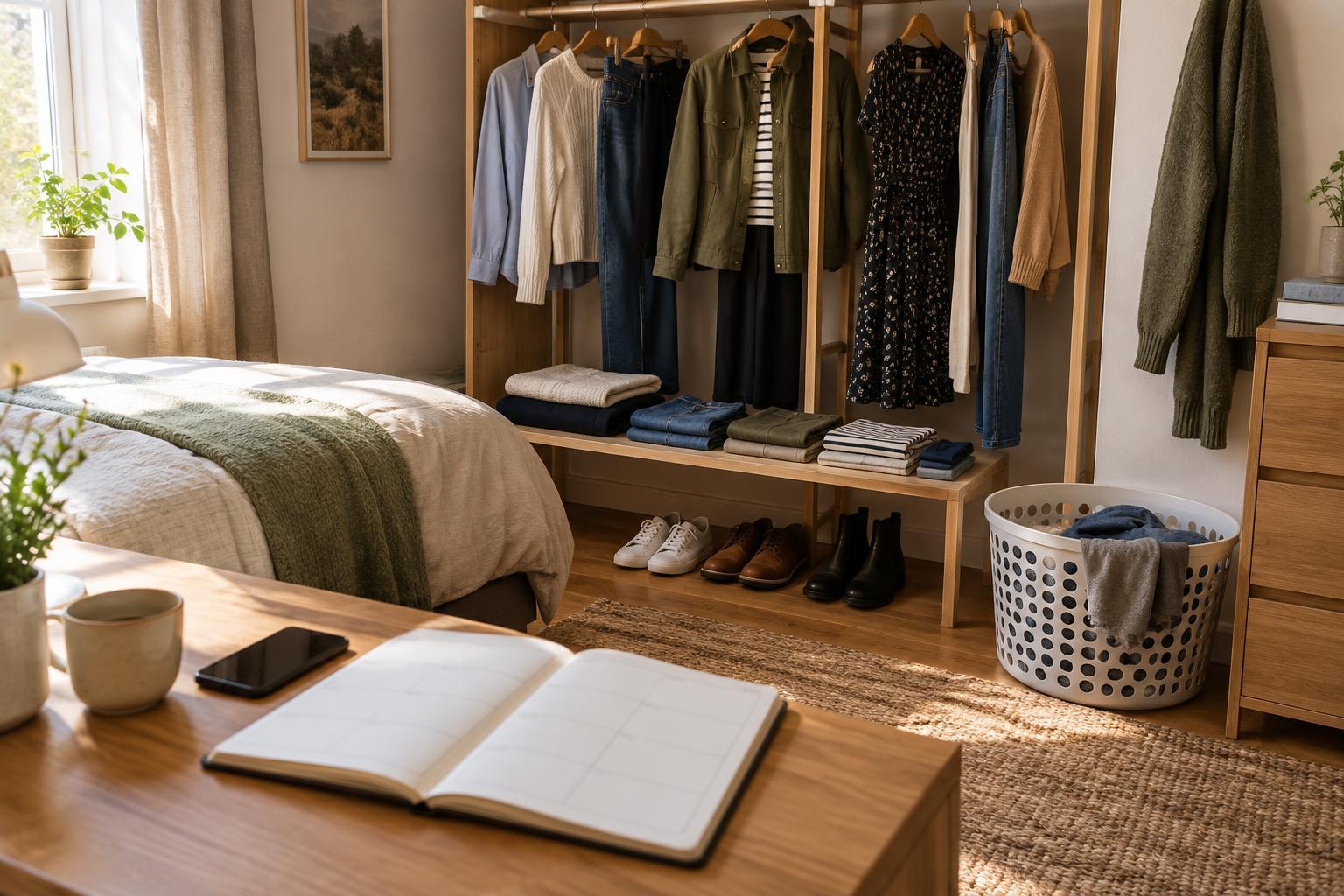
An outfit is only useful if its pieces will be ready when you need them. Check your laundry basket, drying rack and closet before assigning clothes to days. If a favorite shirt is still waiting to be washed, either put laundry on the calendar or choose something else. Do not build the week around a wash you may not have time to do.
Pay particular attention to items that several outfits depend on, such as one pair of work-appropriate trousers or your most comfortable walking shoes. If the same item appears repeatedly, consider when it might need cleaning or time to dry. You can repeat pieces throughout the week; the aim is to make those repeats practical, not to create a different look every day.
Build complete outfits for the demanding days
For each day that needs a specific outfit, put together the whole set: clothing, shoes, outer layer and anything you must carry. Try it on if the combination is unfamiliar. A jacket that looks right on a hanger may feel restrictive over a particular shirt, and a bag that works for a quick trip may be awkward when you have to carry it all day.
Then look for simple adjustments that let one outfit handle more than one setting. You might wear comfortable shoes for a commute and keep a tidier pair at your destination, or choose a layer you can remove when you get indoors. If that requires carrying too much, simplify. A plan should reduce friction, not give you more equipment to manage.
You do not have to lay out seven complete outfits. After the demanding days are covered, make a short list of dependable choices for the remaining ones. “Dark trousers, soft top, everyday shoes” may be enough of a reminder when nothing on the calendar calls for more detail.
Leave room for temperature and changes of plan
Check the likely conditions closer to each day rather than trying to predict the entire week at once. When temperatures may change, plan an optional layer and decide where you will put it if you take it off. Think about rain or a lot of walking when choosing shoes. The most useful backup is often a small substitution, not a second complete outfit.
Keep one clean, comfortable option unassigned if your wardrobe allows it. It can cover a spill, a delayed wash or a last-minute invitation. If setting aside extra clothes is not practical, identify which planned outfit can move to another day. Either approach makes the plan flexible enough to survive ordinary interruptions.
Make the plan easy to use in the morning
Use whatever reminder you already check: a note on your phone, a line in a calendar or a piece of paper near the closet. Write down only the details you are likely to forget, such as “Thursday: blue shirt, black trousers, walking shoes; take light jacket.” A detailed chart is unnecessary unless you enjoy making one.
Before bed, spend a minute confirming that the next outfit is clean and accessible. Put any easily forgotten item, such as a belt or tote, beside it. At the end of the week, notice where the plan helped and where it got in the way. If you kept changing outfits because a pair of shoes was uncomfortable, plan around that lesson next time. The goal is not to dress perfectly every day; it is to make one daily decision a little easier.