Start with a tortilla and a simple filling
A quesadilla is a practical way to use the half cup of beans, few spoonfuls of vegetables or small piece of cheese that might not make a meal on its own. For one person, start with a medium or large tortilla and enough filling to cover one half in a thin layer. Fold the empty half over the filling. A thin quesadilla is easier to heat through and turn than one packed so full that the contents spill out.
Cheese helps hold the filling together, but you do not need a thick layer. Sprinkle some directly onto the tortilla, add your other ingredients, then finish with a little more cheese if you have it. Cheddar, Monterey Jack and other melting cheeses are convenient choices. If you have only a small amount, chop the remaining fillings finely so the cheese can reach more of them.
Choose fillings that are ready to eat
Think of the skillet as a place to warm and crisp a quesadilla, not as a place to cook raw ingredients hidden inside one. Use cooked beans, cooked vegetables or fully cooked meat. Raw onion or peppers can stay crunchy inside a folded tortilla; if you want them soft, cook them in the skillet first and set them aside while you assemble the quesadilla.
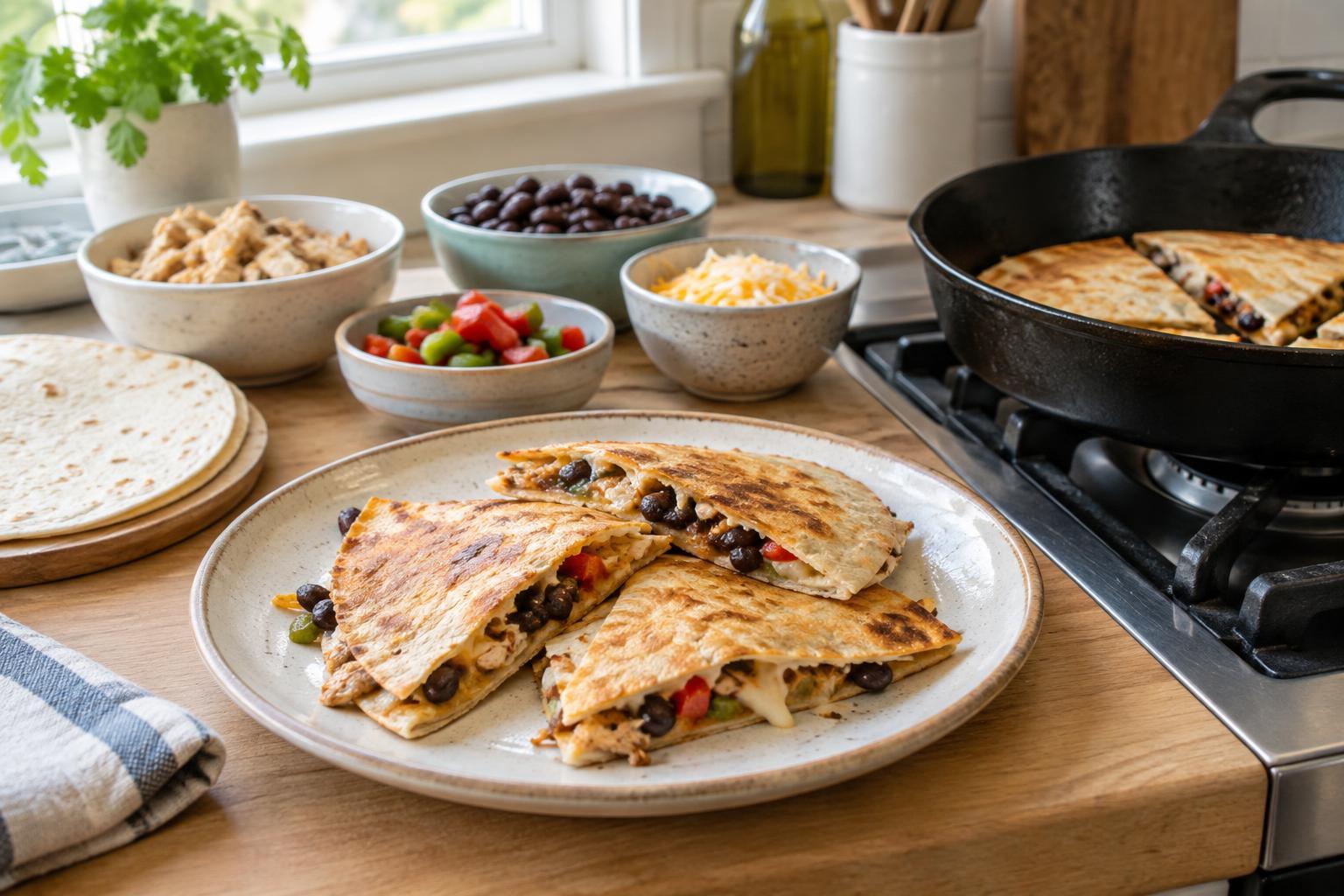
A few combinations are particularly easy to assemble from leftovers: black beans with corn and cheese; sautéed mushrooms with spinach; or cooked chicken with chopped peppers. For a more substantial meal, add a side of sliced fruit, a simple salad or whatever vegetables are ready in the fridge. These are starting points rather than recipes: a modest amount of any well-matched filling is enough.
Moisture matters more than the exact combination. Drain canned beans, squeeze excess water from thawed spinach and leave very wet sauces out of the tortilla. If a tomato or salsa is especially juicy, serve it on the side. Otherwise, steam can soften the tortilla before its surface has a chance to crisp.
Cook gently for a crisp outside and warm middle
Set a skillet over medium or medium-low heat. Add a small amount of oil if you want a more evenly browned surface, or use a dry skillet if that works well with your pan. Place the folded quesadilla in the skillet and cook until the underside is golden and the cheese has begun to melt. Lift an edge with a spatula to check rather than relying on a strict cooking time.
Flip it carefully and cook the second side until golden. If the tortilla darkens before the filling warms, turn down the heat and give it a little longer. Pressing lightly with the spatula can help the tortilla make contact with the pan, but pressing hard may push the filling out. Let the finished quesadilla sit for a minute before cutting it; the filling will be easier to keep in place.
Make it a repeatable low-effort meal
You do not need to buy a collection of special ingredients to keep this meal available. Tortillas and a cheese you already enjoy provide the base; cooked leftovers supply variety. When you put away a small portion of beans or vegetables after another meal, consider whether it could become tomorrow’s quesadilla filling. Keep leftovers refrigerated and use them while they are still in good condition.
For two people, make separate quesadillas rather than stacking extra filling into one. Each person can choose a different combination, and the thinner portions will cook more predictably. Serve them as they leave the skillet, or keep the first one warm briefly while the second cooks. Once you know the basic method, a nearly empty fridge can still offer the ingredients for a quick lunch or dinner.