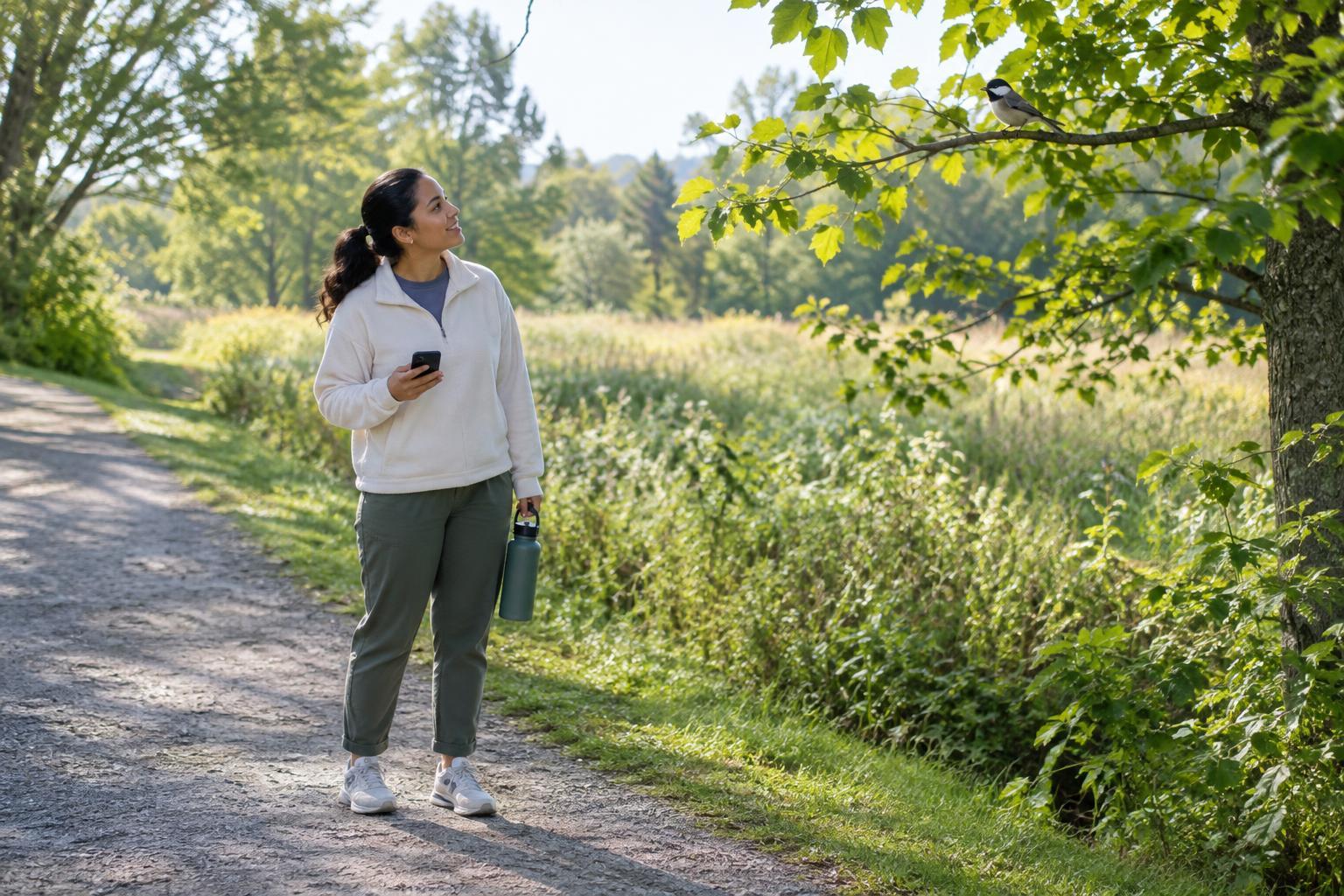
Choose a place you can enjoy even if the birds are quiet
A birdwatching walk does not need to start before dawn or take you somewhere remote. A neighborhood park, public garden, waterfront path or tree-lined street can make a good first outing. Choose a place you already know how to reach, with a route that suits your energy and enough interest to enjoy the walk even if you see few birds. The goal is to spend time noticing what is around you, not to collect a long list of species.
Before leaving, check the location’s access details if they matter to your plans: opening hours, entry fees, parking, restrooms and whether paths are suitable for your group. For a first try, pick one small area rather than an entire park. A loop with a few places to pause is easier to enjoy than a route that keeps you moving to stay on schedule. If you are going with someone else, agree beforehand that stopping to watch for several minutes is part of the outing.
Pack for comfort, not for a new hobby
Wear comfortable shoes and clothing suited to the conditions. Bring water, any snacks you would normally take on a walk and a bag for your everyday essentials. Binoculars can be useful, but they are optional. Start by watching birds you can see with your eyes; you can decide later whether a closer view would make the activity more enjoyable.
A small notebook or your phone’s notes app is enough to record what catches your attention. You might jot down the bird’s approximate size, colors, shape, location and behavior. Try descriptions such as “small brown bird hopping under a hedge” instead of worrying about its name. If you want photos, take them only when you can do so from a comfortable distance. A blurry picture can still help you remember what you noticed, but getting a perfect shot is not worth crowding an animal or stepping off a permitted path.
Slow down and look in more than one place
Begin with a few minutes of quiet observation at an easy stopping point. Look across open ground, then along the edges of shrubs, trees or water. Birds may be easier to notice when they move, so scan slowly rather than fixing your attention on one branch. You can also listen, then look toward a sound without assuming you will find its source. Let the place set the pace: walk a short stretch, pause and repeat.
Notice actions as well as appearances. Is a bird walking on the ground, sitting high up, moving between branches or crossing an open space? Those details give you something specific to remember and can make a familiar place feel new. If you cannot identify a bird, leave it unidentified. Comparing your notes with an identification guide later can be fun, but guessing confidently on the spot is not necessary for a worthwhile walk.
Give wildlife room. Stay on paths where required, avoid approaching nests or young birds and follow posted rules about feeding animals. If a bird changes its behavior as you move closer, step back. Keep your voice and phone audio at a level that respects other visitors, too. A shared public space is more pleasant when everyone can use it comfortably.
Make the outing easy to repeat
Set a modest time limit for your first walk, perhaps an hour including pauses, and leave room for a drink or snack afterward. You do not have to cover much distance. If the weather or your energy makes the full route unappealing, visit just one viewing spot or switch to a shorter loop. A flexible plan makes it easier to go out in the first place.
Afterward, write down three things you noticed: a bird, a behavior and a spot you might revisit. Returning to the same place on another weekend can be as interesting as seeking out a new destination, because you will know where to stop and what to look for. If you enjoyed the outing, consider inviting a friend, trying a different public green space or bringing a borrowed pair of binoculars next time. Keep what worked and skip anything that made the walk feel like homework.