Start with the garment, not the alteration
Tailoring is most useful when you already like a garment’s fabric, color and overall shape, but one fit issue keeps you from wearing it. Sleeves that cover your hands, trousers that bunch at the ankles or a waist that gaps slightly can turn an otherwise useful piece into something you leave in the closet. Alterations can address those problems, but they cannot make every garment into a different design.
Before asking for a quote, put the item on with the shoes and underlayers you would normally wear. Move around, sit down and check it in a full-length mirror. Identify the single change that would make the biggest difference. If the shoulders pull, the fabric feels uncomfortable or you dislike the silhouette, a smaller adjustment elsewhere may not solve the real problem.
Know the common, simpler fixes
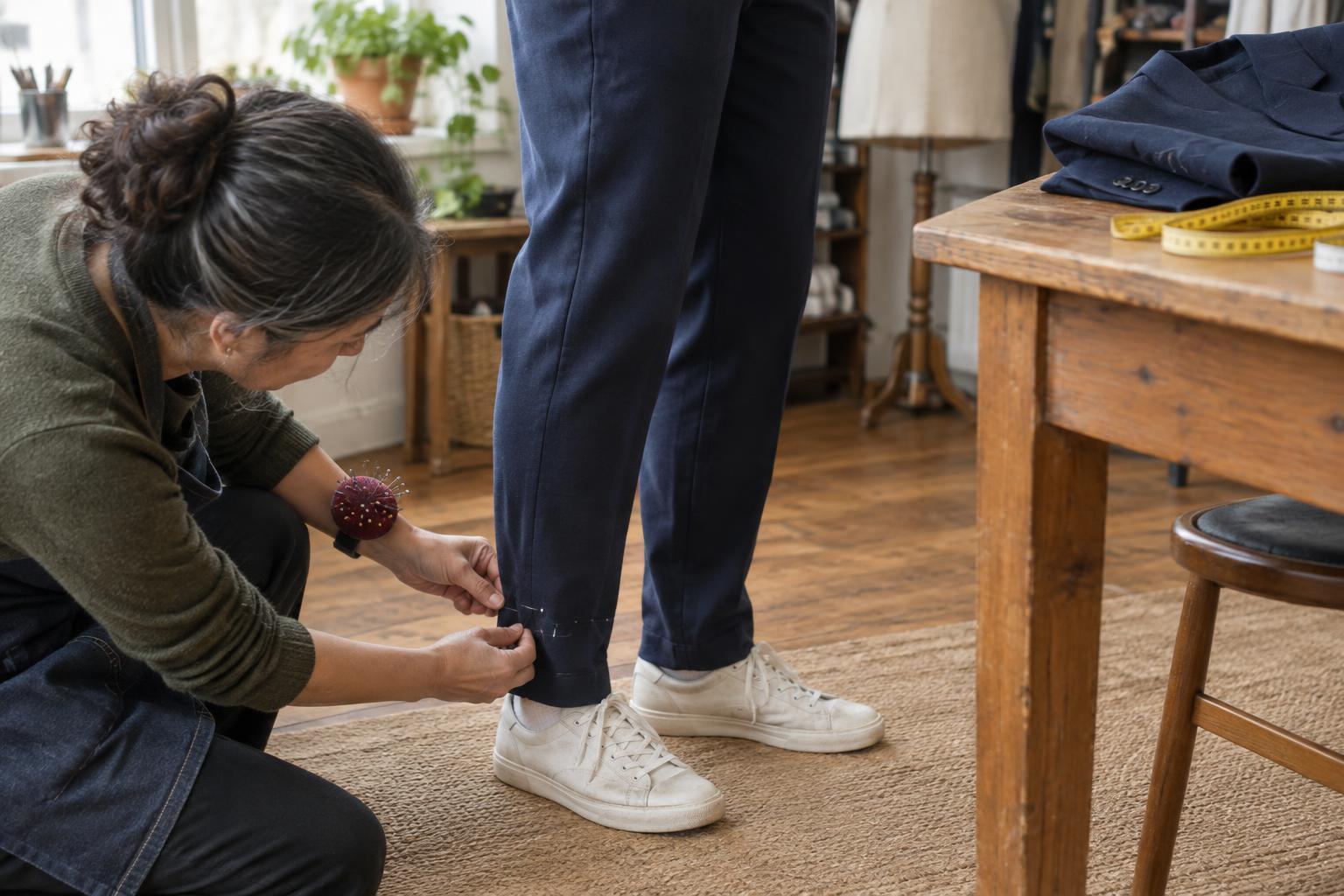
Hemming trousers, skirts and dresses is a common alteration because it changes the length without necessarily changing the garment’s basic structure. The details matter, though: a lined skirt, a curved hem or trousers with a distinctive original finish may take more work than a plain straight hem. Ask what the finished edge will look like, especially if you want to preserve a particular style.
Sleeve shortening and modest waist adjustments can also be worthwhile. A shirt sleeve may be relatively simple to shorten, while a jacket sleeve with buttons, lining or vents can be more involved. Taking in a waistband or side seam works best when there is enough room in the garment’s construction to keep pockets, seams and proportions looking natural. Bring the garment to a fitting rather than assuming a change is possible from a description.
Treat major reconstruction as a separate decision
Some changes affect several connected parts of a garment. Narrowing a coat through the body may change how its lining and sleeves hang. Reshaping a jacket shoulder or armhole can be particularly involved. Making a garment substantially larger may be limited by the amount of extra fabric inside its seams; even when fabric is available, old fold lines or wear might show.
These projects are not automatically a bad idea. A well-loved piece, an outfit for a special occasion or a garment made from fabric you cannot easily replace may justify more work. But if a recent purchase needs changes at the shoulders, chest, waist and length, it is sensible to try another size or cut first. Tailoring tends to be most satisfying when it refines a good starting fit rather than rescuing the wrong garment.
Compare the cost with the use you expect
The price on the clothing tag is only part of the decision. Think about the alteration quote, the garment’s condition and how often you are likely to wear it afterward. Hemming versatile trousers you already reach for may bring more value than altering a discounted outfit that still does not feel like you. Conversely, an inexpensive garment can be worth tailoring if it is comfortable, durable enough for your needs and otherwise fits well.
For a tighter budget, prioritize the adjustment you will notice most. You might hem trousers now and leave a minor waistband issue alone, or tailor one jacket you wear frequently instead of several occasional pieces. If the quote approaches what you would comfortably spend on a better-fitting replacement, compare both options before committing. Remember to account for the time and effort of finding that replacement, too.
Make the fitting work for you
Bring the shoes, belt or underlayers that affect the fit, and explain how you plan to wear the item. Rather than saying only that it feels too big, point to the area that bothers you and describe the result you want: a trouser break you prefer, a sleeve that clears your wrist or a waist that sits comfortably when you sit. Ask the tailor to pin the proposed change so you can see and move in it.
Before leaving the garment, confirm the scope of the work, the price and when it will be ready. If there is a risk that the fabric will leave marks or the change will affect another part of the fit, ask about it. A clear conversation helps you decide whether to proceed, simplify the alteration or keep looking for a garment that fits better from the start.