Start with the experience you want
The best outing is not necessarily the longest walk or the biggest attraction. It is one that gives you something you want from the day without asking more than you can comfortably give. Before searching for places, pick a purpose: fresh air, a change of scenery, time with a friend, a good meal or a little quiet. That purpose can guide your choice when two options look appealing but require very different amounts of effort.
Think about your available energy as a budget for the whole trip, not just the activity. Getting ready, traveling, finding the entrance and getting home all count. A one-hour visit to a nearby garden may feel more enjoyable than a full-day excursion with multiple transfers. There is no need to use every hour you have free.
Match the route to your needs
Look beyond a venue’s general description and picture the trip from door to door. How will you get there? How far is it from parking or a transit stop to the entrance? Once inside, will you need to stand in a line, cross uneven ground or move between floors? Consider the return journey too, especially if you expect to be more tired afterward.
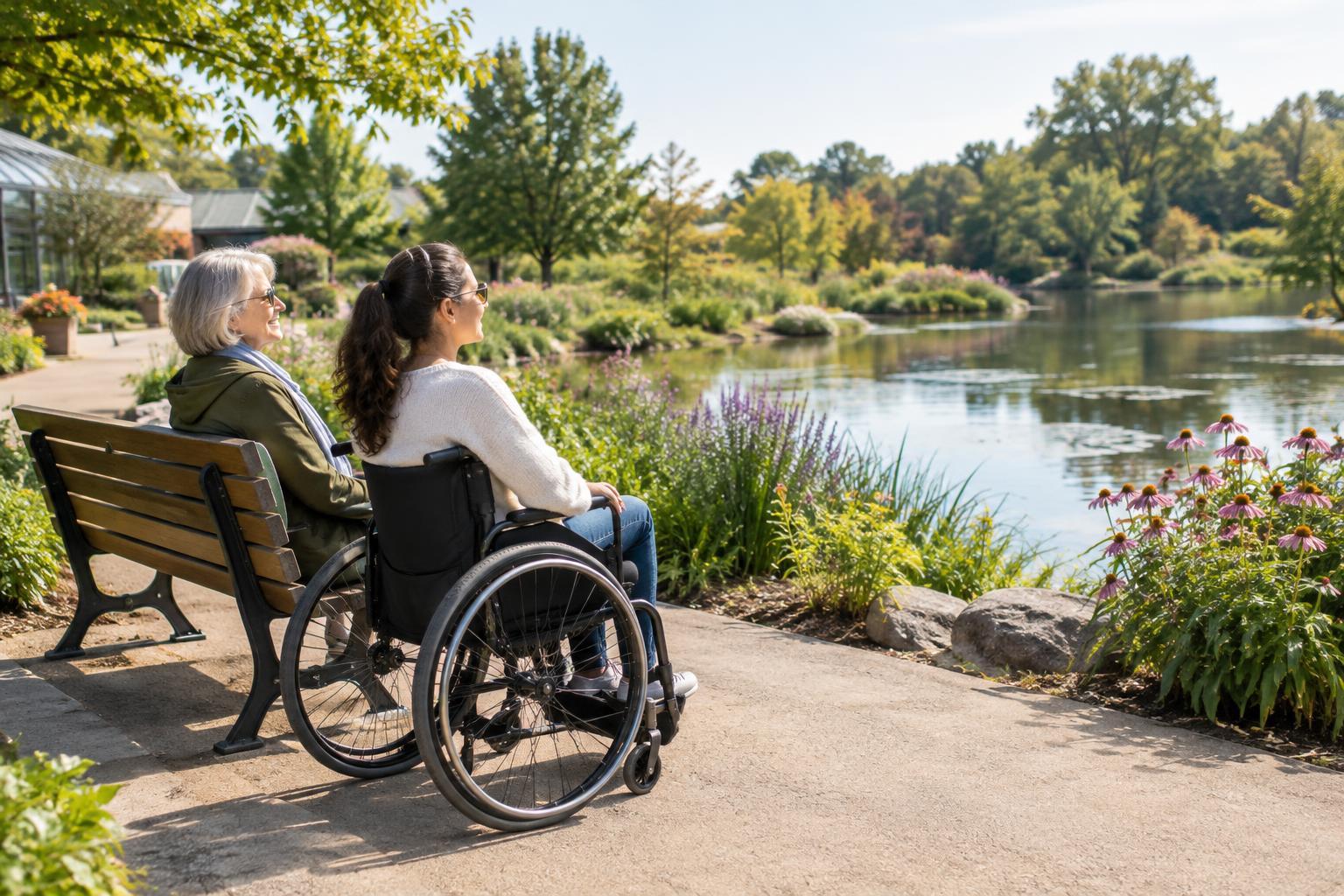
Make a short list of details that matter specifically to you. It might include step-free access, places to sit, nearby restrooms, shade, a quiet area, an accessible parking space or room to use a mobility aid. A place described as “accessible” may still leave important questions unanswered. Venue maps, visitor information and recent visitor photos can help you investigate; if a detail is essential and unclear, contact the venue before committing to the trip.
Choose a small outing with a clear payoff
An outing can be worth taking even if it includes only one stop. You might visit a library exhibition and then sit with a drink, watch boats from a waterfront bench, browse a small market near its entrance or take a short drive to a scenic viewpoint. The goal is to choose a highlight you can enjoy without having to complete a long itinerary first.
For an affordable option, compare the total cost rather than the admission price alone. A free destination that requires expensive transport or a tiring journey may not be the best fit. A modest entry fee closer to home could make for an easier day. Check for places where you can bring water or a snack, and decide in advance whether buying food is part of the treat or an expense you would rather skip.
Build in choices, not obligations
Give your plan a minimum version and an optional extra. For example, the minimum might be a museum’s ground-floor gallery and a rest in the café. If you still feel comfortable, you could see another room; if not, you have already had the outing you came for. This makes leaving early a normal choice rather than a disappointment.
Set a gentle time window instead of packing the day with appointments. If you are going with someone else, share the plan before you leave: where you would like to pause, which parts are optional and how you will decide when to head home. You do not owe anyone a detailed explanation of your needs. A simple “I’d like to keep this to about an hour and see how I feel” can set a useful expectation.
Keep a backup plan and learn from each trip
Weather, crowds, transport delays and unexpected closures can change the feel of an outing. Choose a nearby alternative before you go, such as a quiet café, an indoor display or simply a scenic route home. Check opening hours and any booking requirements shortly before leaving. If the original plan stops being appealing, switching plans still counts as making good use of your weekend.
Afterward, note what worked: perhaps an early start meant a quieter visit, a particular entrance shortened the walk, or a 30-minute stop was just right. Also note what you would change next time. Over a few outings, these observations can become a personal menu of reliable options for different energy levels. The aim is not to push farther each weekend; it is to make getting out easier to enjoy.