Start with the water, not the kayak
Before choosing a boat or a time slot, ask where you will paddle. A sheltered pond or quiet lake may feel more manageable for a first outing than a route with current, boat traffic or exposed stretches. Ask the rental operator to describe the usual conditions in plain language: Is the launch protected? Are there places to rest? Will you paddle back to the same spot, or finish somewhere else?
Then ask what route they recommend for someone who has never kayaked. Find out how long it typically takes at a relaxed pace and whether you can turn around early. A route that fits the booking window without requiring you to hurry leaves more room to get comfortable, take breaks and enjoy the view. If the operator cannot explain the route or its boundaries clearly, consider a different rental.
Find out what help you get before launching
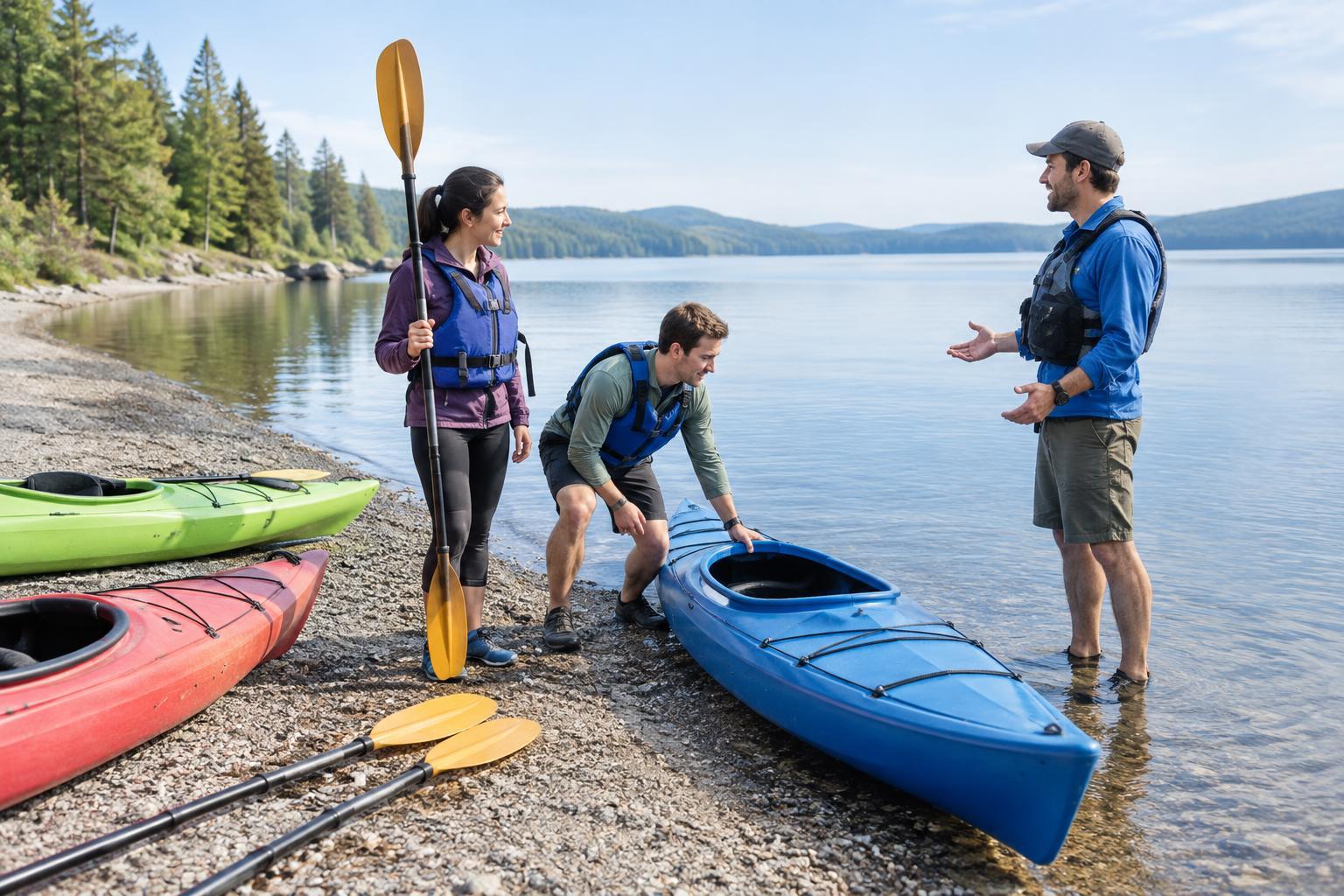
Ask whether staff give beginners a short introduction on shore. Useful basics include getting in and out, holding the paddle, steering, stopping and what to do if you feel unsteady. Also ask whether anyone will help you launch. Even a calm outing can begin awkwardly if you are trying to balance a kayak while figuring out where to put your feet.
Check whether the rental is self-guided or accompanied by a guide. If you would rather learn with someone nearby, ask about beginner lessons or guided trips instead of assuming a standard rental includes instruction on the water. A friend with experience can make the day more comfortable, but you should still understand the operator’s directions and feel able to ask questions yourself.
Check the boat and safety gear
Ask which kayaks are available for beginners and whether staff will help choose one that fits. You might prefer a solo kayak for independence or a tandem if you and a companion want to paddle together. The best choice depends on the available boats, the conditions and how comfortable each person feels. Ask whether you can adjust the seat and footrests before leaving the launch area.
Confirm that a properly fitting personal flotation device and a paddle are included. Ask what else comes with the rental, such as a whistle or a place to keep small belongings dry, rather than assuming accessories are provided. If you plan to bring a phone, ask how the operator recommends protecting it and how to contact staff if you need help. Leave anything you cannot afford to get wet on shore.
Ask how weather changes the plan
Conditions can change the character of a short paddle. Ask the operator how they decide whether a trip can go ahead, and whether wind or other conditions can limit where beginners are allowed to paddle. Find out when you will receive an update if conditions look unsuitable. You should feel free to postpone if the outing no longer seems comfortable to you, even if rentals are still operating.
Read the cancellation and rescheduling terms before paying. Ask what happens if the operator cancels, if you decide not to go or if you need to return early. It is also worth asking what staff expect you to do if conditions change while you are out: where to head, whether to pull ashore and how to reach them. Listen to the on-site briefing before launching.
Make the total cost and timing clear
Ask what the quoted price covers. Does the rental period start when you check in or when you get on the water? Are instruction, gear, parking, storage or a late return included? Check whether there is a deposit and whether you need to bring identification. These details can affect both the cost and how much time you actually have to paddle.
Finally, plan the ordinary parts of the day: where to meet, how early to arrive, where to change and what to wear. Comfortable clothes and footwear that can get wet are usually more practical than an outfit you need to keep dry. Bring water and sun protection suited to the day. With the route, support and logistics settled, your first rental can be about learning a new skill rather than solving surprises at the dock.