Let the route decide what goes in your bag
Before packing, check where the trail starts, how long you expect to be out, whether the path is marked and what the weather may be like. A short, familiar park loop needs less preparation than a remote trail of the same length. Note the time it takes to reach the trailhead, where you can refill water or use a restroom, and when you want to turn back. Tell someone your plan if you are going somewhere you do not know well.
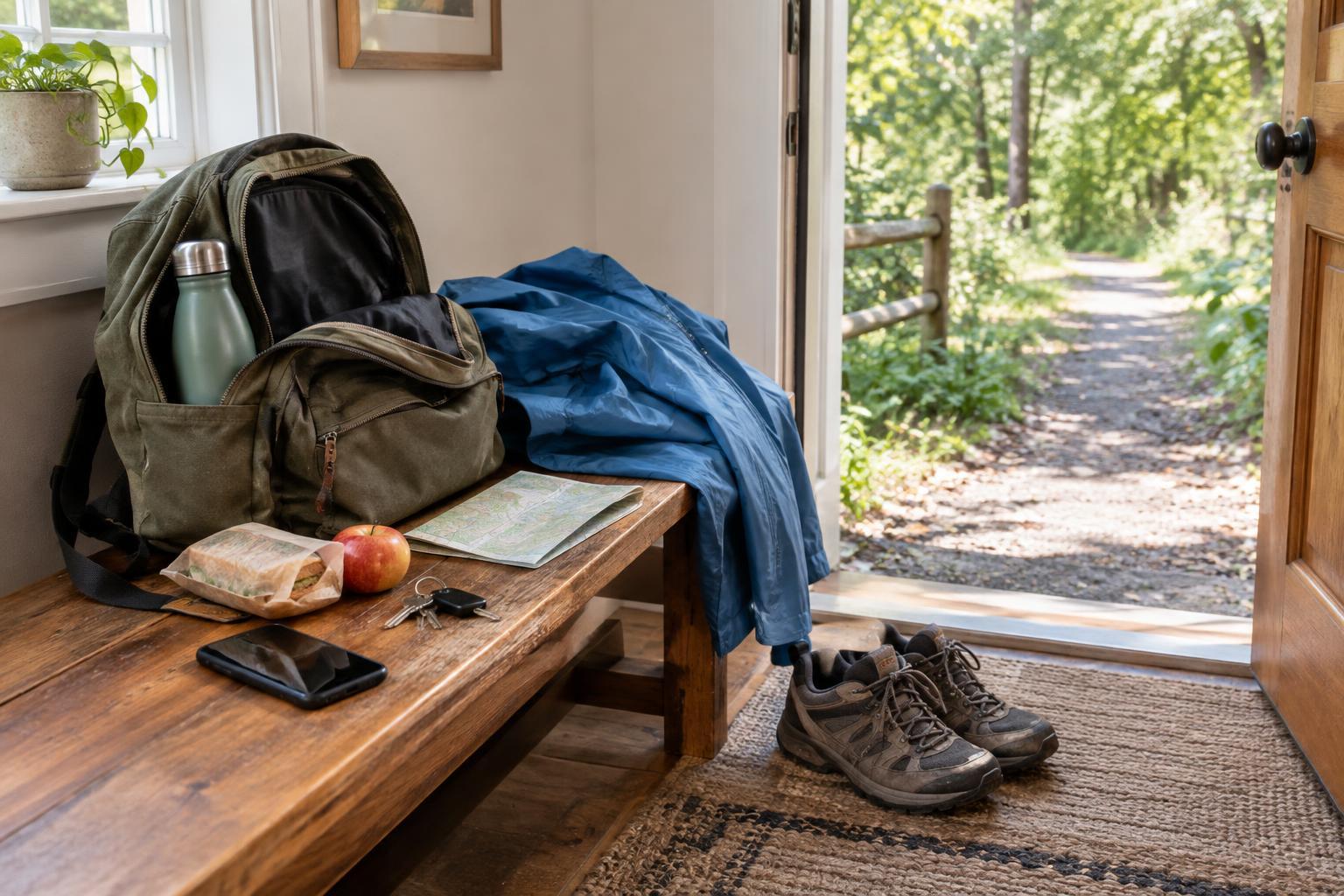
Use a small backpack or an everyday bag that leaves your hands free. If a shoulder bag keeps sliding or feels heavy before you start, choose a different one or remove nonessentials. Pack the things you may need on the trail near the top rather than underneath spare clothes.
Wear comfortable clothes you already trust
For many maintained, easy trails, comfortable sneakers with soles that grip reasonably well are a better choice than brand-new hiking boots. Wear shoes you have already walked in, along with socks that do not bunch or rub. If the path is muddy, rocky or steep, check whether your footwear is suitable before committing to that route. You can choose an easier trail instead of buying shoes for a single outing.
Dress for movement and for a possible change in temperature. A familiar T-shirt with a light layer you can take off often works better than one heavy garment. Bring a rain jacket if showers are possible; an ordinary jacket with a hood may be enough for a mild, brief outing, though it may not keep you dry in sustained rain. A cap and sunglasses can make an exposed path more comfortable. Avoid clothing that restricts your stride or has seams that tend to chafe.
Cover water, food and the small essentials
Fill a reusable bottle before leaving home. How much water you need depends on the weather, the route, your pace and whether you can refill along the way. For a longer or warmer walk, bring more than you expect to drink rather than relying on an uncertain tap. Add an easy snack such as a banana, crackers or a sandwich, especially if travel time and the hike together will keep you out for a while. A reusable container or bag keeps it from getting crushed.
Carry your phone with enough charge to navigate and call for help, but do not depend on reception. Save the route information for offline use or take a simple paper map if the trail is unfamiliar. Put your keys, identification and any personal items you routinely need in a secure pocket. A few adhesive bandages, tissues, hand sanitizer and a small bag for your rubbish take little space. If you expect to finish near dusk, bring a small flashlight rather than assuming your phone battery will last.
Make the trip more comfortable without adding much
Choose extras for the conditions, not because they appear on a long gear list. Sunscreen and a hat are useful on exposed routes; insect repellent may be worth bringing where bugs are bothersome. A spare pair of socks can help if wet feet are likely. If you are carrying everything for several people, divide shared items so one bag does not become needlessly heavy.
At home, lay out what you plan to carry and ask what problem each item solves. You probably do not need a change of clothes, large toiletries or a bulky picnic setup for a short walk, unless the outing includes another activity. Leave fragile or valuable items behind. A lighter bag is easier to carry, and a little empty space gives you somewhere to put a layer you take off.
Do one last check before you leave
Check the forecast and any available trail information again on the day of your hike. If conditions look worse than expected, the path is closed, or you do not have what you need to stay comfortable, choose a shorter route or go another day. Start early enough that you can return in daylight without rushing. On the trail, pay attention to signs and turn back if the route becomes difficult to follow.
Your first few walks are also a packing test. When you get home, notice what you used, what stayed untouched and what you wished you had brought. Keep the useful small items together for next time. The goal is not to own a perfect hiking kit; it is to carry what helps you enjoy the particular walk you are taking.