Start with the rental, not the shelf
Wall shelves can make a small room feel open because they leave the floor clear. Freestanding shelves can hold plenty of everyday items without requiring a row of mounting holes. Neither is automatically the more renter-friendly choice: the answer depends on what your lease allows, what your walls are made of and what you plan to put on the shelves.
Before buying, check the lease or ask the property manager what kinds of holes, anchors and repairs are permitted. A small nail hole for a picture may be treated differently from the holes needed for a loaded shelf. Look at the space, too. A wall with tile, exposed brick, pipes or uncertain wiring may be a poor candidate for drilling, even if a shelf would look good there. If you cannot confirm that a mounting spot is suitable, choose another location or a freestanding option.
When wall shelves earn their space
Wall shelves are useful where floor area is scarce but an accessible stretch of wall is available: above a desk, beside a bed or in a narrow kitchen. A shallow shelf can hold a few books, a small lamp or regularly used supplies without adding another piece of furniture to the walking path. It can also put items within easy reach when a tall bookcase would block a window or crowd a doorway.
Installation is the trade-off. The right fasteners depend on the wall material, shelf design and intended load. Follow the shelf manufacturer’s instructions, including its weight limits and mounting requirements; do not assume that a generic adhesive strip can replace hardware specified for a shelf. Put especially heavy or breakable objects elsewhere. When you move out, you may need to remove the hardware and repair the wall in the manner your rental agreement requires.
When freestanding shelves make more sense
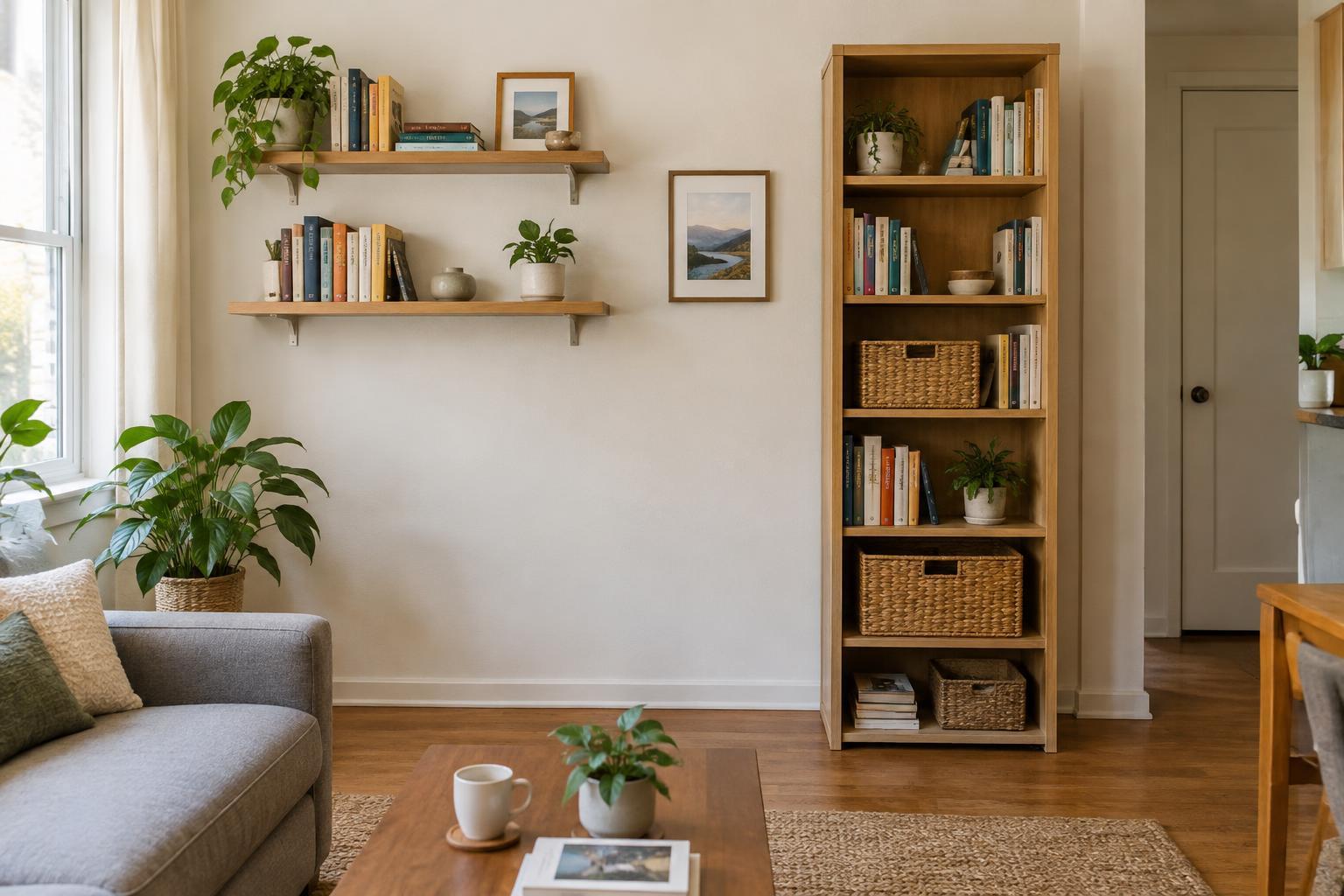
A freestanding unit is often the simpler starting point if you are unsure where you want storage or expect to rearrange the room. You can compare its footprint with the floor space you actually have, assemble it once and take it with you when you move. In a studio, a low bookcase can sit behind a sofa; in a bedroom, a narrow unit can turn an unused corner into storage for folded clothes and baskets.
Freestanding does not mean wall-free in every case. Tall or top-heavy units can tip, particularly if someone pulls on a shelf or climbs it. Follow the manufacturer’s instructions for anti-tip hardware, and check whether your rental permits the required attachment. Keep heavier items low, avoid overloading shelves and leave enough room to walk past without bumping the unit. If you cannot use the recommended safety hardware, consider a lower, more stable unit instead.
Compare the full cost and daily use
For a fair comparison, count more than the shelf’s price. A wall shelf may also need brackets, appropriate fasteners, tools and eventual patching supplies. A freestanding unit may need delivery, assembly and anti-tip hardware. If you already own tools, one option may be inexpensive; if you move often, a shelf that comes apart easily may save effort later. Measure before ordering, including ceiling height, baseboards and the space needed to open nearby doors.
Then picture a normal week. Open shelves make items easy to grab but also put clutter and dust on display. Baskets can help either style look calmer, provided they fit and do not encourage overloading. For things you use daily, place shelves at a comfortable height rather than maximizing every inch of wall. For occasional storage, a low unit with closed bins may be easier to maintain than a high shelf you need a step stool to reach.
A practical choice for a small room
Choose wall shelves when you have permission to install them, a suitable mounting surface and a modest set of items that benefit from being off the floor. Choose freestanding shelves when flexibility matters more, the walls are unsuitable or you need storage you can move to another room. If both work, try one low freestanding unit for heavier belongings and a small wall shelf for lighter, frequently used items.
You do not need to fill every available wall. Start by measuring what needs a home, then select the smallest shelf arrangement that holds it without crowding the room. That approach leaves space to live in—and makes it easier to change your setup when the rental, or your needs, change.