Make the decision before the morning rush
An outfit formula is a combination you can repeat, not a rule about what you must wear. Think of it as a short list of pieces that reliably work together: a bottom, a top, a layer, and shoes. On a busy morning, you can choose the version that suits the weather and your plans instead of starting with an open closet and no direction.
Before trying the formulas below, notice which clothes you already reach for. Set aside anything that pinches, needs repair, or requires a wash you will not have time to do. You do not need a coordinated new wardrobe. Two comfortable bottoms, a few clean tops, one useful layer, and shoes you can walk in are enough to make these combinations work. Keeping those pieces easy to see helps, whether you have a full closet or a single rail.
Formula one: straight-leg bottoms, simple top, structured layer
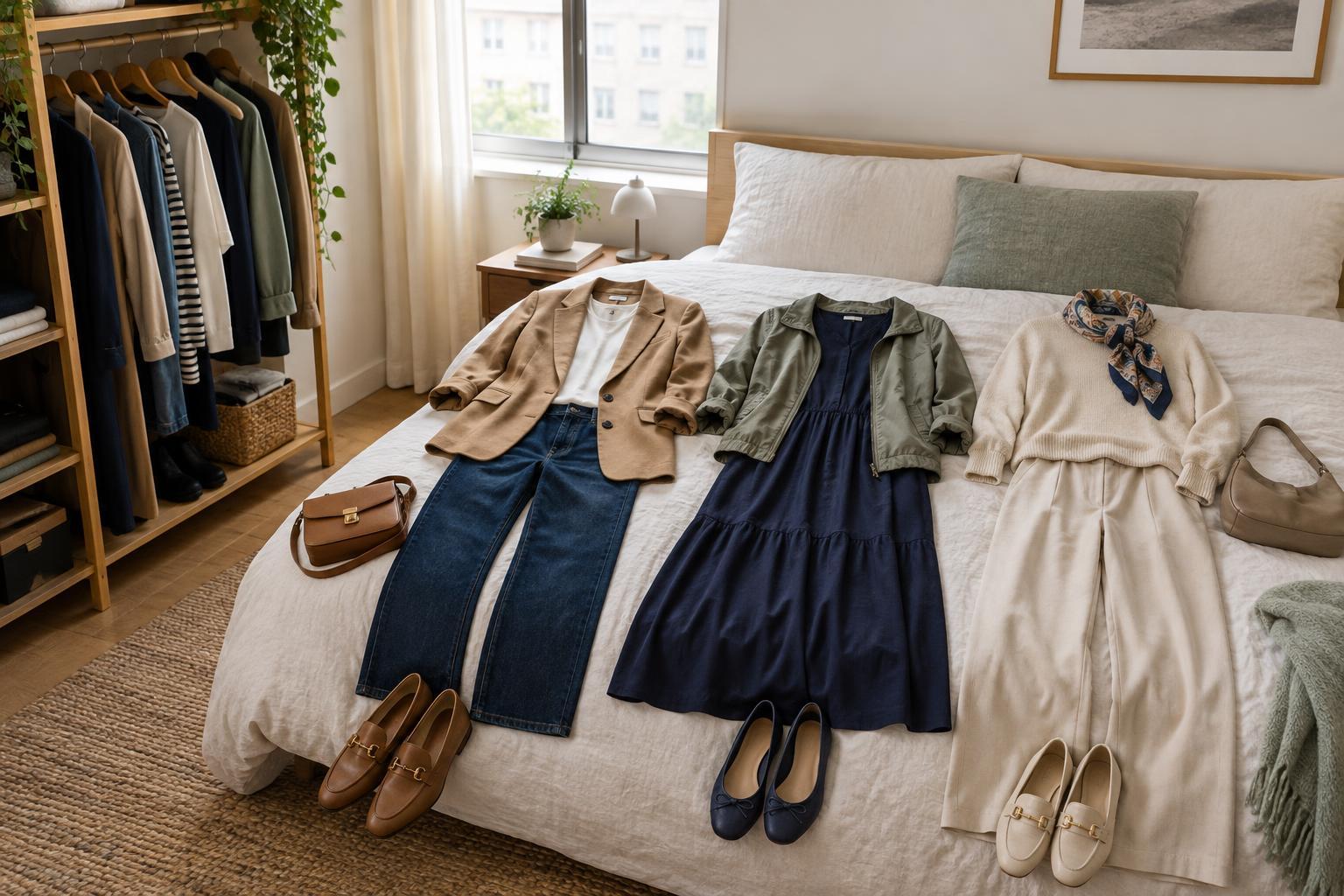
Start with straight-leg jeans, chinos, or trousers that feel comfortable when you sit down. Add a plain T-shirt, fine-knit sweater, or tucked-in button-up. Finish with a jacket, cardigan with some shape, or unstructured blazer. The relaxed base makes the outfit easy to wear; the layer gives it a finished look without requiring careful styling.
This is a useful default when your day includes several settings, such as a commute, desk time, and a quick dinner. White sneakers keep it casual, while loafers or simple boots make it feel a little sharper. If a full tuck feels awkward, try leaving the top untucked and choosing a layer that ends around your hip. For a small wardrobe, keep the bottoms and layer in colors you wear often, then change the top for variety.
Formula two: one-piece outfit, practical layer, ready-to-go shoes
A dress or jumpsuit can remove the top-and-bottom decision altogether. Choose one that lets you move freely and works with shoes you already own. Add a denim jacket, overshirt, or soft cardigan if you want warmth or coverage. For cooler days, tights or a lightweight top underneath may make a familiar piece more useful across seasons.
The key is to test the entire outfit in advance. A jumpsuit may look effortless but feel inconvenient on a day with little time between stops. A dress may work better with flat boots than with the shoes you first imagined. Hang the piece beside its layer, or make a note of the pairing on your phone. Then it becomes a genuine shortcut rather than another choice to troubleshoot at the door.
Formula three: relaxed base, matching colors, one deliberate detail
For errands, a casual workplace, or a travel day, begin with comfortable pants and a top in the same color family. Try navy trousers with a blue tee, black jeans with a charcoal sweater, or olive pants with a cream shirt. The colors do not need to match exactly; keeping them related makes the outfit look intentional with little effort.
Add one detail that makes the clothes feel like yours: a patterned scarf, a belt, a pair of earrings, or a favorite overshirt. Stop at one if time is short. Comfortable sneakers or boots are often the most useful finish, particularly if you will be on your feet. If you prefer leggings, a longer shirt or sweater and a layer you like wearing outside can serve the same purpose. The best version is the one that fits your actual day, not an imagined one.
Build a small morning-ready rotation
Once you find a version of each formula that works, write it down or photograph it. Include the shoes and outerwear; those are often the missing pieces that slow down a morning. Check the weather and your next day’s plans when you put laundry away, and place one complete option where you can reach it.
Repeat outfits without apology. If a top works with both straight-leg trousers and relaxed pants, that is a strength, not a lack of variety. When you do need to buy something, use your saved outfits to spot a real gap rather than shopping for an entirely new look. A good formula gives you fewer decisions, more use from the clothes you own, and a little extra time before you leave.