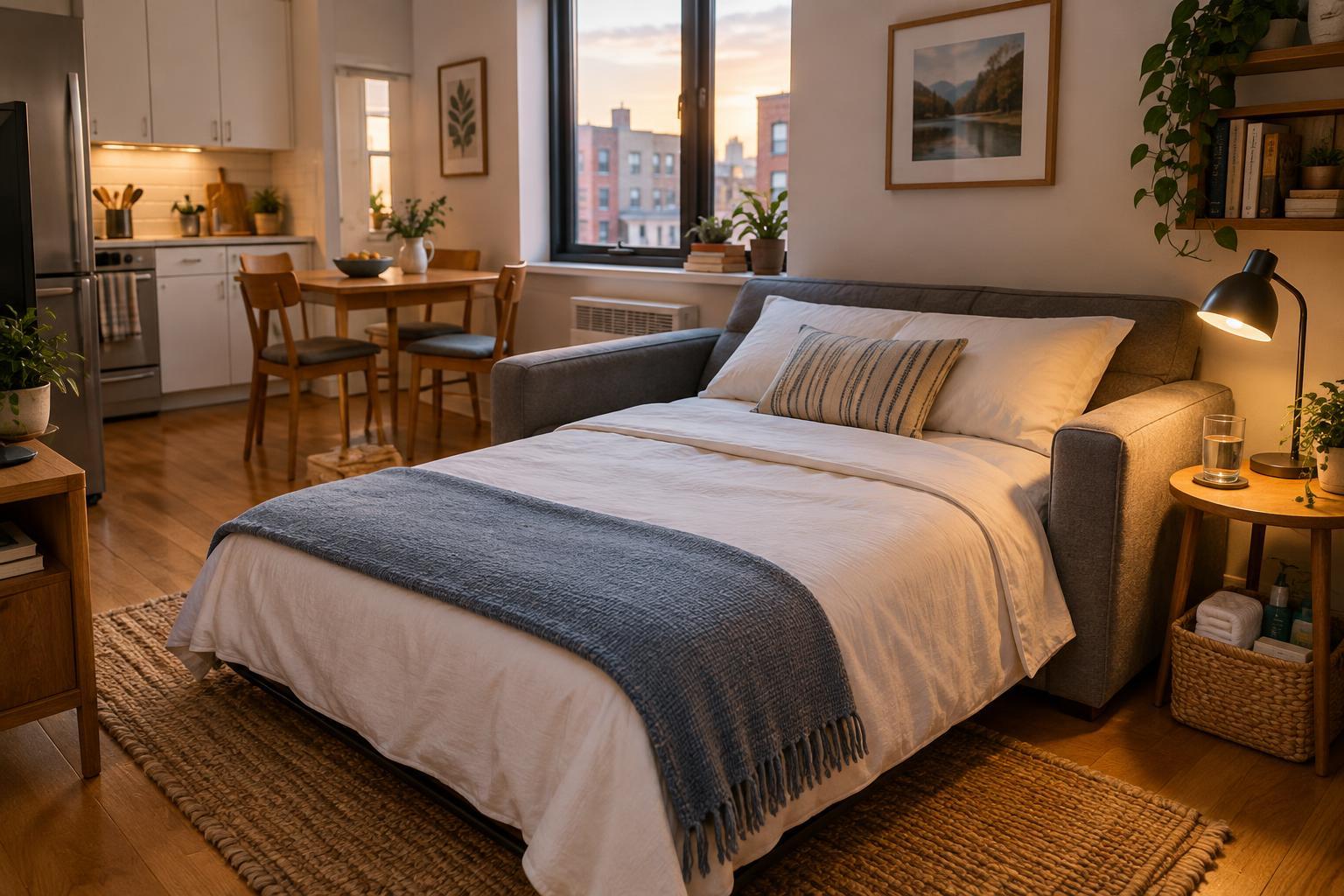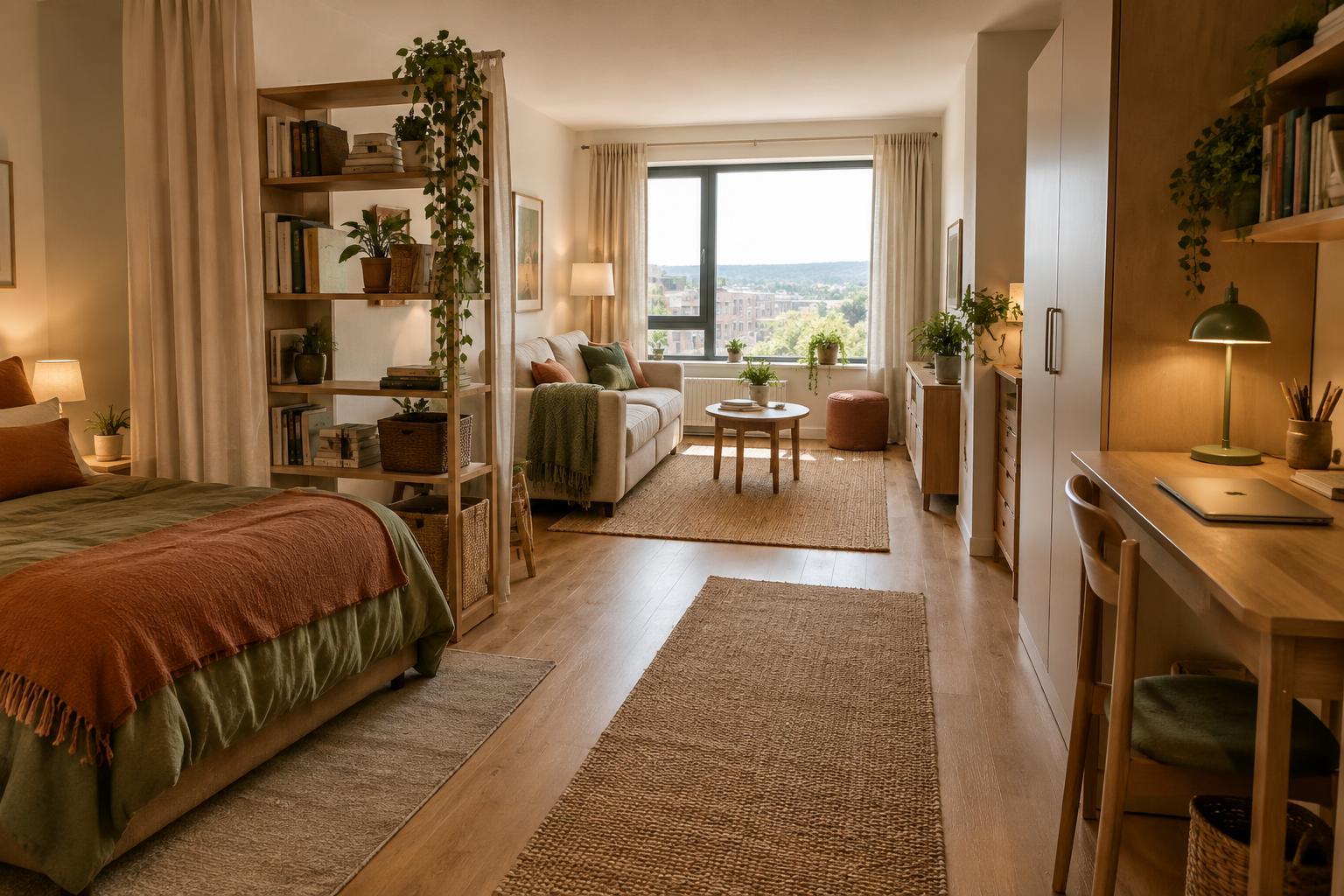
Start with the path through the room
Before moving furniture, sketch the apartment’s fixed features: doors, windows, outlets, radiators and kitchen cabinets. Add the pieces you already own, roughly to scale. Then draw the route you take from the entrance to the kitchen, bathroom and window. A useful layout lets you follow those routes without squeezing around a bed or desk. Keep doors, vents and heaters unobstructed, and leave enough space to pull out a chair and open storage.
Choose the most important use for the brightest part of the room. A desk near a window may make sense if you work at home most days; a reading chair might be a better fit if the desk is rarely used. Place the bed where it feels less exposed to the entrance, if the room allows. These choices give you a starting point before you buy a divider or extra furniture.
Give the sleeping area a quiet edge
The bed is often the largest object in a studio, so its position shapes everything else. Tucking it into a corner can free up a broad central area for living and work. If the only practical spot is along an open wall, try placing a low bookcase or a sofa at the foot of the bed. That creates a visual boundary without making the room feel closed off.
For more privacy, consider a freestanding screen or a curtain on a renter-approved tension rod. Check that a divider will not block a window, door or safe route through the room. An open shelving unit can mark the edge of the sleeping zone, but avoid stacking heavy items high on it; follow the manufacturer’s instructions for securing furniture where appropriate.
Keep sleep-related things close to the bed: a small lamp, charging spot and somewhere to set a glass of water. Put laundry and work supplies elsewhere when possible. Even if the bed remains visible, a consistent place for those items helps the area feel intended for rest.
Make the living zone face something other than the bed
A sofa does not have to sit against a wall. In a wider studio, placing it with its back toward the bed can define a living area while leaving the room open. In a narrower one, an armchair and a small side table may fit more comfortably than a full sofa. Aim seating toward a window, a shelf or a compact media setup so the bed is not the default focal point.
A rug can outline the living area without taking up floor space, especially when at least the front legs of the main seat rest on it. Choose a size that suits the actual furniture arrangement rather than trying to cover the whole room. If you eat and relax in the same spot, a nesting table or lightweight side table is easier to move than a large coffee table.
Test the arrangement with furniture you own before shopping. A taped outline on the floor can help you judge whether a new piece will fit while still leaving a comfortable path.
Build a work zone you can close down
A dedicated desk is helpful, but it need not be large. A narrow table, wall-mounted surface where permitted, or compact desk can give a laptop and notebook a home. Position the screen to reduce glare, and make sure the chair has room to slide back. If work calls are part of your routine, look at what appears behind your seat before settling on a location.
When a separate desk will not fit, use a dining table as a work surface and keep supplies in one portable box or drawer. At the end of the day, put the laptop, cables and papers away together. This short reset makes the same table feel available for dinner or a hobby. A task lamp that can be switched off separately from the room’s other lights also helps signal that work is finished.
Use storage and light to hold the layout together
Assign storage according to where an activity happens. Keep work supplies near the desk, blankets near the seating area and everyday clothing near the bed. Closed bins can hide visual clutter; open shelves work best for items you use or enjoy seeing. Under-bed storage can be useful for less frequently needed belongings, provided you can still reach them without moving half the room.
Finally, light each zone for its purpose instead of relying on one ceiling fixture. A bedside lamp, a focused work light and a softer living-area lamp offer different moods in the same space. You do not need to install anything to try this approach. Move the furniture you have, live with the arrangement for a week, and notice where belongings pile up or paths feel awkward. Those observations are a better guide to your next small change than a layout that only looks good on paper.