Start with the meals you make most often
The best beginner pan is not necessarily the one a confident cook would choose. It is the one that helps you make dinner without dreading the cooking or the cleanup. Before shopping, write down three meals you expect to make regularly. If your list includes fried eggs, pancakes and delicate fish, nonstick has a clear advantage. If it includes browned chicken, sautéed mushrooms and pan sauces, stainless steel may serve you better.
Either type can handle a wide range of everyday meals, but neither makes technique irrelevant. Nonstick reduces the chance that tender food will cling to the surface. Stainless steel can produce deeper browning, though it asks you to pay more attention to heat and timing. If you have a small kitchen or a limited budget, let your usual meals—not the promise of a perfect collection—guide the purchase.
Where nonstick makes cooking easier
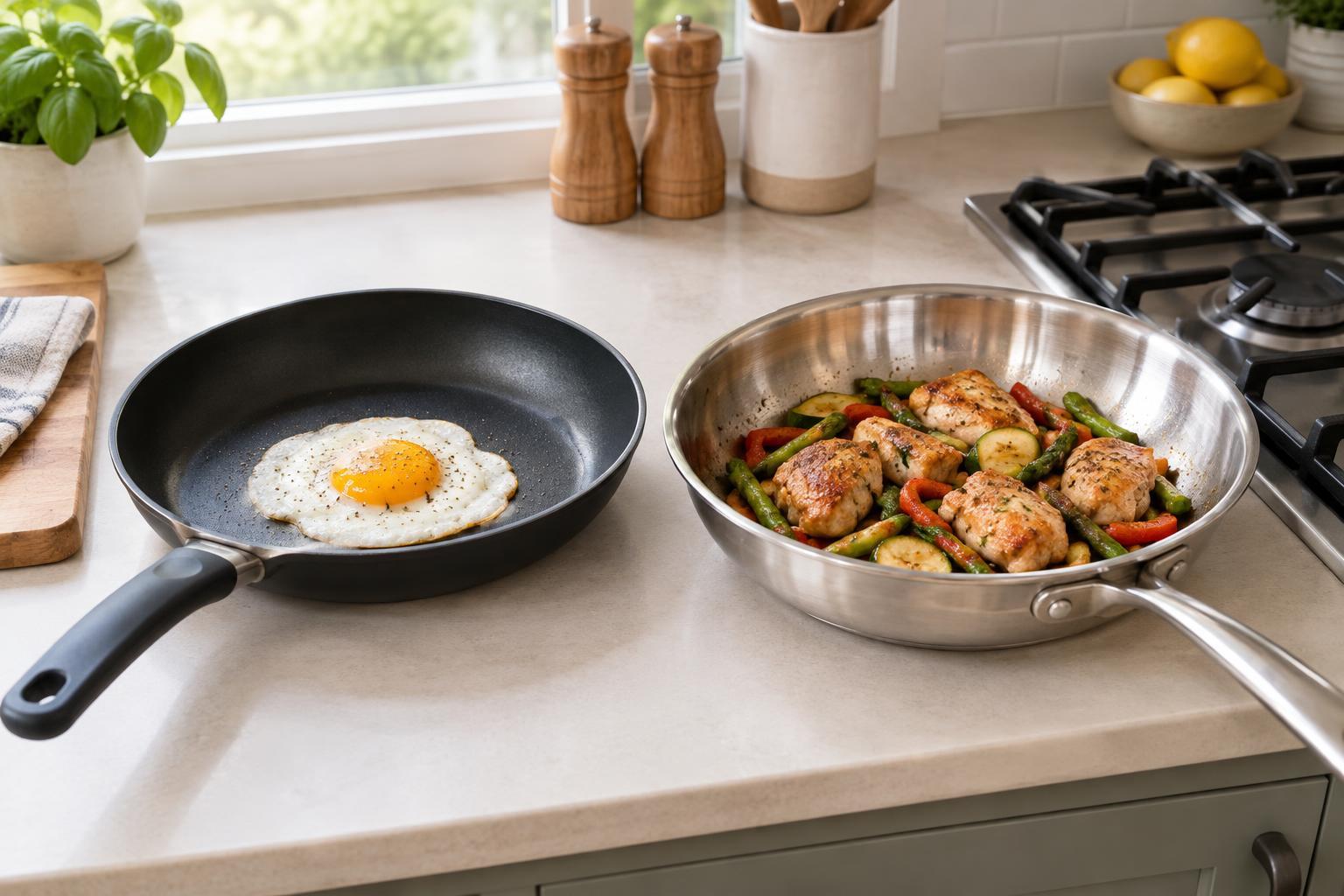
A nonstick frying pan is a friendly place to begin with eggs, quesadillas, pancakes and reheated leftovers. Food releases readily, so you can practice flipping and adjusting the heat without scraping up a stuck breakfast. Cleanup is often quick, which matters when the sink is close to the stove and counter space is scarce.
Its trade-off is care. Nonstick surfaces can wear or become scratched, so use utensils and cleaning methods recommended by the manufacturer. Avoid leaving an empty pan heating on the burner, and check its instructions before using high heat or putting it in the oven. If the surface becomes damaged or food starts sticking despite normal use, it may be time to replace the pan.
Nonstick is less useful when your goal is a strong sear or the browned bits that form the base of a pan sauce. You can cook meat in it, but a gentler surface does not offer the same experience as stainless steel for those dishes. For many beginners, that is an acceptable compromise if breakfast and easy cleanup are higher priorities.
What stainless steel does well—and why food sticks
Stainless steel is versatile and does not rely on a nonstick coating. It is especially useful for browning chicken, cooking vegetables and making a simple sauce in the same pan. After the food comes out, you can add a little liquid and gently loosen the browned bits from the bottom. Those bits bring flavor to a quick sauce for dinner.
The learning curve is real but manageable. Give the pan time to warm over moderate heat, add cooking fat, then add food. If you try to move a piece of chicken the moment it touches the pan, it may resist. Letting it cook undisturbed for a while often makes it easier to lift. Exact heat and timing vary by stove, pan and ingredient, so start lower than you think you need and adjust as you go.
Stainless steel can take more effort to wash, particularly after a sticky first attempt. A short soak and a nonabrasive scrub usually make cleanup less frustrating. Check the pan’s care instructions before using it in the oven or with particular cleaning tools; handles and construction differ.
Choose one pan that fits your space and stove
If you are buying just one pan and mostly cook eggs, quick lunches and simple dinners, start with nonstick. It can make learning to cook feel less punishing. If you already enjoy cooking and want to practice browning and sauces, start with stainless steel. Neither choice closes off the other: you can add a second pan later, once you know what you miss.
For a one- or two-person household, a medium frying pan is often more useful than a tiny egg pan or an oversized skillet. Look for enough flat cooking surface to hold your usual portion without crowding it, a handle that feels secure, and a weight you are comfortable lifting. Confirm that the pan works with your stove, especially if you have induction. A lid is helpful for covered cooking, but you do not need to buy a whole matching set to get one useful pan.
When comparing prices, look beyond the sticker. A sturdy stainless steel pan may suit someone who wants one versatile piece to keep using as their skills grow. A modestly priced nonstick pan can be a sensible first purchase if it solves the meals you cook most. Spending extra on features you will not use is rarely the best way to build a practical kitchen.
A simple test for your first week
Whichever pan you choose, cook three familiar meals before judging it. Try one quick breakfast, one vegetable dish and one dinner with a protein or other filling ingredient. Notice what sticks, how quickly the pan heats, whether you can lift it comfortably and how long cleanup takes. These observations will tell you more than a long list of product features.
If you eventually own both, give each a clear job: nonstick for delicate foods and stainless steel for browning and sauces. If you own only one, learn its strengths and work within them. The right beginner pan is the one you reach for on an ordinary weeknight.