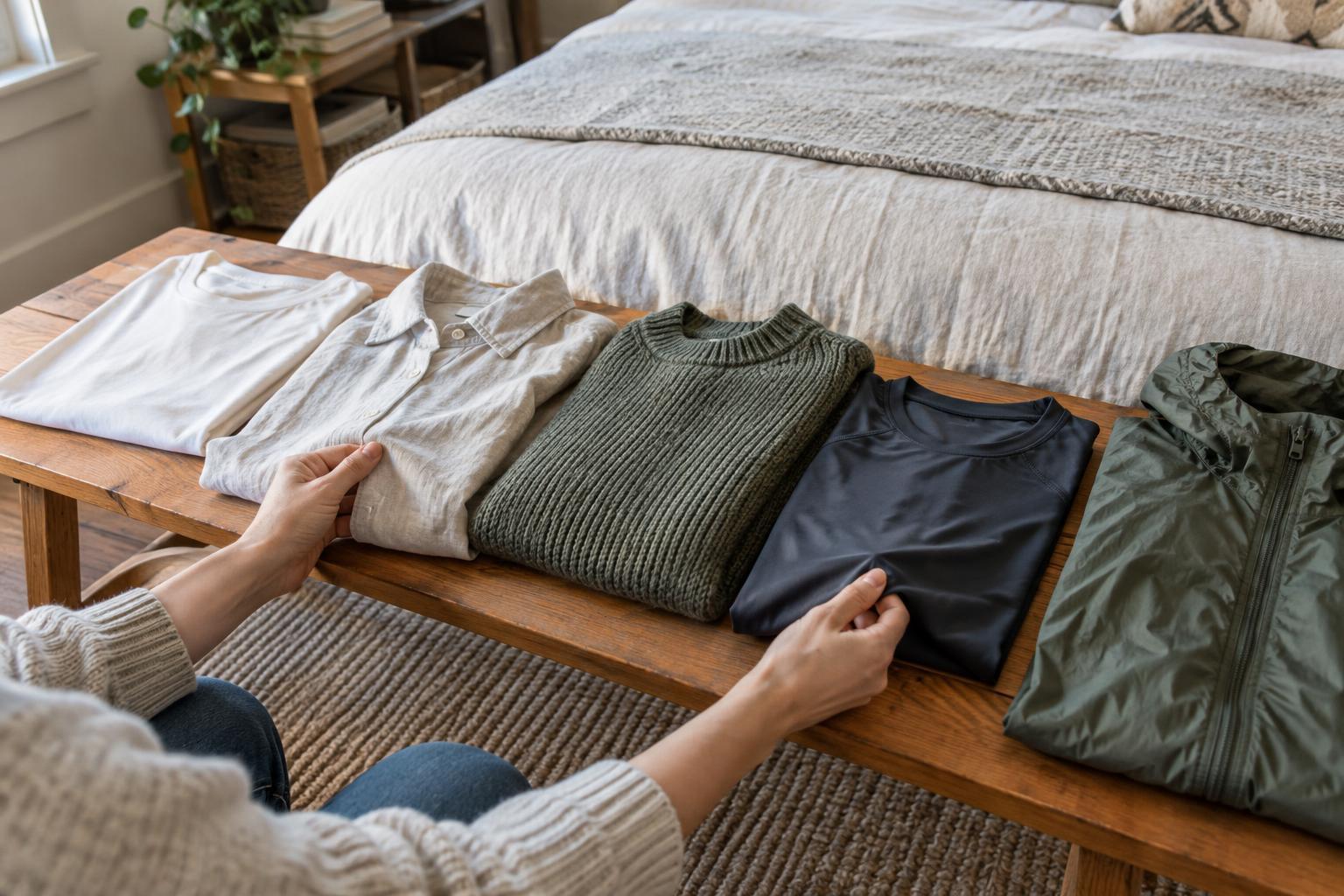
Start with the job the garment needs to do
A fabric label can tell you what a garment is made from, but it cannot tell you whether you will enjoy wearing it. Start with the setting: a warm commute, a cool office, a long walk or a day at home. Then think about what matters most for that garment. Do you want it to feel airy, dry quickly, resist creases or survive frequent washing? Those questions are more useful than a rule to always buy natural or always avoid synthetic fibers.
Construction matters alongside fiber. A loosely woven cotton shirt may feel breezier than a thick cotton sweatshirt. A lightweight polyester blouse may feel different from a dense polyester jacket. When possible, feel the cloth, hold it up to the light to judge its weight, and check whether it stretches and returns to shape. If you are shopping online, look closely at the fabric composition, garment photos and care instructions before deciding.
Where natural fibers shine
Cotton is an approachable choice for T-shirts, shirts and casual trousers. It often feels soft against the skin and is easy to find at different prices. The trade-offs depend on the garment: cotton can wrinkle, shrink if care instructions are ignored, and stay damp longer than some synthetics. For a frequently washed basic, a sturdy knit or weave and well-finished seams may be worth more than an especially soft first impression.
Linen is useful when you want an airy feel in warm weather and do not mind visible creases. Those wrinkles are part of its relaxed look, so it works particularly well for loose shirts, dresses and easy trousers. Wool can be a comfortable option for cool days, especially in sweaters and outer layers, though the feel varies widely between garments. Check whether a wool item requires hand washing or special care before making it an everyday staple. Silk can feel lovely, but its price and care needs may make it a less convenient choice for clothes you wear hard and wash often.
Where synthetics earn their place
Polyester and nylon are common in activewear, outerwear and everyday clothes because they can be made into light, strong fabrics that dry relatively quickly. That makes them useful for a walking outfit that might meet a rain shower or a shirt you need to wash and wear again soon. Their performance is not identical across garments, though: a breathable sports knit and a tightly woven blouse can feel very different, even if both labels say polyester.
Synthetics have drawbacks to weigh against that convenience. Some garments can hold onto odors or feel less comfortable in heat, depending on the fabric and fit. Acrylic is often used as a lower-cost alternative in sweaters, but some acrylic knits pill readily. Elastane, also called spandex, adds stretch to jeans, trousers and fitted tops; a small amount can improve comfort, although stretchy garments may need gentler washing and drying to keep their shape.
Understand blends and in-between options
A blend is not necessarily a compromise. Cotton with a little elastane can make a pair of trousers easier to move in. Wool blended with a synthetic fiber may be used to change a sweater’s texture, strength or care requirements. The percentages on the label provide a starting point, not a guarantee of how the item will wear. Try the garment on, move around, and consider whether its feel suits the way you will actually use it.
You may also see viscose, rayon, modal or lyocell on labels. These are made from processed plant-derived cellulose, so they do not fit neatly into a simple natural-versus-synthetic choice. They can offer a soft drape that works well for shirts and dresses, but care needs vary. Some pieces are prone to shrinking or changing shape if washed or dried incorrectly. Read the instructions for the specific garment rather than assuming that every cellulose-based fabric behaves like cotton.
Make a choice you can live with
For everyday purchases, use a short checklist: Does the fabric feel comfortable for the season? Can you care for it with the time and equipment you have? Is it substantial enough for its intended use? Will it work with clothes you already own? A modestly priced shirt you wear weekly and can wash easily may be a better buy than a special fabric that spends most of its time waiting for careful laundering.
If you are undecided, choose by use rather than by category. Try cotton or linen for relaxed warm-weather outfits, wool for a cool-weather layer, and quick-drying synthetics for exercise or unpredictable weather. Blends can be handy when you want softness with stretch or easier upkeep. Whatever the label says, inspect the seams and fabric, follow the care directions, and favor the garment you will be comfortable wearing again and again.