Start with the care label and a quick sort
The care label is the best starting point, especially for a new garment. Check the suggested water temperature, whether machine washing is allowed, and how the item should be dried. If a label calls for hand washing or says not to tumble dry, a gentle machine cycle or a low dryer setting is not a guaranteed substitute. When you are unsure about an item you want to keep, choose the gentler option or wash it separately first.
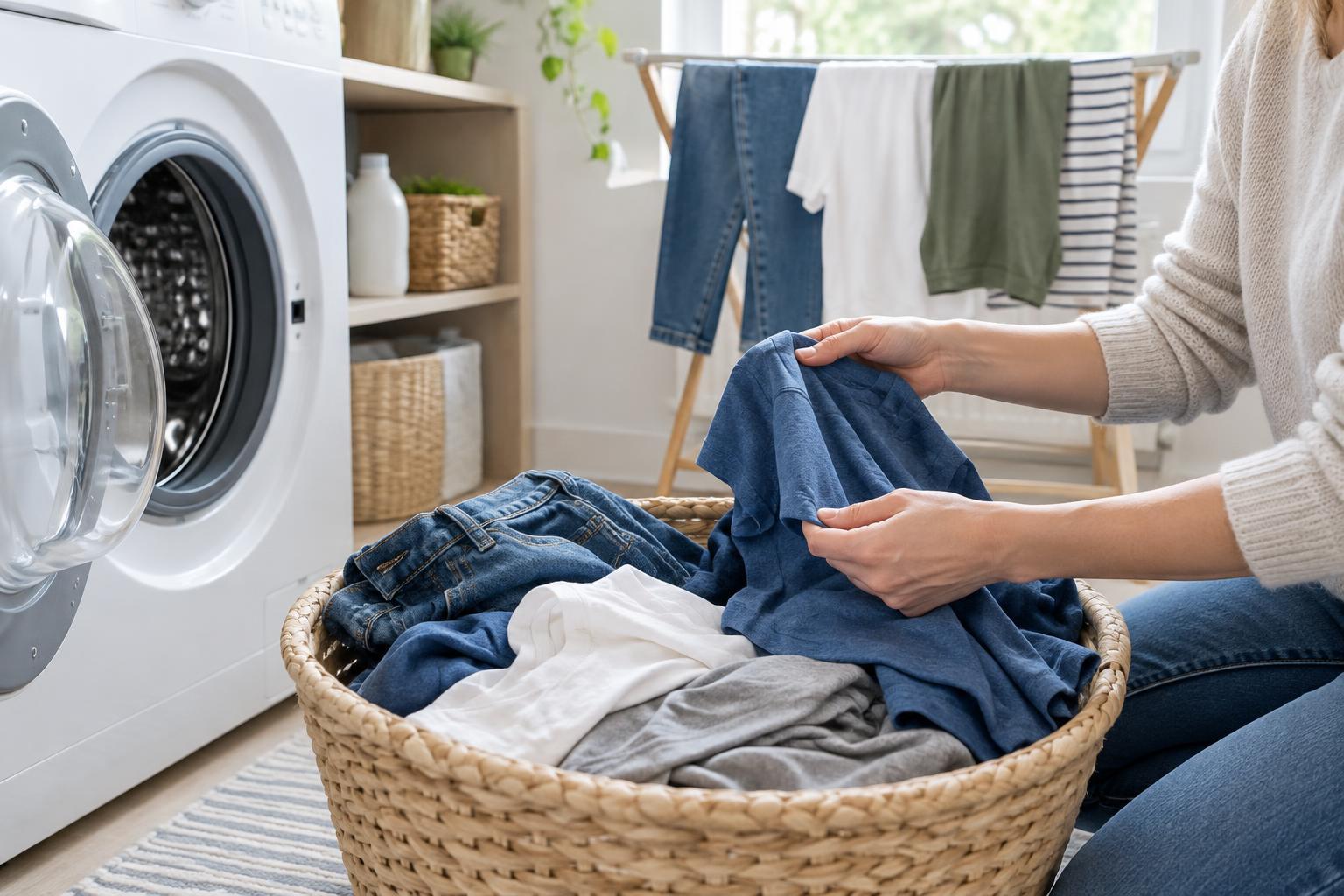
Sort by more than color. A simple system is lights, darks and items that need gentle handling. Keep rough fabrics, heavy jeans and clothes with exposed zippers away from soft knits when possible; rubbing can leave surfaces looking worn. Wash a strongly colored new item on its own the first time if you are concerned it may release dye. Turn dark clothes, printed T-shirts and jeans inside out to reduce friction on the visible side.
Choose a cooler, gentler wash when appropriate
Heat and vigorous washing can be hard on color and fit, so use the coolest water and gentlest cycle that will get the load clean while following the care labels. Cool water is a useful default for lightly worn everyday clothes. Items with heavy soil may need a different approach; choose settings based on the fabric and the mess rather than using the same cycle for everything.
Give clothes room to move. An overfilled drum can make rinsing less effective and press garments against one another. A load does not have to be tiny, but you should be able to place items in without packing them down. Fasten hooks, close zippers and empty pockets before washing. A mesh laundry bag can help protect delicate pieces from snagging, though it will not make a machine wash suitable for every fabric.
Use detergent sparingly and treat spots first
Measure detergent for the load size, water conditions and product directions instead of pouring by eye. More detergent does not necessarily mean cleaner clothes; residue can leave fabric feeling stiff or dull. If you use a concentrated product, check its measuring marks carefully. For most loads, you do not need a collection of specialty additives to protect your clothes.
Treat a stain before it goes into the dryer. Blot or gently lift off what you can, then use a stain treatment suitable for the fabric, following its directions. Test products on an inconspicuous area if colorfastness is uncertain. Scrubbing aggressively can damage fibers or spread the mark. After washing, check whether the stain remains before drying: dryer heat may make some stains harder to remove.
Dry with the fit in mind
Drying is where an otherwise careful wash can go wrong. High heat can cause some fibers to shrink or affect a garment’s shape, particularly if the care label advises against tumble drying. When the label allows it, a lower heat setting is a reasonable place to start. Remove clothes promptly once dry rather than leaving them in for extra cycles. If an item is still slightly damp, finish it on a rack when practical.
For garments you air-dry, support their weight. Lay a sweater flat on a clean towel or drying rack so it does not stretch on a hanger. Hang lighter shirts where air can circulate, and smooth seams and hems while the fabric is damp. Keep brightly colored items out of prolonged direct sun if fading is a concern. Air-drying takes more time, but it can be a useful choice for pieces whose fit matters to you.
Build a routine you can keep
You do not need to handle every sock like a delicate garment. Reserve extra care for the clothes most likely to show wear: dark favorites, printed tops, soft knits and items with a fit you like. A practical routine might be to turn those pieces inside out, wash them with similar fabrics in cool water, and check their labels before drying. Everything else can follow its own care instructions without turning laundry day into a complicated project.
Finally, wash clothes when they need washing, not simply because they were worn once. A clean layer that has no odor or visible soil may be ready to wear again, while underwear and heavily used items should be washed after wear. Fewer unnecessary wash-and-dry cycles mean less friction and heat exposure. Paired with sensible sorting and drying, that small habit can help your everyday wardrobe stay comfortable and presentable longer.