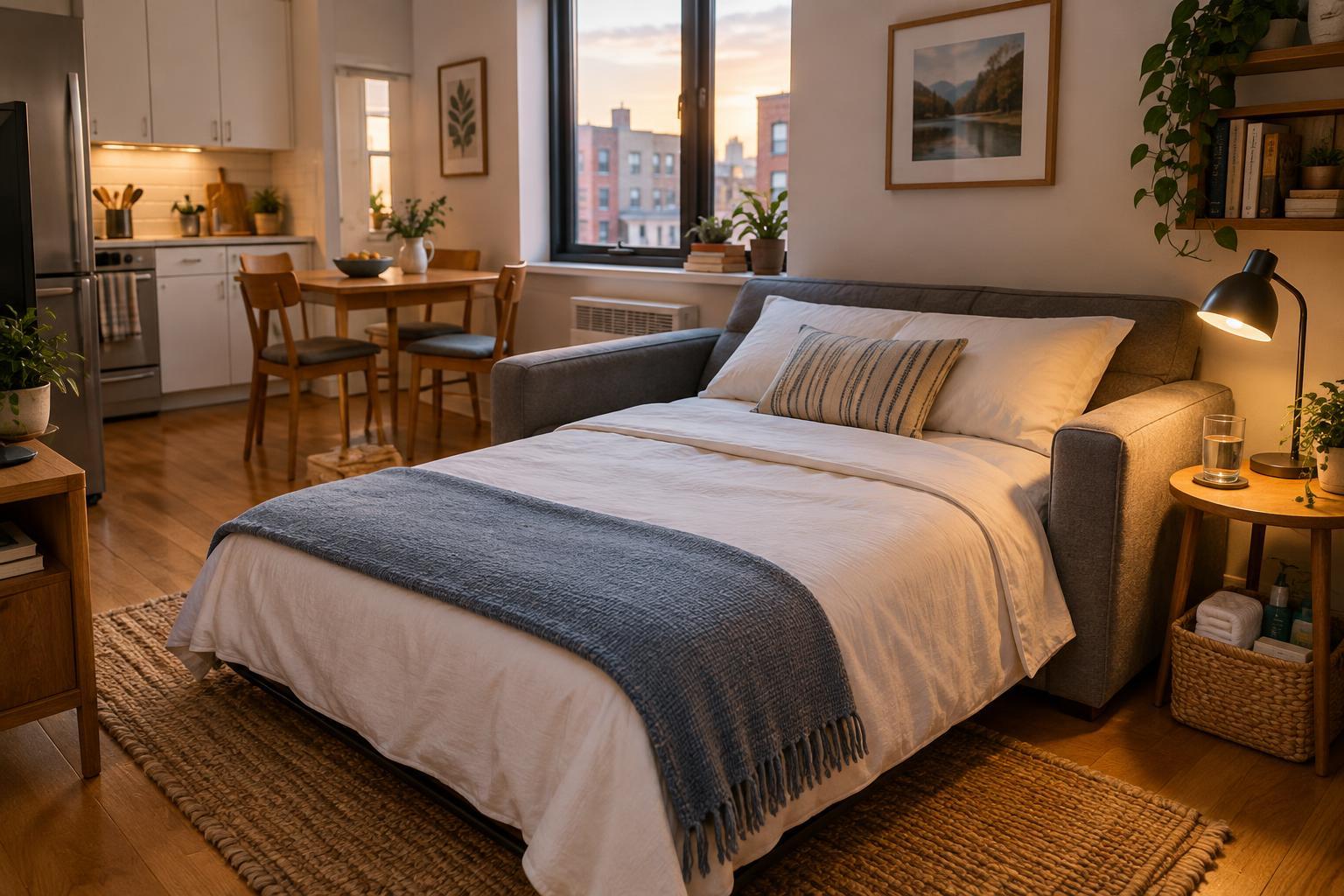
Start with a storage problem, not an empty wall
Vertical storage works best when it gives things you already use a convenient home. Before buying shelves, notice where items pile up: keys beside the door, books beside a chair, or cooking tools across the counter. Choose one problem area first. A narrow shelf near the entry may do more for the room than a full wall of shelving that you then feel obliged to fill.
Measure the available width and depth as well as the height. In a tight walkway, a shallow shelf may be more useful than a deep cabinet because it leaves room to move. Mark the proposed outline with removable tape or hold a cardboard template against the wall. Walk past it, open nearby doors, and sit in the room before deciding. This simple test can reveal whether the storage will help or become an obstacle.
Keep some wall space quiet
A room can feel crowded even when its floor is clear. Rows of objects at eye level draw attention, while shelves that cover every wall give the eye few places to rest. Concentrate storage in one or two useful zones instead of spreading small units around the room. If one wall holds books and baskets, let an adjacent wall remain relatively open or display just one piece of art.
You do not have to use the full height of a wall. A shelf above a desk can hold supplies without continuing to the ceiling; a taller unit might work better beside a doorway where it does not dominate the main view. Leave a little space between the top of furniture and the first shelf, and avoid blocking windows or light sources. Empty space is not wasted space: it helps the storage you do have look intentional.
Match what you display to how often you use it
Put everyday items at a comfortable reach, and reserve higher spots for lighter things you use less often, such as spare linens or seasonal decorations. Avoid placing heavy or breakable objects where you would need to stretch or climb to retrieve them. When installing wall-mounted storage, follow the product's weight and mounting guidance and use fixings suited to the wall. Renters can check their lease before making holes and consider a stable freestanding unit where mounting is not an option.
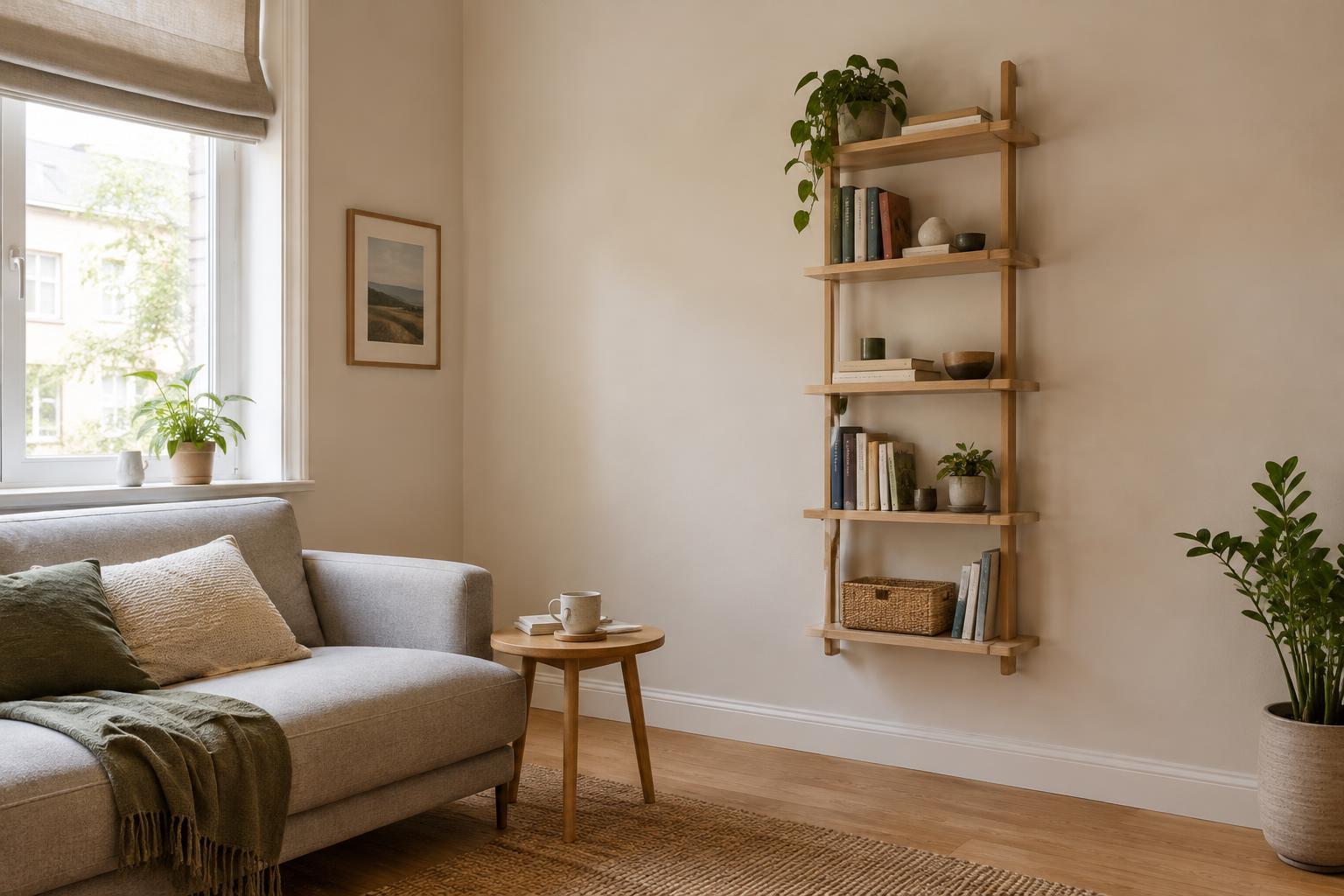
Open shelves are easiest to live with when their contents have a pattern. Group books together, keep a small tray for loose essentials, and give plants enough room to grow without brushing against everything nearby. Use closed boxes or baskets for visually busy items such as cables, spare toiletries, or craft materials. Labels on containers kept up high save you from pulling down several boxes to find one item.
Choose pieces that feel light in the room
The shape and finish of storage affect how much space it appears to take up. A shallow shelf painted close to the wall color can blend into the background. An open-sided bookcase may let light pass through, while a cabinet with solid doors can hide clutter. Neither is always better: the right choice depends on whether your belongings look calmer displayed or concealed.
Scale matters more than matching every piece perfectly. A single appropriately sized unit can look tidier than three small racks squeezed into the same corner. In a kitchen, a short rail for the utensils you reach for daily may be enough; in a bedroom, a narrow bookcase beside the bed might replace both a bulky nightstand and a separate stack of books. Whenever possible, try rearranging what you own before adding more storage.
Leave room for the system to work
A shelf packed edge to edge has no space for a new library book or the bag you need to put away tonight. Keep a small amount of capacity free in each storage zone and make sure items can be removed without shifting everything around them. If containers are stacked so high that you avoid using them, move some contents lower or let a few things go.
After a week or two, notice what still lands on the floor, counter, or chair. That is useful feedback, not a failure. Move a hook lower, swap a decorative basket for one that is easier to reach, or clear a shelf for the items you actually use. Good vertical storage makes daily routines simpler while allowing the room to feel like a place to live, not a place to stockpile.