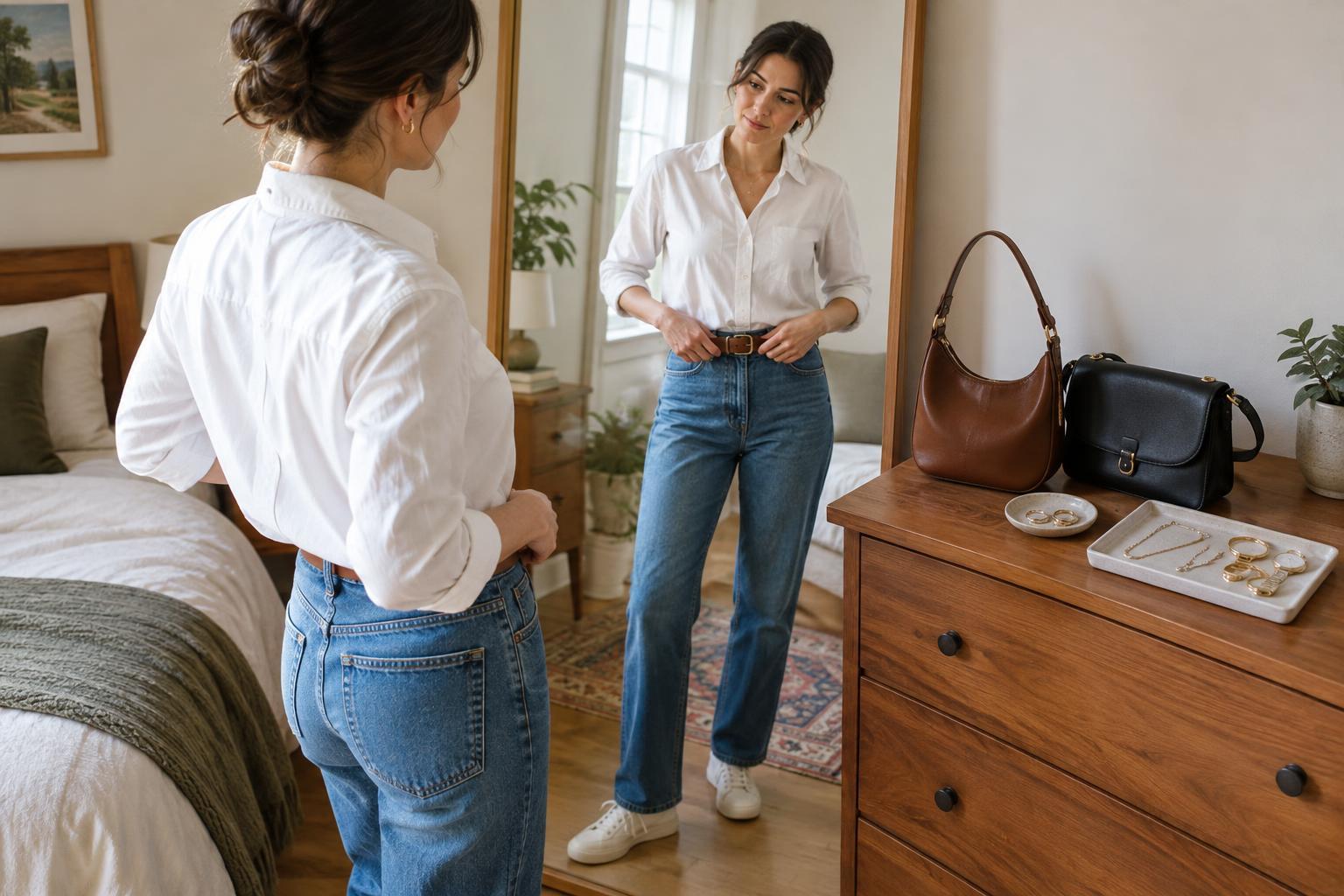
Start with one outfit you already wear
A white shirt and jeans can look relaxed, polished or playful depending on what you add. Before reaching for accessories, decide what you want the outfit to do. Are you dressing for errands, a casual dinner or a day when you need to carry a laptop? That answer gives each accessory a job, rather than leaving you to choose from everything you own.
Lay the base outfit on the bed or put it on, then try changing just one item at a time. A belt can alter the silhouette, a bag can set the level of formality, and jewelry can draw attention toward your face or hands. Taking a quick mirror photo of each version can help you spot which changes make a difference. You may find that two or three familiar accessories give you enough variety without adding anything new.
Use a belt to change the shape
A belt is more than a way to hold up trousers. A slim belt threaded through jeans can give a loose shirt a defined finish, especially if you tuck in only the front. A wider belt over a roomy dress or long cardigan can create a waist, though it should feel comfortable when you sit and move. If a belt makes a garment bunch awkwardly, try wearing it at a different height or skip it; not every outfit benefits from being cinched.
Consider contrast as well as width. A belt close to the color of your trousers tends to blend in, while one that contrasts with your clothes becomes a visible detail. For example, a dark belt with dark jeans keeps the line simple; a tan belt with the same jeans draws the eye to the waist. If you own only one belt, a reversible style or a plain one with an understated buckle may work across more outfits than a highly decorative option.
Let the bag set the mood and meet the need
Bags are noticeable because they sit alongside so much of an outfit. A soft canvas tote can make a button-down shirt and tailored trousers feel easygoing. Swap it for a compact crossbody bag, and the same clothes may feel more ready for dinner. Shape matters too: a structured bag adds a crisp edge to loose layers, while a slouchy bag can relax a sharp jacket.
Choose function first so the change lasts beyond the mirror. Think about what you need to carry, whether you want your hands free and how the strap sits over your coat. For a small wardrobe, it can be useful to have one everyday bag that fits your essentials and one smaller or differently shaped option. They do not have to be new or expensive. A clean bag with a working closure and a comfortable strap will be easier to wear repeatedly than one chosen only for its color.
Use jewelry to direct attention
Jewelry works well for small shifts because it takes little storage space. Simple studs and a fine chain keep the focus on a patterned top. Larger earrings can bring attention to your face when you wear a plain sweater. A watch, bracelet or ring can add detail to an outfit with short or rolled sleeves. Try the piece with the neckline and sleeves you plan to wear; an attractive necklace may disappear under a collar, while earrings remain visible.
You do not need to match every metal or repeat every color. A useful starting point is to choose one piece as the focus and let the others stay quieter. If your earrings are bold, you might leave the necklace off. If you want to mix metals, repeating one of them in two places can make the combination feel deliberate. Comfort matters here, too: lightweight earrings or a shorter necklace may be better choices for a long day.
Build a few repeatable combinations
To practice, use one base outfit and make three versions. For a relaxed weekend, wear jeans, a T-shirt and an open shirt with a canvas tote and simple earrings. For a tidier look, tuck the T-shirt in, add a belt and switch to a structured bag. For an evening out, keep the belt, carry a smaller bag and put on more noticeable earrings. The clothes stay largely the same; the emphasis changes.
Once you find combinations you like, keep the accessories where you can see and reach them. A small tray for daily jewelry, a hook for belts and a clear spot for the bag you use most can make getting dressed simpler. When considering a purchase, ask whether it works with at least a few outfits you already wear. The most useful accessory is not necessarily the most striking one; it is the one that helps your clothes feel right for your day.