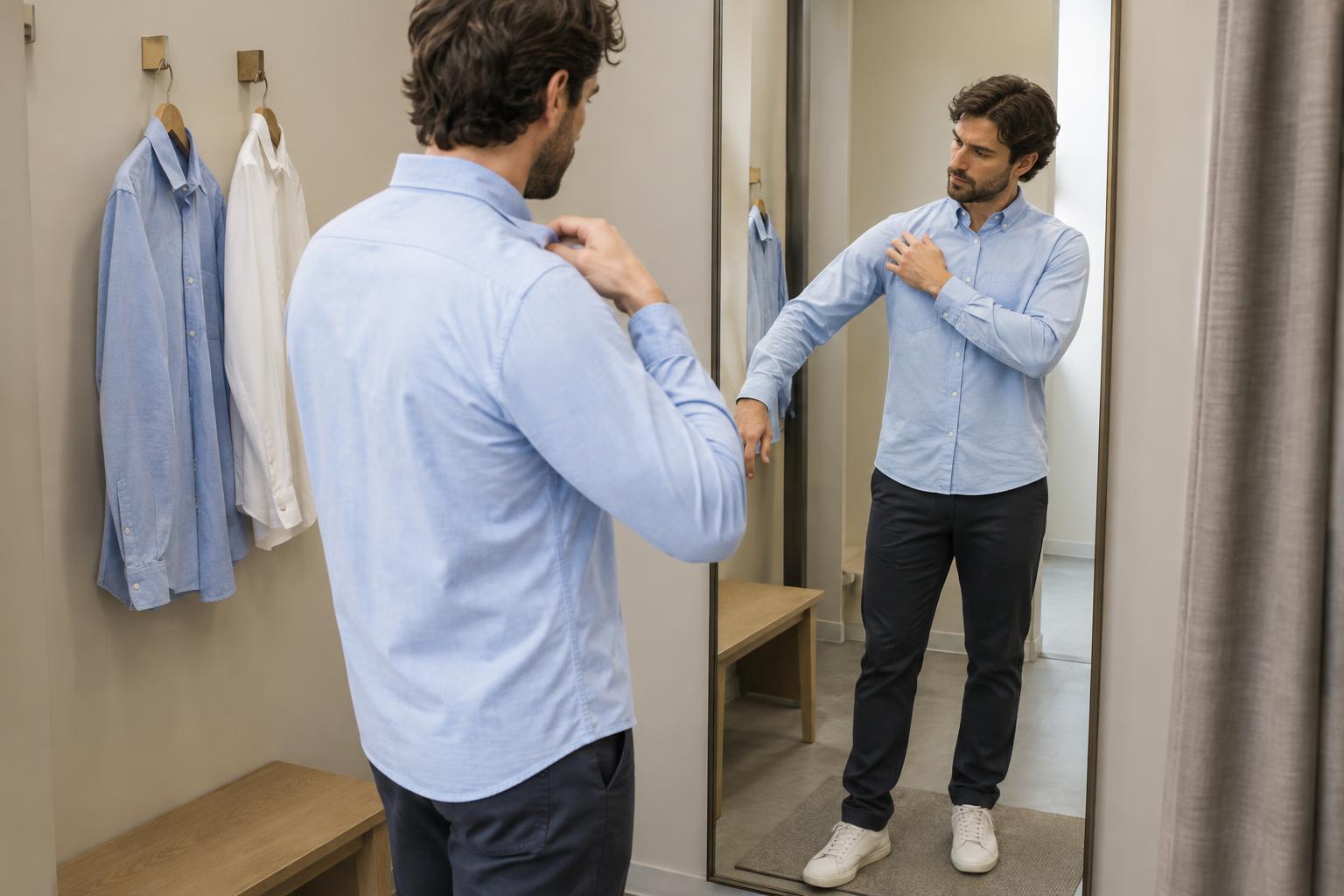
Start with the shirt’s intended shape
Before judging the fit, look at what the shirt is designed to do. A crisp button-up, a soft T-shirt and an oversized linen shirt should not all sit against the body in the same way. Check the product label or description for words such as slim, relaxed, cropped or boxy, then ask whether that shape works with the clothes you already wear. A roomy shirt can be a good fit; a shirt that is roomy in places you did not intend may simply be the wrong cut.
Try the shirt with the type of layer you expect to wear underneath it. If you usually tuck shirts into trousers, bring or wear a similar pair when shopping. If the shirt needs to go under a jacket, check it with one. This takes a little more effort than holding it against yourself, but it can prevent a purchase that only works in the fitting room.
Check the shoulders and chest first
On a conventional fitted shirt, the shoulder seam should sit near the edge of your shoulder, without pulling toward your neck or slipping far down your arm. An intentionally dropped-shoulder shirt is an exception: its seam sits lower by design. In either case, look for a smooth, comfortable line rather than a sleeve that twists or bunches awkwardly.
Next, let your arms hang naturally and look at the front and back. The fabric should have enough room for you to breathe and move without strain. On a button-up, check for gaps between the buttons, especially across the chest; standing straight can hide a gap that appears when you sit down. On a T-shirt, notice whether the fabric stretches tightly across one area while hanging loosely elsewhere. If the shoulders and chest both feel wrong, changing size may help, but a different cut may be the better answer.
Look at the body, hem and sleeves
Turn sideways in the mirror. Does the shirt follow the shape you want, or does excess fabric collect around your waist and lower back? There is no required amount of ease: some people prefer a close outline, while others want space for airflow and layering. The useful question is whether the extra fabric looks deliberate and stays comfortable when you move.
Check where the hem ends. For an untucked shirt, picture it with your usual trousers or skirt: does it stop at a length you like, or cover more than you expected? For a shirt you plan to tuck, bend and raise your arms to see whether it stays tucked. Sleeves deserve the same attention. Short sleeves should feel comfortable around the upper arm; long sleeves should reach your preferred point at the wrist without restricting your elbows. If you plan to roll them, try rolling them now.
Give it a two-minute movement test
A shirt that fits while you stand still may fail during an ordinary day. Reach forward as if taking something from a shelf, lift your arms, sit down and turn your torso. Notice any pulling across the back, tightness under the arms, riding up at the waist or buttons that strain. You should not have to keep tugging the shirt back into place after each movement.
Pay attention to feel as well as appearance. A collar that rubs, a seam that presses into your armpit or a fabric that feels clingy may become more distracting with wear. If two sizes both seem possible, repeat the movement test in each. Choose based on how you intend to wear the shirt, not just which size tag you usually buy.
Make a better call when shopping online
When you cannot try a shirt on, compare garment measurements with a shirt you already own and like. Lay your existing shirt flat, then measure across the chest, from shoulder to hem and along the sleeve. Compare those numbers with the seller’s garment measurements where available; a body-size chart is helpful but does not tell you exactly how the finished shirt will hang. Read the fabric description too. A rigid woven cotton shirt may offer less give than a stretchy knit, even when the listed dimensions look similar.
Before ordering, check the return conditions and avoid buying a shirt that would need several uncertain fixes to work. A simple hem adjustment may be manageable, but changing the shoulders or overall shape is more involved. The goal is not a flawless fit by someone else’s rules. It is a shirt you can wear comfortably, style easily and leave alone once you put it on.