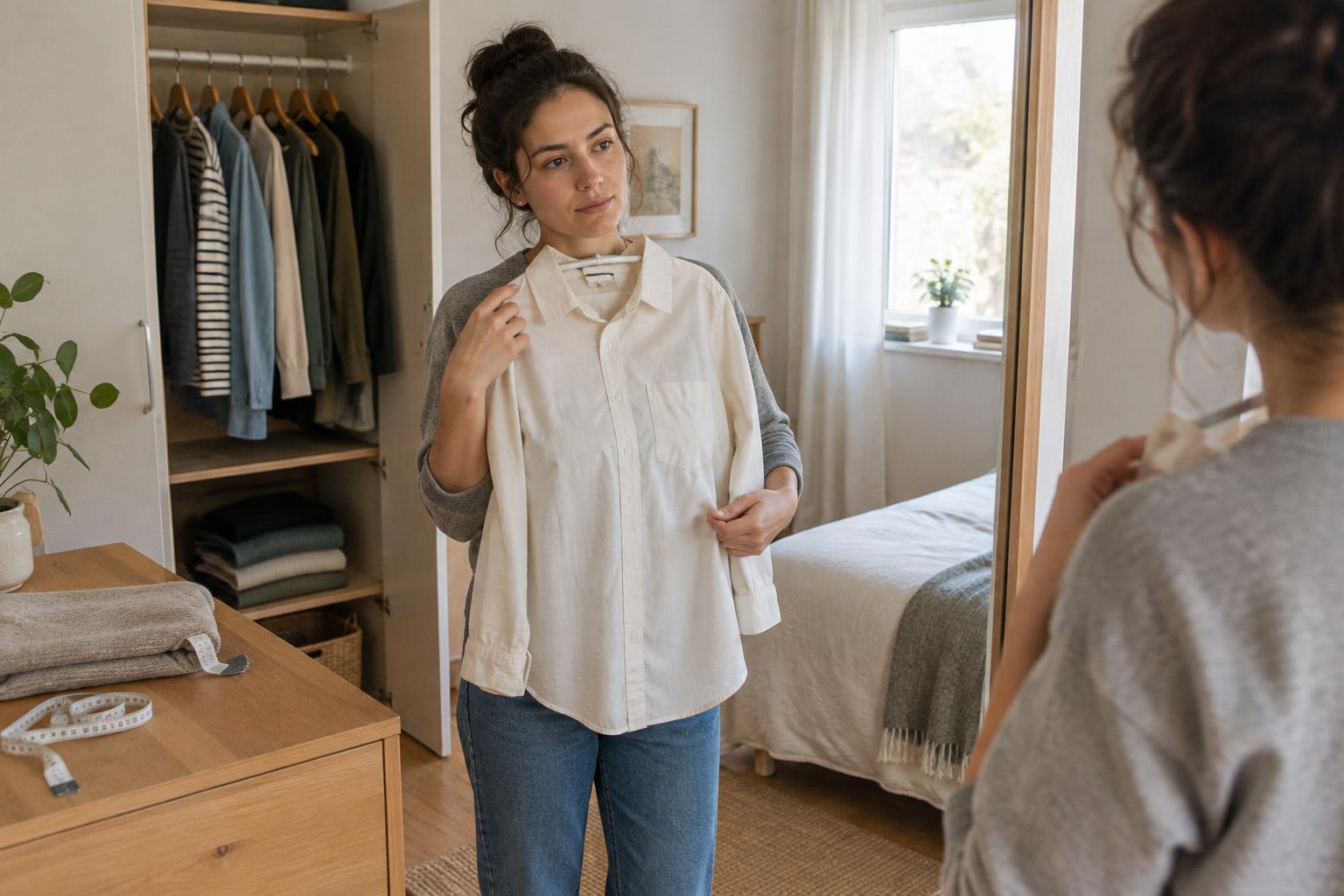
Start with the life you actually dress for
A price tag tells you what an item costs, not how useful it will be. Before deciding whether a shirt, coat or pair of shoes is worth buying, picture an ordinary week. Where would you wear it? Does it suit the weather you encounter, the places you go and the level of formality you need? A beautiful jacket that only works for an imagined version of your life may be less valuable than a simpler one you reach for regularly.
Try naming three specific outfits you can make with clothes you already own. “With my black trousers for work, jeans for dinner and a skirt for a family gathering” is more convincing than “It goes with everything.” If the purchase also requires new shoes, special underwear or another layer to look right, include those needs in your decision. An item should make getting dressed easier, not quietly create a second shopping list.
Check fit before you judge the label
Even well-made clothing has limited value if you avoid wearing it. Try the item in the positions your day requires: sit, walk, reach and bend. Check whether a waistband digs in, a shoulder seam restricts movement or a hem needs constant adjustment. Look at the fit from the side and back as well as the front. For online shopping, compare the garment measurements with a similar piece you own and like rather than relying only on the size name.
Be honest about alterations. Shortening a hem may be straightforward; changing the shape of a structured jacket is a different proposition. If you know a piece needs work, consider whether the likely effort and cost still make sense to you. Do not buy something that is uncomfortable now solely because you hope it will fit differently later.
Look for evidence of lasting wear
Price and brand can offer clues, but neither replaces a close look at the garment. Examine seams for loose threads or puckering. Check that buttons feel secure, zippers move smoothly and patterns line up where you would notice them. Hold a knit gently to see whether it springs back into shape. For shoes, pay attention to how the sole is attached and whether the inside feels smooth against your foot. These checks cannot predict a garment’s full lifespan, but they can reveal obvious problems before purchase.
Fabric deserves the same attention. Read the fiber and care labels, then feel the material: is it comfortable, overly sheer or prone to clinging? Some fabrics wrinkle, pill or need delicate handling more readily than others, but construction and use matter too. Think about how the item will behave during your real day, not just how it looks for a minute in a fitting room.
Count the upkeep, not just the wears
A useful way to compare purchases is to estimate cost per wear: divide the price by the number of times you realistically expect to wear the item. A $90 pair of trousers worn 45 times comes to $2 per wear; a $30 top worn twice comes to $15. The estimate is not a promise, and a special-occasion piece does not have to compete with everyday basics. It simply prompts you to consider use instead of reacting to the sticker price alone.
Also ask what wearing the item asks of you afterward. Will you hand-wash it, iron it or take it for cleaning? Does it need careful storage in a home where space is limited? Those tasks may be worthwhile for a favorite piece, but they are part of its cost in time and attention. If you routinely postpone laundry with special instructions, an easy-care alternative might serve you better even if it costs a little more upfront.
Make the decision without rushing
Before paying, run through a short final check: Does it fit comfortably? Can you wear it with what you own? Is the fabric and construction suitable for its purpose? Can you manage the care? Does the price leave room for other priorities? A sale does not fix a poor fit or turn an unnecessary item into a bargain. If you are uncertain and do not need it immediately, stepping away can help you tell genuine interest from the pressure of the moment.
A worthwhile purchase does not have to be the cheapest option or a flawless investment. It should earn a place in your wardrobe through comfort, usefulness and enjoyment at a price that works for you. Apply the same questions to secondhand finds, inexpensive basics and higher-priced pieces alike. The best test is whether you can imagine choosing the item on a normal morning and feeling glad it is there.