Start with what actually needs to stay
When storage is tight, the most useful first step is deciding what deserves the space. Gather seasonal items by type: cold-weather clothes, extra bedding, holiday decorations, outdoor gear and anything else you use only part of the year. Seeing each group together makes duplicates easier to spot. A coat that no longer fits and a broken string of lights do not become more useful because they are packed away.
Keep items that you expect to use again, then separate anything to donate, repair or discard. Be realistic about repairs: if you cannot picture when you will do one, you may not want to give the item valuable storage space. For the things you keep, estimate how much room each group needs before buying containers. A few measured shelves and a short list of dimensions are more helpful than a stack of attractive boxes that do not fit anywhere.
Give the least-used items the hardest-to-reach spots
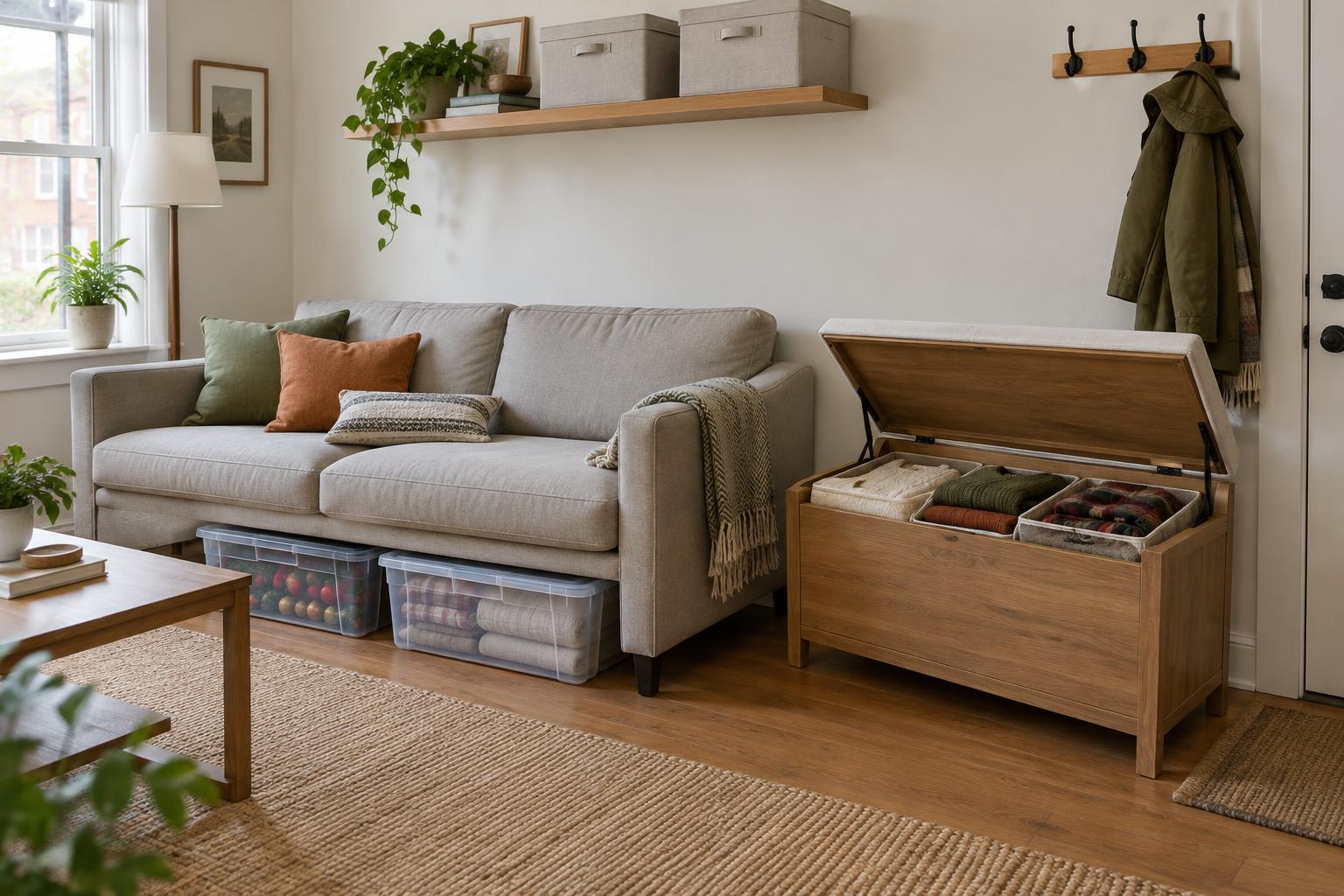
Seasonal storage works best when it does not interfere with daily life. Look for space under the bed, above kitchen cabinets, on a high shelf or beneath a sofa with enough clearance. Measure the height, width and depth of each spot, including any narrow opening a container must pass through. Leave room to pull it out without moving half the furniture.
Match the location to the item. Light decorations or spare linens can go on a high shelf; heavy boxes should stay lower, where they are easier to lift safely. Flat under-bed containers suit folded sweaters, scarves or an extra duvet. A lidded basket beside the sofa can hold an off-season throw while still looking intentional. Keep frequently used things, such as an umbrella or a light jacket, accessible rather than burying them with items you will not need for months.
Choose containers for protection, not just appearance
A container should fit its storage spot and protect what is inside. Clear bins make contents visible, while opaque boxes look calmer on open shelves; either works if you label it. Soft zippered bags can slip into awkward gaps, but they may not offer much protection from spills or crushing. Avoid packing fabric into a container while it is damp, and make sure everything is clean and dry before it goes away.
For clothing and bedding, fold items loosely enough that you can remove one without emptying the whole bag. Vacuum bags may save room for some soft textiles, but they can leave them deeply creased and are not ideal for everything. If a storage area is prone to dampness or temperature swings, choose another spot for delicate fabrics, photographs or anything you would hate to damage. A tidy box cannot fix a poor storage location.
Use furniture and walls without filling every inch
In a small home, storage often has to share space with furniture. A bed with drawers, a lift-top bench or an ottoman can hold seasonal belongings without adding another visible stack. You do not need to replace furniture to use the same idea: a shallow box beneath an existing bed or a sturdy basket under an entry bench may be enough. Check that drawers and lids can open comfortably in the room.
Wall space can help with items that tolerate hanging. A row of hooks in an entryway can hold the coats currently in rotation, freeing enclosed storage for less attractive gear. A shelf above a doorway might hold lightweight, rarely used items if it is securely installed and reachable with a stable step stool. Resist turning every wall and corner into storage. Some empty space makes a room easier to clean and more pleasant to live in.
Make the next seasonal switch easy
The best system is one you can maintain in an afternoon. Label containers with specific contents, such as “winter scarves and gloves,” rather than “miscellaneous.” If you store several categories in one box, put a brief list on the lid. Keep paired items together: gloves with coats, picnic supplies with the outdoor blanket, and decorations with the small accessories needed to put them up.
When you swap seasons, take a moment to check what you used and what stayed untouched. Put things away clean, and return each container to its assigned spot. You can leave a little space in a box for an item you already own but have not packed yet; you do not have to reserve room for hypothetical purchases. With a clear home for each category, seasonal storage becomes a short routine rather than a search through every corner of your home.