Start with a quick sort
The easiest way to waste less produce is to sort it when you get home. Set aside anything bruised or very ripe to use first, and remove spoiled pieces from a bag of fruit or vegetables. A soft berry, for example, can make its neighbors harder to keep in good condition. You do not need a set of matching containers: a few clean jars, reusable bags and towels can handle most of the job.
Think about two things as you put groceries away: moisture and ripening. Leafy vegetables need protection from drying out, but water sitting on their surfaces encourages decay. Some fruits, including apples and bananas, release ethylene gas as they ripen; nearby produce may ripen faster as a result. Giving fast-ripening fruit its own spot makes it easier to check and use.
Give greens and vegetables the right amount of moisture
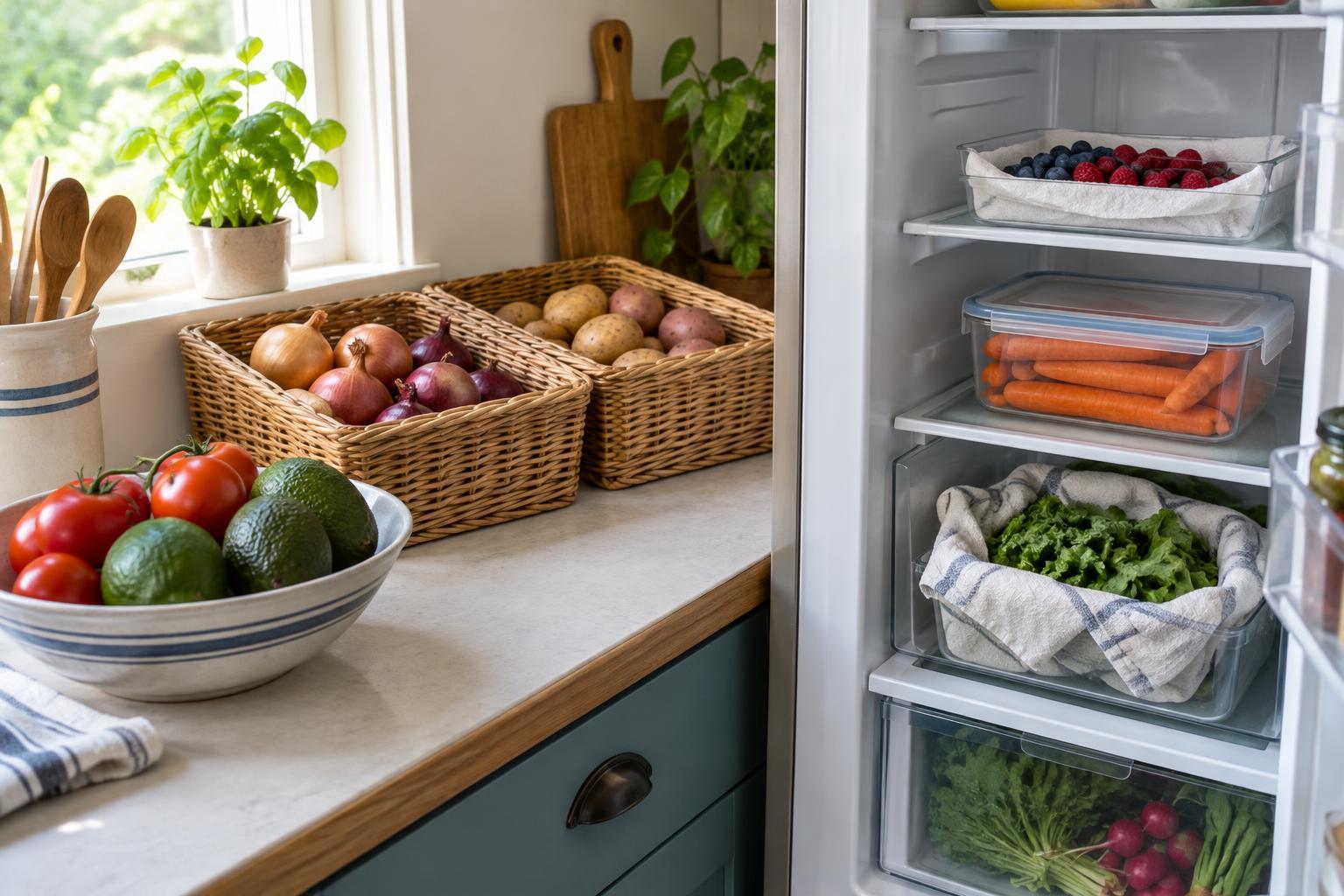
Store lettuce, spinach and other leafy greens in the refrigerator. If they are already washed, dry them well before putting them away. Line a container or loose bag with a clean towel or paper towel to absorb excess moisture, and replace the lining if it becomes wet. If you prefer not to wash greens in advance, keep them dry and wash them just before use. Either approach works better than sealing visibly wet leaves in a bag.
Carrots, broccoli and many other firm vegetables do well in the refrigerator’s crisper drawer. If your drawer has a humidity setting, the higher-humidity setting is generally useful for vegetables that wilt. Keep an eye on the drawer rather than treating it as long-term storage: crowded produce is easy to forget, and a quick look while planning dinner can catch something that needs using.
Mushrooms are a useful exception to the sealed-container habit. Refrigerate them in a paper bag or their original ventilated packaging so moisture does not collect around them. Wash or wipe them when you are ready to cook. If you have half a pepper, cucumber or other cut vegetable, cover it, refrigerate it promptly and plan to use it soon.
Keep delicate fruit visible and dry
Berries are best kept cold and handled gently. Check the package, remove any berries that are already spoiled, and refrigerate the rest in a shallow, breathable container. Wait to wash them until you are ready to eat them, unless you can dry them thoroughly before storage. Put a berry container where you will see it when you open the fridge; visibility can matter as much as the container.
Apples can be refrigerated, ideally apart from delicate greens and vegetables that might be affected by their ripening gas. Pears and avocados, on the other hand, can sit on the counter until they reach the ripeness you like. Then move them to the refrigerator if you need a little more time before using them. A countertop bowl is helpful for fruit you intend to eat in the next day or two, but check it regularly and move ripe items before they become overripe.
Use the counter and pantry on purpose
Whole tomatoes generally develop their best flavor and texture when allowed to ripen on the counter. Once ripe, refrigerating them can buy you time if you cannot use them immediately; let them come closer to room temperature before serving. Bananas also belong on the counter while ripening. Give them some space from fruit you want to ripen slowly.
Keep potatoes in a cool, dark, ventilated place rather than a sealed plastic bag. Whole onions and garlic also need a dry spot with airflow. Store potatoes and onions separately if you can, and check both occasionally for soft or sprouting pieces. These pantry rules apply to whole produce; once you cut an onion or tomato, cover and refrigerate the unused portion.
Make storage part of the meal plan
Fresh herbs benefit from a little attention. Trim the ends of parsley or cilantro and stand the stems in a jar with a small amount of water in the refrigerator, loosely covering the leaves if they need protection. Change the water when it looks cloudy. Basil is more sensitive to cold, so a small bunch may fare better in water on the counter, away from strong sun. Use any herb before its leaves turn slimy.
Before shopping again, scan the fridge, fruit bowl and pantry. Build a meal around what is closest to losing quality: soft tomatoes can become a quick sauce, tired but sound greens can go into a cooked dish, and ripe fruit can top breakfast. Storage slows waste, but it cannot rescue spoiled food. Discard produce with mold, slime or an off smell, and wash fresh produce under running water before eating or preparing it.