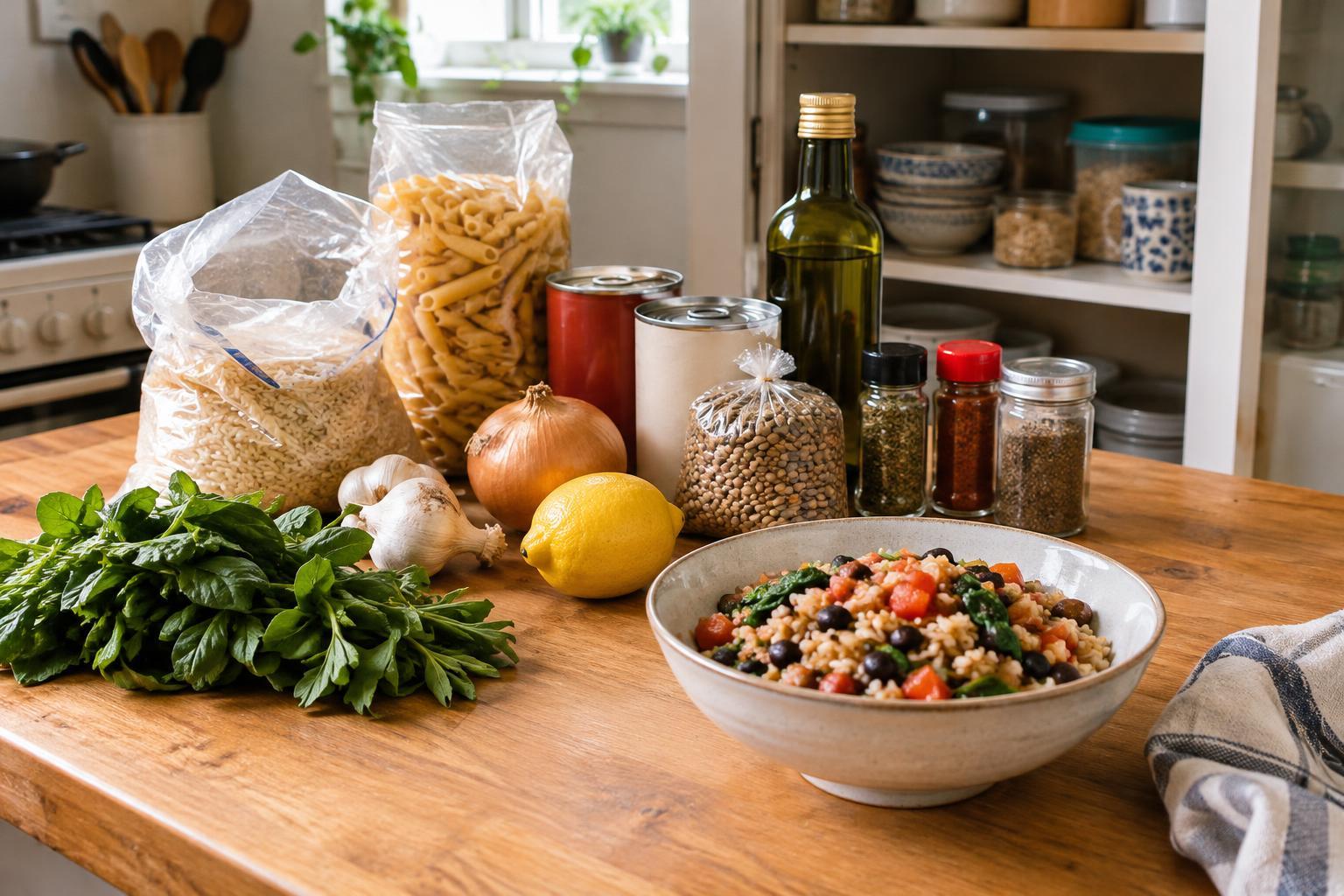
Start with meals, not a shopping list
A starter pantry works best when it reflects what you will actually cook. Before buying anything, name three or four easy meals you would happily eat on a busy evening. Pasta with tomato sauce and beans, rice bowls with vegetables and eggs, lentil soup, and tortillas filled with beans are good examples. Their ingredients overlap, so one purchase can serve several meals.
Check your cupboards before you shop, then choose a few staples to fill the gaps. You do not need every grain, spice, or canned good at once. If your budget or storage space is tight, buy enough for the next week or two and note what you use. A pantry built gradually around repeat meals is usually more useful than one assembled from an ambitious list.
Choose a small, flexible foundation
Pick one or two bases you enjoy: rice, pasta, oats, couscous, or tortillas. Rice can support a bowl, become part of a soup, or accompany a simple stir-fry. Pasta makes a quick dinner with canned tomatoes, olive oil, and whatever vegetables are available. Oats can become breakfast or a savory bowl. There is no advantage to stocking all of them if you rarely reach for them.
Add a couple of shelf-stable ingredients that make those bases more satisfying. Canned beans are convenient for bowls, soups, and tortilla fillings. Dry lentils can be useful if you are willing to cook them; many varieties require less planning than dry beans. Canned tomatoes can become a pasta sauce, a soup base, or a sauce for beans. If you eat fish, a tin of tuna or sardines is another compact option, but it is not essential.
Round out the foundation with ingredients you regularly use outside the cupboard. Eggs, frozen vegetables, and a small bag of onions can turn pantry staples into complete-feeling meals without requiring a long fresh-produce shopping list. Choose quantities you can finish, especially while you are learning your routine.
Keep a few ways to change the flavor
A modest set of seasonings prevents the same ingredients from tasting identical every night. Start with salt, pepper, a cooking oil, and one or two spices you already like. Garlic powder, chili flakes, cumin, or smoked paprika can each work in multiple dishes. Buy one when you have a plan for it rather than collecting an entire spice rack.
Acid and savory condiments help simple food feel finished. Vinegar or bottled lemon juice can brighten beans, vegetables, and sauces. Soy sauce, mustard, or hot sauce can add character to rice bowls and sandwiches. If you already keep peanut butter, it can enrich oats or make a quick sauce with water and a little soy sauce. You only need a few of these: select the ones that fit the meals you chose.
Practice three mix-and-match dinners
For a fast tomato-and-bean pasta, cook pasta while warming canned tomatoes with oil and a seasoning you like. Stir in drained beans and simmer until hot, then combine. Add frozen spinach or another vegetable if you have it. Leftover sauce can top rice the next day, giving you a second meal without repeating the exact same plate.
For a rice bowl, pair cooked rice with heated beans or an egg and vegetables from the freezer. Finish it with hot sauce, soy sauce, or a quick dressing of oil and vinegar. For soup, simmer lentils or canned beans with canned tomatoes, water, and seasonings; add pasta, rice, or vegetables to make it heartier. Follow package directions for dry ingredients and cook eggs and other perishables thoroughly.
These are templates rather than strict recipes. Changing the base, protein, vegetable, or seasoning lets you use what is already open. That flexibility is where a small pantry earns its space.
Store what you buy so it gets used
Put newer purchases behind older ones and keep frequently used staples where you can see them. Label ingredients moved into plain containers, including the package date or best-before information if it will otherwise be lost. Store dry goods in sealed containers in a cool, dry place, and follow package instructions for unopened and opened foods. Refrigerate leftovers promptly and use them within a safe window appropriate to the food.
Before each grocery trip, look for one ingredient that needs attention. A half bag of rice might suggest bowls; an open jar of sauce might suggest pasta. Build the next shopping list around that ingredient instead of starting from scratch. Over time, the pantry becomes a record of meals you actually make, not a collection of things you meant to cook.