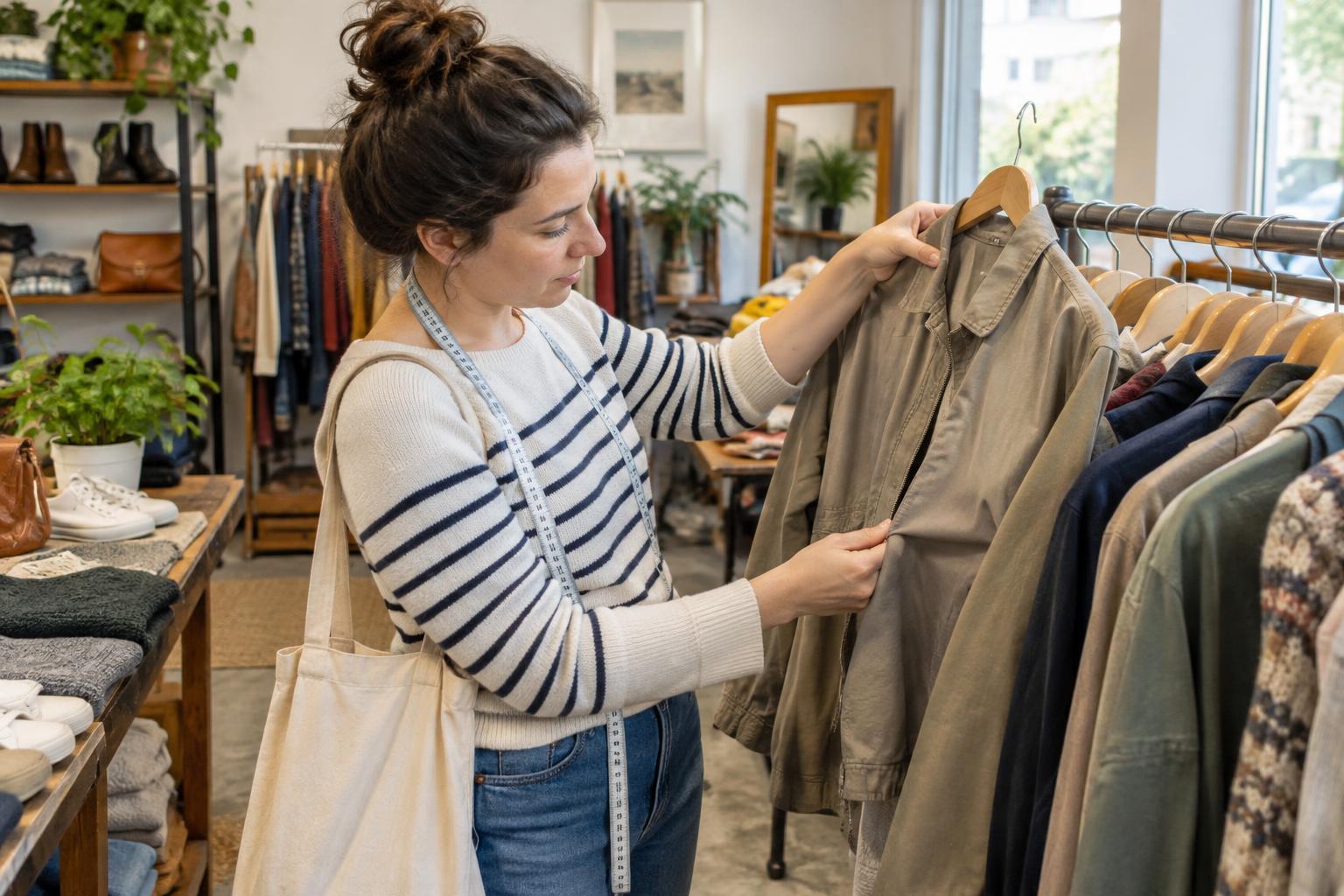
Start with your wardrobe, not the thrift rack
Before shopping, look at the clothes you already reach for. Notice which pieces are wearing out, which outfits feel unfinished, and which purchases still have their tags. That quick review gives you a more useful list than a vague goal to “find something good.” You might need a washable work shirt, dark jeans that fit comfortably, or a light layer for cool evenings. Keep the list short enough to remember while browsing.
Set a spending limit before you go. If you have $40 to spend, you could decide that a coat is worth most of it but an extra T-shirt is not. Also decide what you will not buy: perhaps dry-clean-only pieces, shoes that need resoling, or another black sweater. These boundaries are especially helpful when a low price makes an item tempting even though it does not solve a wardrobe problem.
Know your measurements and fit priorities
Secondhand sizing is inconsistent because clothes come from different brands and eras, and some items may have shrunk or been altered. Measure a few garments you already like while they lie flat. Useful measurements include the width across the chest, waist and hips, plus inseam or sleeve length. Save the numbers on your phone alongside notes such as “room for a sweater underneath” or “waistband must feel comfortable when sitting.”
Try things on when possible, and move as you normally would: sit, raise your arms, walk, and check whether buttons pull. If you are shopping online, compare the seller’s measurements with a garment you own rather than relying only on the listed size. A slightly loose waist may be manageable with a belt; shoulders that sit far from yours or shoes that pinch are less forgiving. Buy for your current body and daily routine, not for a hoped-for alteration you may never arrange.
Inspect condition before you fall for the price
In a store, take the item into good light and check the places that wear first: underarms, collar, cuffs, seat, inner thighs and hems. Look for stains, thinning fabric, pilling, missing buttons, stretched elastic and broken zippers. Turn the garment inside out to inspect seams and the care label. A loose button is usually a simpler fix than a worn-through knee; a mark you cannot identify may remain after washing.
For online listings, read the full description and examine every photo. Ask for clear pictures of any area you cannot assess, along with measurements if they are missing. Check the total cost, including shipping and any stated return terms, before paying. A jacket listed cheaply can become an expensive gamble if it cannot be returned and you are unsure about the fit. When the condition or measurements remain unclear, passing is a reasonable way to protect your budget.
Count the cost of making it wearable
The price tag is only part of the cost. An item may need laundering, a replacement button, hemming or a trip to a cleaner. Before buying, ask yourself whether you have the time, supplies and interest to do that work. If not, estimate what you would be willing to spend to have it done and add that to the purchase price. A $12 pair of trousers that needs a $20 alteration costs $32 to wear.
Check the fabric and care label against your habits. If you usually wash clothes at home, a delicate piece with demanding care may spend more time waiting to be cleaned than in rotation. Texture matters too: scratchy wool or stiff denim will not become a favorite just because it looks good on a hanger. Choose items you can care for and feel comfortable wearing.
Make the final decision with real outfits
Before checkout, picture at least two outfits you can make with clothes you already own. Think about the shoes, layers and occasions involved. A patterned shirt might work with your everyday jeans and your plain skirt; a striking jacket that requires new trousers, shoes and a bag is a much bigger purchase than its tag suggests. If you cannot imagine wearing something in the next few weeks, leave it for someone else.
It helps to give yourself permission to leave empty-handed. Secondhand stock changes, but you do not need to buy a substitute simply because the exact item on your list is unavailable. Save your budget and keep the list. Shopping secondhand works best when each purchase earns its place: it fits, it is in usable condition, its full cost makes sense, and it supports the life you actually lead.