Start with the trip through the door
A useful drop zone is not a miniature mudroom. It is a place for the few things you reach for as you leave and put down when you return. Before buying anything, notice what actually happens at your door. Do keys land on a nearby table? Do bags end up on the floor? Does mail travel halfway through the home before you deal with it? Choose a home for those repeat offenders rather than trying to store every outdoor item in the entry.
Measure the entryway with the door open and closed, then walk through it carrying a bag or a load of groceries. Pay attention to where the door swings, where people pause, and what could catch on a coat or shoulder. A layout that looks tidy against the wall but makes the doorway awkward will not last. Keep access to doors, switches, vents, and any routes you need to move through clear.
Give everyday items three small homes
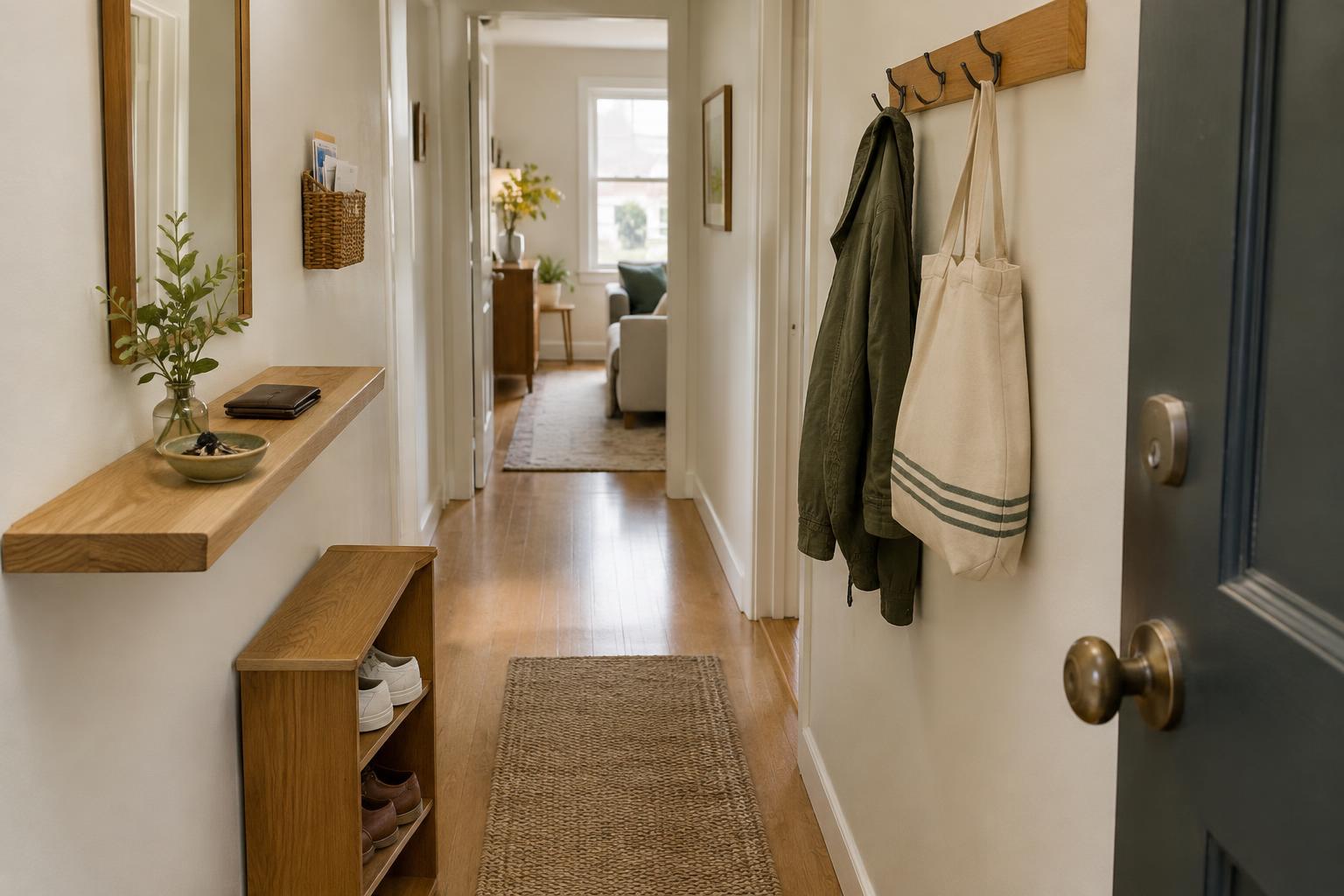
Most narrow entries need only three functions: a place to hang, a place to set things down, and a place to contain what otherwise spreads. Wall hooks can hold a daily jacket and bag without taking up floor space. A shallow wall shelf or slim console can be a landing spot for keys and sunglasses. A tray, bowl, or small basket keeps those items from wandering across the surface.
Assign each spot a specific job. For example, one hook might be for the bag you carry most days, while a second is for a jacket. A small tray can hold keys and transit cards; a separate slot or basket can catch mail until you sort it. If several people use the entry, give each person a hook or labeled container if space allows. Leave a little empty room so the system can handle an unusually busy day without becoming a pile.
Choose storage that suits the width
In a tight passage, shallow and vertical pieces usually work better than deep furniture. A short row of hooks, a peg rail, or a narrow wall-mounted organizer can use space above the floor. If you have room for a console, check its depth against the walkway rather than choosing by appearance alone. A small shelf at a comfortable height may do the same job with less visual bulk.
Shoe storage deserves particular restraint. A slim cabinet or a low, narrow tray may work if it does not interrupt the path, but an entryway does not need to hold every pair you own. Keep the shoes used that week near the door and store the rest elsewhere. If the only workable space is behind the door, check the full swing before adding hooks or an organizer. Follow the mounting instructions for anything fixed to a wall, especially if it will hold heavy bags.
Make a low-cost version first
You can test the idea before committing to new furniture. Repurpose a small bowl for keys, move an unused basket to the entry, and temporarily designate an existing shelf as the landing spot. If wall mounting is not an option, a narrow freestanding rack or a tray on furniture you already own may be enough. Look for pieces with rounded corners or edges that will not snag clothing as you pass.
After a week, adjust what did not work. If keys still turn up elsewhere, move their container closer to where your hand naturally goes. If a basket fills with unrelated items, make its purpose narrower or remove it. This trial run helps you avoid buying an organizer that fits the wall but not your routine.
Keep the system small enough to maintain
A drop zone works best when it has limits. Set a simple rule: only current-use outerwear, one everyday bag per person, and items needed for the next departure belong there. Put a nearby home elsewhere for spare shoes, seasonal accessories, and things waiting to be returned. Otherwise, the convenient entryway can become permanent storage.
Spend a minute resetting it when you come home or before bed. Hang the bag, return keys to their spot, and move mail or stray objects where they belong. The goal is not a perfectly styled doorway. It is a clear path and a dependable place to find what you need on the way out.