Start with the job each ingredient does
Salt, acid and herbs do different kinds of work. Salt brings existing flavors into focus. Acid, such as lemon juice or vinegar, adds brightness and can make a rich dish feel less heavy. Herbs add a recognizable aroma: parsley tastes fresh, rosemary tastes woodsy, and dill gives a dish a grassy, slightly sharp note. You do not need all three in every meal, but understanding their roles makes it easier to decide what is missing.
Before reaching for another ingredient, take a small taste and ask a specific question. Does the food taste flat even though you can identify its ingredients? It may need salt. Does it taste adequately salty but dull or heavy? Try a little acid. Does it taste balanced but plain? An herb may give it direction. Change one thing at a time, then taste again, so you can tell what helped.
Add salt in stages, not all at once
A pinch of salt early in cooking helps season ingredients as they soften or simmer. Another small addition near the end lets you adjust the finished dish. This is easier to control than adding a large amount at the table. For a pot of tomato sauce, for example, lightly salt the onions as they cook, then taste the sauce after it has simmered. Its flavor may change as liquid evaporates.
Salt already hides in ingredients such as broth, canned beans, cheese, olives and soy sauce. If several are going into one dish, start with less added salt than you think you need. Taste a cooled spoonful before adjusting a hot soup or sauce; heat can make it harder to judge flavor. If a dish becomes too salty, adding unsalted ingredients or more liquid may help, though it will also change the texture and quantity. Prevention is simpler.
Use acid to finish and balance
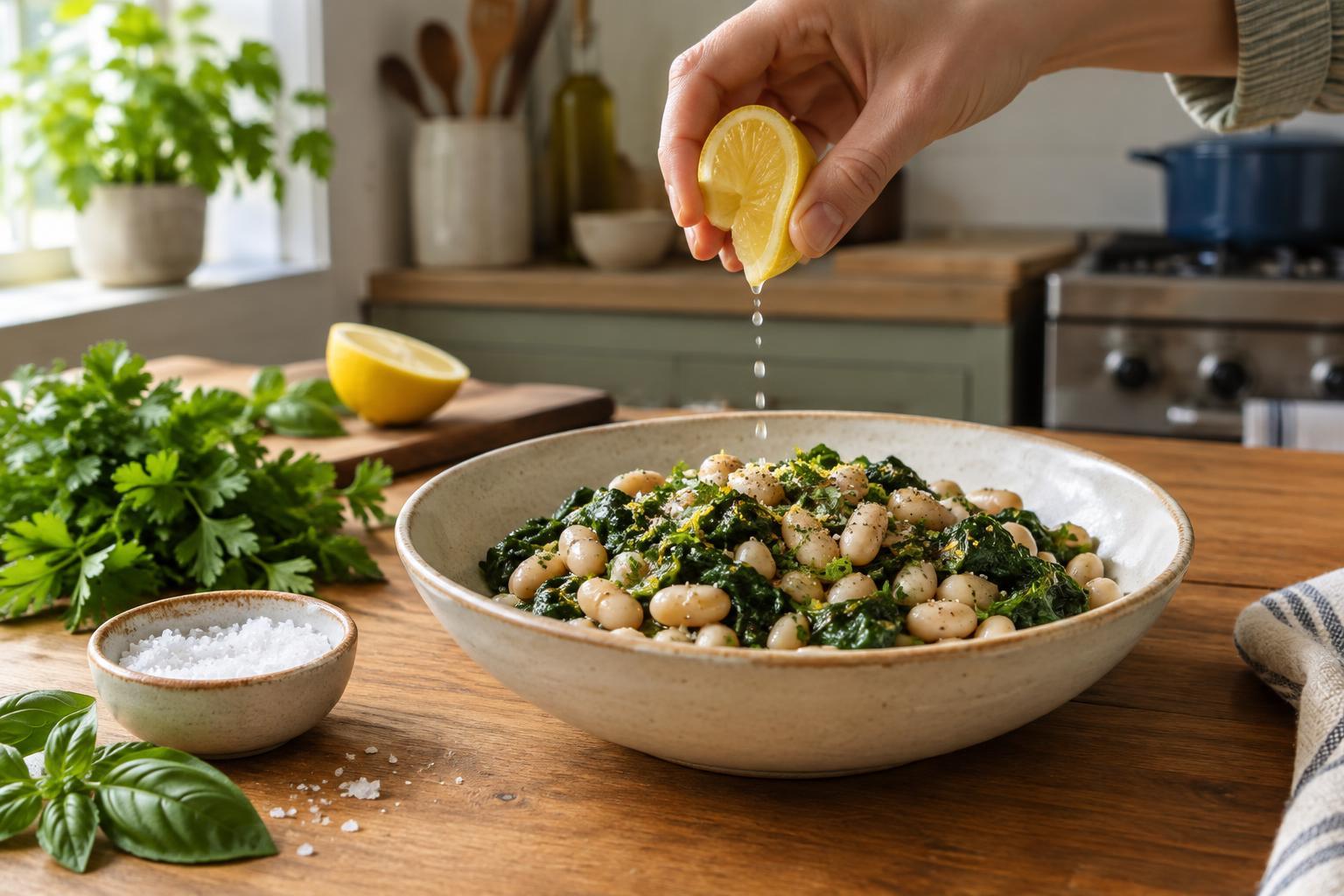
Keep one versatile acid on hand: a lemon, a mild vinegar or even the liquid from a jar of pickled vegetables. Add a small splash near the end of cooking, stir and taste. Acid is especially useful in bean soups, sautéed greens, roasted vegetables and creamy sauces. It does not have to make the food taste noticeably sour; a modest amount can simply make the other flavors seem clearer.
Match the acid to the dish without worrying about strict rules. Lemon suits herbs, fish, chickpeas and many vegetables. Cider or red wine vinegar works well with lentils, cabbage and roasted roots. If you add too much, a little more of the dish’s main ingredient may soften the sharpness. For individual plates, a lemon wedge at the table lets everyone choose their own balance.
Choose herbs by when you will add them
Sturdy herbs such as rosemary, thyme and oregano can go into a dish while it cooks. Dried herbs also benefit from time in a warm sauce or broth, which gives their flavor a chance to spread. Start modestly: dried herbs can be concentrated, and adding more later is easier than removing them. Rub a pinch between your fingers before adding it to release its aroma.
Tender fresh herbs such as parsley, cilantro, basil and dill are often most useful near the end. Stir them into finished food or scatter them on top so their flavor stays lively. There is no need to buy several bunches for one recipe. Choose one herb that works across the week: parsley can finish pasta, scrambled eggs and a bean salad. If a bunch begins to wilt, chop it and mix it with a little oil for a quick topping.
Practice with one simple meal
A can of beans makes a low-effort seasoning exercise. Drain and rinse the beans, then warm them in a pan with a little oil and a splash of water. Add a small pinch of salt and, if you like, dried oregano or thyme. Once warm, taste. Add a few drops of lemon juice or vinegar, stir and taste again. Finish with chopped parsley if you have it. Serve the beans on toast, alongside rice or over a baked potato.
Notice which addition made the biggest difference. Next time, use the same sequence with leftover vegetables or a simple soup. Salt first for balance, acid in small amounts for brightness, and herbs for character is a useful starting point, not a rigid formula. The goal is to build the habit of tasting and adjusting, using ingredients you already keep around.