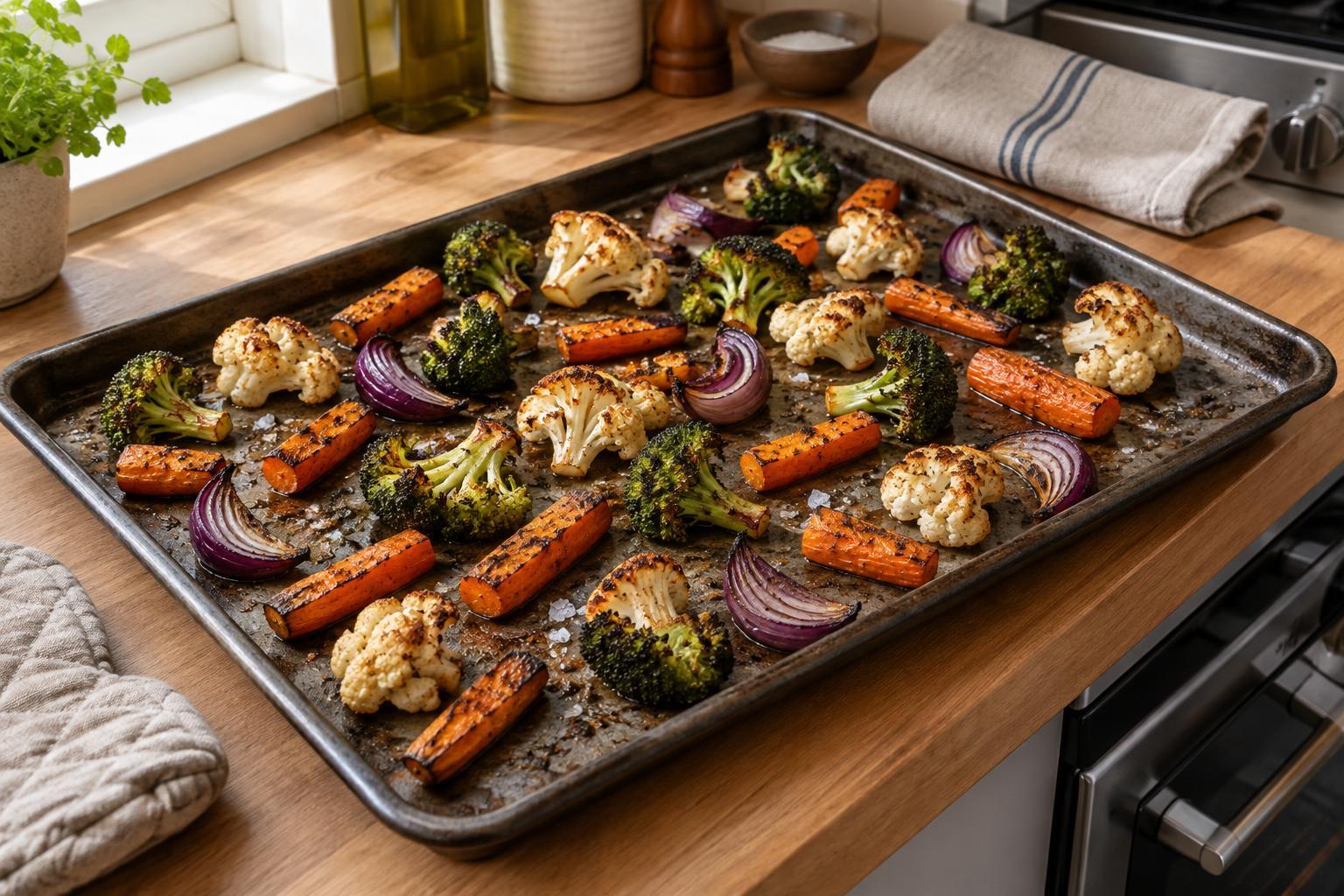
Why a crowded pan stays pale
Vegetables release moisture as they heat. If that moisture can escape, their surfaces dry out and begin to brown. If the pieces are piled together, steam gets trapped between them. The vegetables may become tender, but they are more likely to look pale and feel soft than develop crisp, flavorful edges.
The most useful fix is often a second pan. Spread the vegetables in one layer with a little space between pieces; a few touching edges are fine. If covering the whole pan is the only way to fit dinner in the oven, cook in two batches or use two pans and swap their positions partway through. A smaller, well-spaced batch will usually brown better than a heaped pan.
Start with dry vegetables and even cuts
After washing vegetables, drain and dry them well with a clean towel. Water clinging to broccoli florets, potato skins or pepper strips must evaporate before those surfaces can brown. If you are prepping ahead, you can leave washed vegetables in a colander until you are ready to cut them, then pat them dry before adding oil.
Cut pieces so they cook at roughly the same pace. Small florets brown faster than large ones, while thick carrot chunks take longer than thin slices. Aim for similarly sized pieces within each vegetable, rather than trying to make every ingredient in a mixed tray identical. Put flat cut sides against the pan when possible: halved Brussels sprouts and wedges of squash make particularly good contact that way.
Some vegetables carry more water than others. Mushrooms, zucchini and tomatoes may need more space than potatoes or carrots. For a mixed tray, consider roasting the denser vegetables first and adding quick-cooking, watery ones later. It is a simple way to avoid overcooked zucchini while you wait for the potatoes to soften.
Use enough heat, oil and pan space
Preheat the oven before the pan goes in. Around 425°F (220°C) is a useful starting point for many vegetables: hot enough to encourage browning without requiring constant attention. Ovens vary, and delicate pieces can darken quickly, so check on the pan as it cooks. A sturdy metal sheet pan works well because it gives you a broad surface for a single layer.
Toss the vegetables with enough oil to coat them lightly rather than leave a puddle on the pan. As a starting point, try about one to two tablespoons for a pound of prepared vegetables, adjusting for their shape and surface area. Broccoli florets may need a little more than smooth potato chunks. Add salt and any dry seasonings you like, then spread everything out. Too little oil can leave some pieces dry; too much can make the tray greasy without solving a crowding problem.
A sheet of parchment can make cleanup easier, but vegetables placed directly on a lightly oiled metal pan often get stronger contact browning. If you use parchment, choose one rated for your oven temperature and keep it within the pan’s edges.
Let the pan work before you stir
Once the vegetables are in the oven, give them time to sit against the hot pan. Stirring every few minutes interrupts that contact. Instead, check when they are partway through cooking and turn them once if they need it. If the undersides are still pale, let them go a little longer before moving them.
Cooking time depends on size, moisture and your oven. Broccoli florets might take about 18 to 25 minutes, while potato chunks or thick carrots may need 30 to 45 minutes. Use those ranges as prompts to check, not as guarantees. Look for browned spots and edges, then test a piece with a fork. If the vegetables are tender but pale, give them a few more minutes of heat, provided they are not already drying out.
Finish simply and troubleshoot the next tray
Add fresh lemon juice, vinegar, herbs or a spoonful of sauce after roasting. These finishes brighten the vegetables without adding moisture while you are trying to brown them. A tray of carrots can become a side dish with lemon and parsley; roasted broccoli works just as well alongside rice and an egg. Keeping the seasoning simple makes it easy to use what is already in the kitchen.
If your vegetables still steam, check three things next time: were they dry before seasoning, did they have room on the pan, and was the oven fully hot? Change one thing at a time so you can tell what helped. Even a modest tray of well-spaced vegetables can make a straightforward weeknight meal feel more satisfying.