Start with the route, not the scenery
A photograph of a waterfall or overlook can make a trail tempting, but it says little about the walk required to get there. Before choosing a hike, find a map that shows the full route, its trailhead and any connecting paths. A park or trail manager’s map is a useful starting point; a phone map can help you inspect details. Check that the map covers your entire planned walk, including the return trip.
For an early outing, look for a clearly marked route with an uncomplicated return. An out-and-back trail follows the same path in both directions, which can make navigation simpler than a loop with several junctions. A short loop can work just as well if its turns are easy to identify. Note where you will park or arrive by transit, and make sure the trail you want actually connects to that starting point.
Read the legend and measure the whole walk
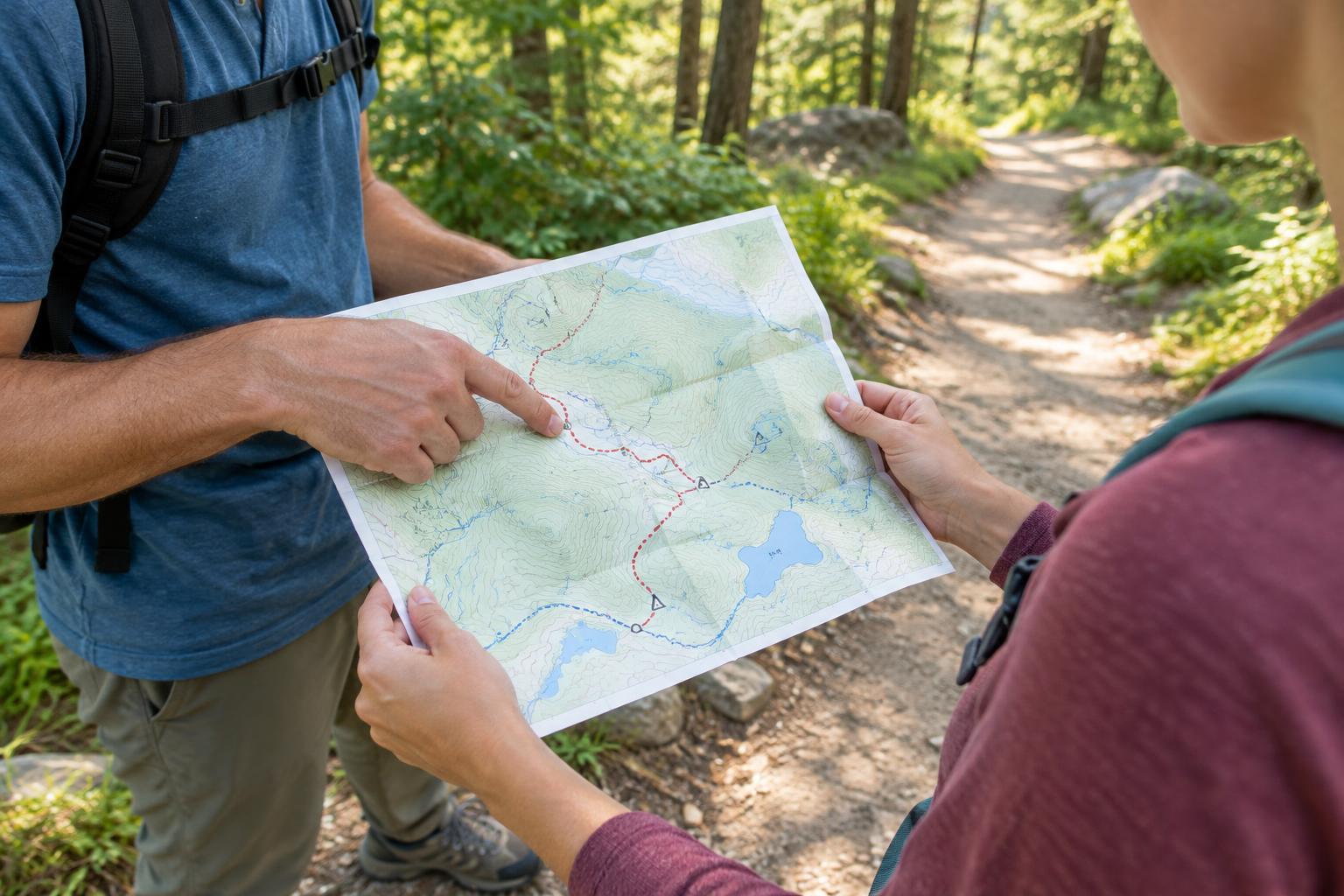
The legend explains the lines and symbols on a map. Find the markings for maintained trails, roads, water, parking and restrooms, if shown. Different line styles may distinguish hiking paths from service roads or other routes. Do not assume a thin line is an easy shortcut: consult the legend, then trace your intended path through every junction from start to finish.
Next, use the scale to estimate distance. On an out-and-back hike, the distance to the destination is only half the walk. If a viewpoint is 2 miles from the trailhead, reaching it and returning by the same route makes a 4-mile hike. For a loop, follow each segment rather than judging distance by how close the end looks to the start. If the map gives a route length, check whether it includes access from the parking area and any side trip you hope to take.
Use contour lines to spot climbs
Distance alone does not tell you how demanding a hike may feel. Contour lines connect places of equal elevation. On a typical topographic map, closely spaced lines signal a steeper slope; widely spaced lines suggest a gentler grade. The legend or map margin may state the contour interval, meaning the elevation change between neighboring lines. A route that crosses many tightly packed contours is likely to involve more climbing than one that follows along them.
Look at where the climbing occurs, too. A long uphill stretch at the beginning feels different from a steep climb just before the return. Check whether a loop ends with an ascent, and remember that a downhill section can require careful footing. For a first hike, a modest distance and gentler terrain are usually more comfortable than a route chosen solely because its mileage looks manageable.
Check what the map cannot promise
A map is a planning tool, not a guarantee of trail conditions. It may not show mud, loose stones, fallen trees, exposed stretches or a confusing junction. A labeled stream crossing may also be different after rain. Read any available route description and posted notices before you go, and check the weather and access information close to your outing. If conditions sound uncertain, choose another route rather than counting on an unmarked alternative.
Estimate your time generously. Allow for a comfortable walking pace, breaks and slower sections, then aim to finish well before dark. A good beginner route has room for an unhurried stop and a clear point where you can turn back if needed. Save or carry a map that will work without cell service, and identify your planned trailhead and main junctions before leaving home.
Make a simple plan and stay flexible
Before setting out, tell someone which route you plan to take and when you expect to return. Bring water, a snack, layers suited to the forecast and shoes you can walk in comfortably. At the trailhead, compare the posted map and signs with your plan. As you walk, pause at junctions to confirm the trail name and direction instead of relying on the path that looks most worn.
The best beginner hike is one you can enjoy without rushing. Start with a manageable route, pay attention to how its distance and hills feel, and use that experience to choose the next one. Turning around early is a sensible adjustment, not a failed adventure.