Start with the whole picture
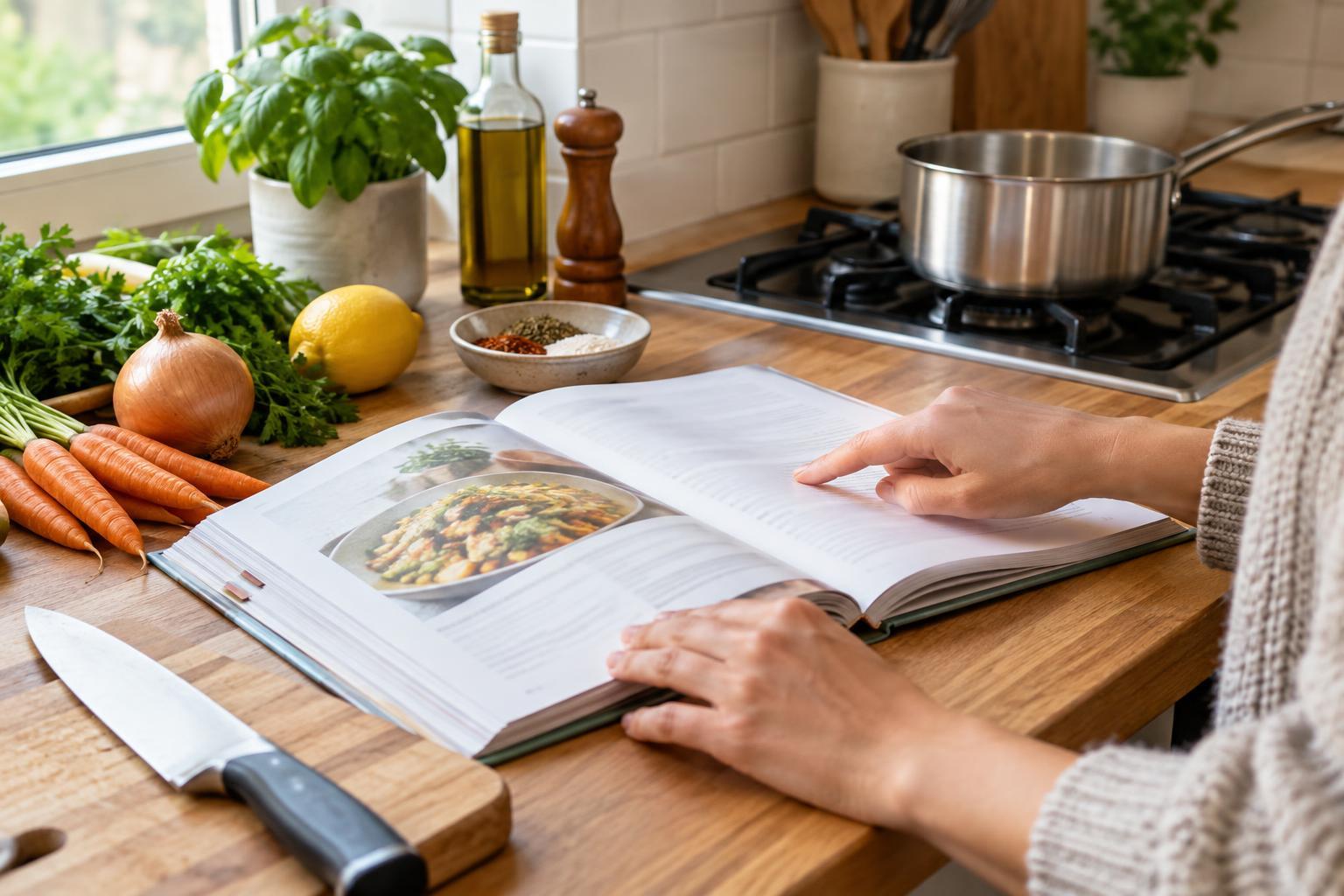
Before you take out a pan, read the recipe from beginning to end. The ingredient list tells you what to gather, but the instructions reveal how the meal actually comes together. A short-looking recipe may ask you to chill dough, simmer a sauce or let food rest before serving. Finding those steps early helps you choose a meal that fits the time you have.
Check the number of servings, too. If a recipe serves four and you are cooking for one, decide whether you want leftovers before making the full batch. If you plan to halve it, consider whether the smaller amount will still fit the method: a little sauce can evaporate quickly in a wide pan, for example. You do not need to solve every detail yet. The first pass is for spotting surprises.
Separate active work from waiting
Look for both hands-on tasks and periods when the food needs time on its own. Chopping vegetables, stirring a sauce and shaping patties require your attention. Baking, simmering and cooling may give you a chance to wash a board or set the table. A recipe’s stated time is a useful starting point, but your own pace and kitchen setup matter. If you are trying a technique for the first time, leave yourself some extra room.
Notice instructions that need to happen before the main cooking begins. Rice might need rinsing; an oven may need preheating; frozen ingredients may need to thaw. Also look for steps that overlap. If the pasta cooks while you make the sauce, you may need the sauce ingredients chopped before the pasta goes into the water. Reading for timing turns a list of steps into a workable plan.
Read the ingredient list like a set of directions
Ingredient wording often tells you when preparation happens. “One cup chopped onion” calls for measuring after chopping, while “one onion, chopped” asks you to start with one whole onion and then chop it. Most weeknight meals will not depend on a tiny difference, but paying attention helps you use the amount the writer intended. Check for ingredients listed in more than one place, such as oil used first for cooking and later for finishing.
Before shopping or starting, scan for anything you lack. Decide whether a missing ingredient is central to the dish or a flexible accent. Leaving out a garnish may be simple; replacing the main ingredient or a leavening agent in baking can change the result substantially. If you make a substitution, consider its role rather than just its flavor. A watery vegetable, for instance, may need a different cooking time from a firm one.
Match the method to your kitchen
Make a quick equipment check. Does the recipe need a large skillet, a baking dish, a blender or a lid that fits your pot? Pan size can affect how food cooks: crowded vegetables tend to steam rather than brown. If you have to use a smaller pan, cooking in batches may work better than piling everything in at once. Check oven temperature and shelf space before you begin, especially if two dishes must bake together.
Pay attention to cooking verbs as well. “Sauté until softened,” “simmer gently” and “cook until browned” describe different results, not just different lengths of time. Instructions that describe what food should look, smell or feel like can be more useful than a minute count alone. If a step is unfamiliar, pause and make sure you understand what you will do before the pan is hot.
Make a short plan, then begin
You do not have to prepare every ingredient in a row of little bowls. Instead, identify the steps where you will not have time to stop. Chop vegetables before heating oil if they all enter the pan quickly. Open a can and measure spices before starting a fast sauce. For a slow-cooking soup, you may have time to prepare later ingredients while the first ones simmer. Arrange ingredients roughly in the order you will use them.
Finally, find the recipe’s stopping points. Is there time to taste and adjust seasoning? Does the dish need to rest, cool or be served immediately? Keep the instructions nearby as you cook, and treat them as a guide rather than a test of memory. A few minutes spent reading and planning can make an ordinary dinner feel much more manageable.