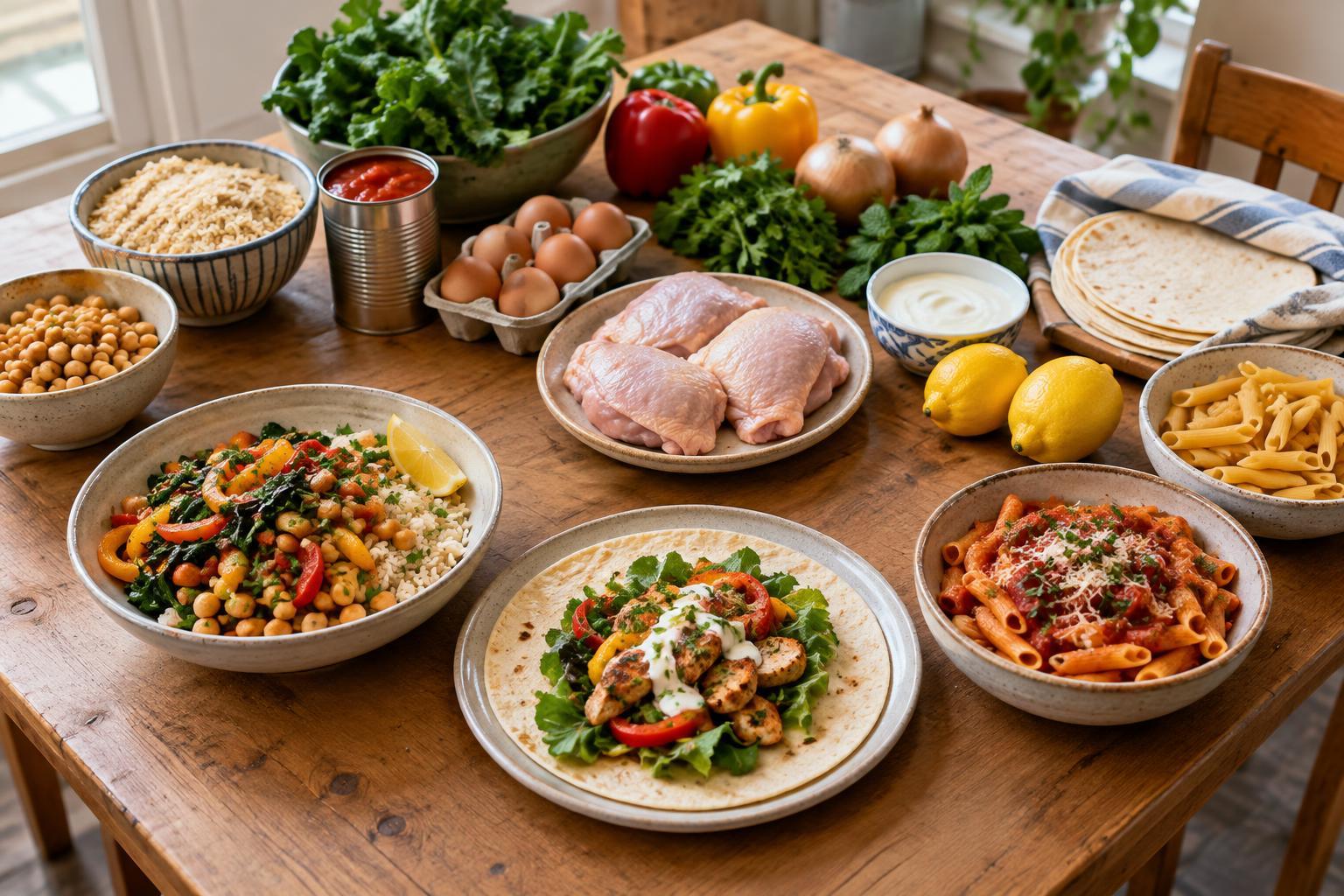
Build the list around ingredients that can change roles
Planning five dinners does not mean making one enormous batch of food and eating it all week. A more flexible approach is to buy a small set of ingredients that can appear in different forms: roasted, tossed with pasta, tucked into pita or cooked in a skillet. This plan makes five dinners for two people. Adjust quantities if you prefer larger portions or want lunch leftovers.
Put these on the grocery list: about 1½ pounds boneless chicken thighs, two cans of chickpeas, six eggs, a pound of rice, a pound of pasta and a package of pita. For produce, buy about 1½ pounds of potatoes, a pound of carrots, two onions, two bell peppers, a bulb of garlic, a lemon and a small bag of spinach. Add two cans of diced tomatoes, a bag of frozen peas and a tub of plain yogurt. The plan assumes you have cooking oil, salt and pepper; paprika, dried oregano and soy sauce are useful if they are already in your cupboard. You will not need all the rice or pasta for these dinners, so the remainder can stay on the shelf.
Make the first two dinners work together
Dinner one is a chicken-and-vegetable tray bake. Cut the potatoes and several carrots into bite-size pieces, toss them with oil, salt and pepper, and spread them on a baking tray. Add the chicken, a sliced onion and, if you have it, paprika or oregano. Roast until the vegetables are tender and the chicken is cooked through; check the chicken rather than relying on a fixed cooking time, since pieces vary in size. Serve with lemon squeezed over the top and a spoonful of yogurt. Set aside roughly half the cooked chicken for the next dinner, refrigerating it promptly.
Dinner two turns that chicken into rice bowls. Cook enough rice for two, then warm the reserved chicken thoroughly. Top the rice with chicken, a sliced bell pepper and a handful of spinach. Stir lemon juice and a little salt into yogurt for a quick sauce. The bowl is easy to adapt: use raw pepper for crunch, or cook it with the chicken if you want a softer, warmer meal. If your plans change after the first dinner, freeze the reserved chicken rather than leaving it in the fridge for several extra days.
Use the pantry ingredients in three different ways
Dinner three is chickpea and tomato pasta. Cook about half the package of pasta. Meanwhile, soften chopped onion and garlic in a pan, add one drained can of chickpeas and one can of diced tomatoes, and simmer until the sauce thickens slightly. Fold in spinach at the end, then toss with the pasta. A spoonful of yogurt can make individual bowls creamier without changing the whole pan. If you have extra carrots, grate one into the sauce while it simmers.
Dinner four is vegetable egg fried rice. Cook a fresh batch of rice and let it cool briefly while you prepare the vegetables. In a wide pan, cook the remaining bell pepper, some diced carrot and a generous handful of frozen peas until tender. Push them aside, scramble two to four eggs in the pan, then add the rice and toss everything together. Season with soy sauce if you have it, or use salt and a squeeze of lemon. For an easier stir-fry, cook the rice earlier that day, cool it promptly and keep it refrigerated until needed.
Dinner five is a tomato, chickpea and egg skillet with warm pita. Soften any remaining onion and garlic, then add the second can of tomatoes and the second drained can of chickpeas. Simmer until thick enough to make small hollows in the sauce. Crack in the remaining eggs, cover and cook until the eggs are set to your liking. Serve with pita and a spoonful of yogurt. If eggs are not what you want that night, skip them and serve the chickpea mixture over leftover rice instead.
Keep the plan useful when the week changes
Think of the five dinners as building blocks, not a strict schedule. The chicken meals belong close together unless you freeze the extra portion, while the canned goods and dry pasta can wait. Use the spinach in the first dishes you make so it does not linger in the fridge; frozen peas can fill in later. Check what you already own before shopping, especially rice, pasta, oil and seasonings. That small step can make the list shorter without making the dinners feel repetitive.
You can also change the format without changing the shopping list. Put the chicken bowl ingredients into pita, serve the pasta sauce over rice, or turn leftover roasted vegetables into an egg scramble. The goal is not to use every ingredient to the last grain. It is to have enough overlap that one shopping trip gives you choices, while each dinner still feels like its own meal.