Choose a trip that fits one day
A good solo day trip does not need an ambitious destination. Start with one main activity: a walk in a nearby park, a museum visit, a small-town bookshop crawl or lunch by the water. Pick somewhere you can reach, enjoy and leave without rushing. If this is your first trip alone, a familiar route with a new stop along the way can be a comfortable place to begin.
Work backward from when you want to be home. Allow time for travel, the activity, a meal and a little unplanned wandering. Check opening hours and transport options before you commit, especially if the last bus or train would determine your return time. A backup indoor stop or shorter walking route gives you a useful alternative if the weather changes or you run out of energy.
Make a light itinerary and budget
Write down your destination, how you will get there, your likely arrival time and your planned departure time. Leave room to change your mind about minor details. For example: take the morning train to a neighboring town, visit the market and riverside path, eat lunch, then catch an afternoon train home. The point is to have a workable outline, not a minute-by-minute schedule.
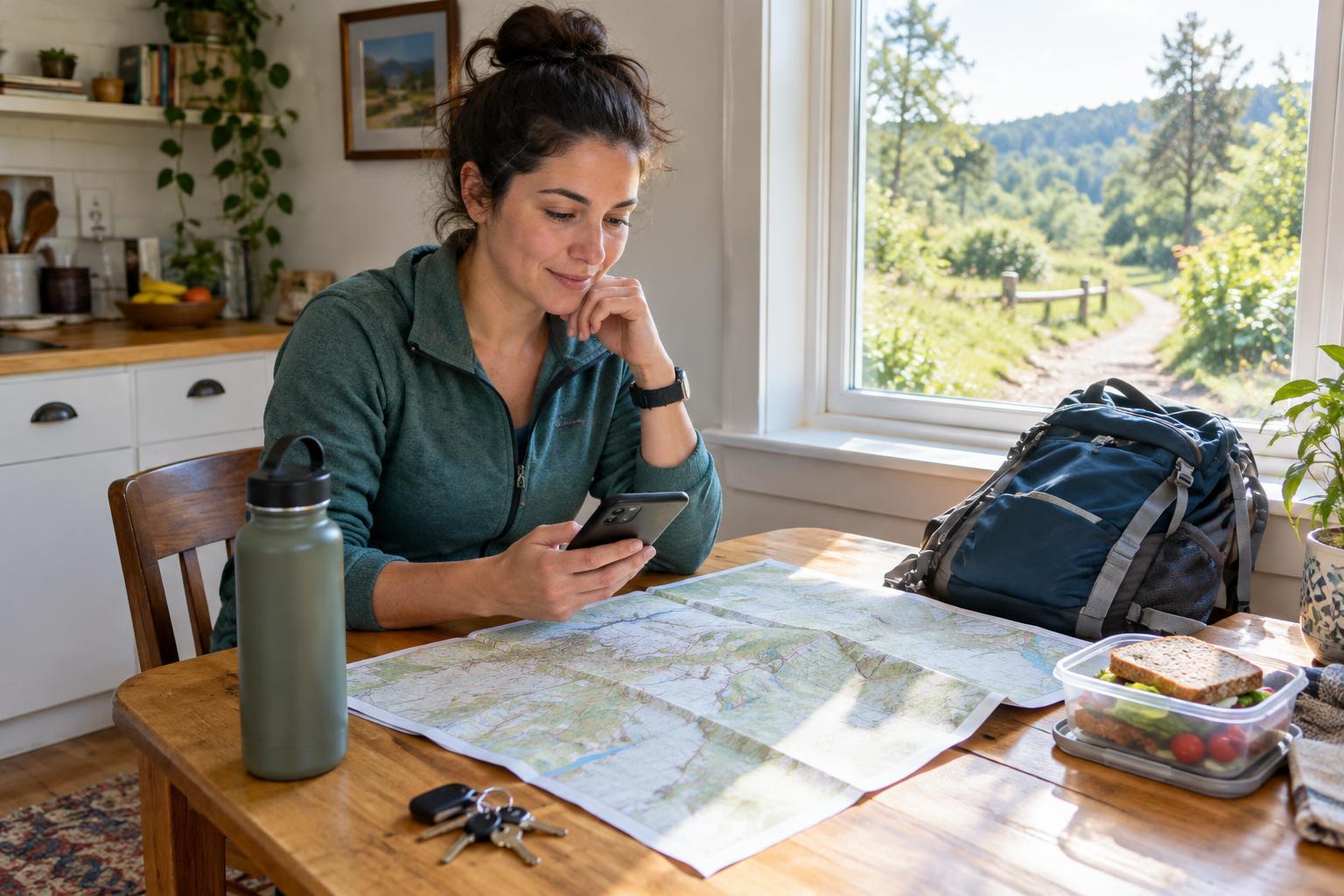
Set a spending limit that includes transport, food, admission fees and a small buffer for an unexpected fare or change of plans. Bringing water and a snack can make the day cheaper and easier. Charge your phone, check whether you need tickets or cash, and save any essential directions where you can access them without a signal. For an outdoor route, look at its length and conditions rather than relying on a description such as “easy.”
Share the details someone would actually need
Before you leave, send your outline to a trusted person who has agreed to be your contact. Include where you are going, your transport or parking plan, your main route or stops, and when you expect to return. If you are driving, tell them where you intend to park. If you are hiking, share the trail name and planned turnaround point. A screenshot of a route can be more useful than a vague message saying you are going out for the day.
Agree on one check-in time and what it means. You might text after lunch and again when you are heading home, or simply send a message when you return. Tell your contact when to expect a reply and what you would like them to do if they cannot reach you after a reasonable agreed window. That avoids leaving them to guess whether a late message is normal. You do not need to share continuous location tracking unless you both find it helpful and are comfortable with it.
Keep your plan flexible without going silent
One pleasure of traveling alone is being able to follow your curiosity. You can spend longer in a gallery or skip the crowded café without consulting anyone. If you make a meaningful change, though, send a short update. “Taking the earlier train home” or “Skipping the park and staying in town until four” is enough. If you expect poor reception, mention that before you enter the area and give a realistic time when you expect to reconnect.
Pay attention to the practical limits of the day. Turn back if a trail takes longer than expected, the weather worsens or you are uncomfortable with the route. Keep enough phone battery and money for the trip home, and know an alternative way back if your first option falls through. Sharing a plan is useful, but it is not a reason to push ahead when the day calls for a simpler choice.
Close the loop when you get home
Send the promised “home” message, even if you already checked in on the return journey. It is a small courtesy that lets your contact know the plan is complete. If they helped you think through the trip, you can also share a favorite photo or the name of a place you would revisit.
Afterward, note what made the day easy and what you would change. Perhaps you needed more time between stops, a cheaper lunch option or an earlier departure. Keep the parts that worked as a template for next time. With a destination, a realistic route and a clear check-in agreement, planning another solo day out becomes much less work.