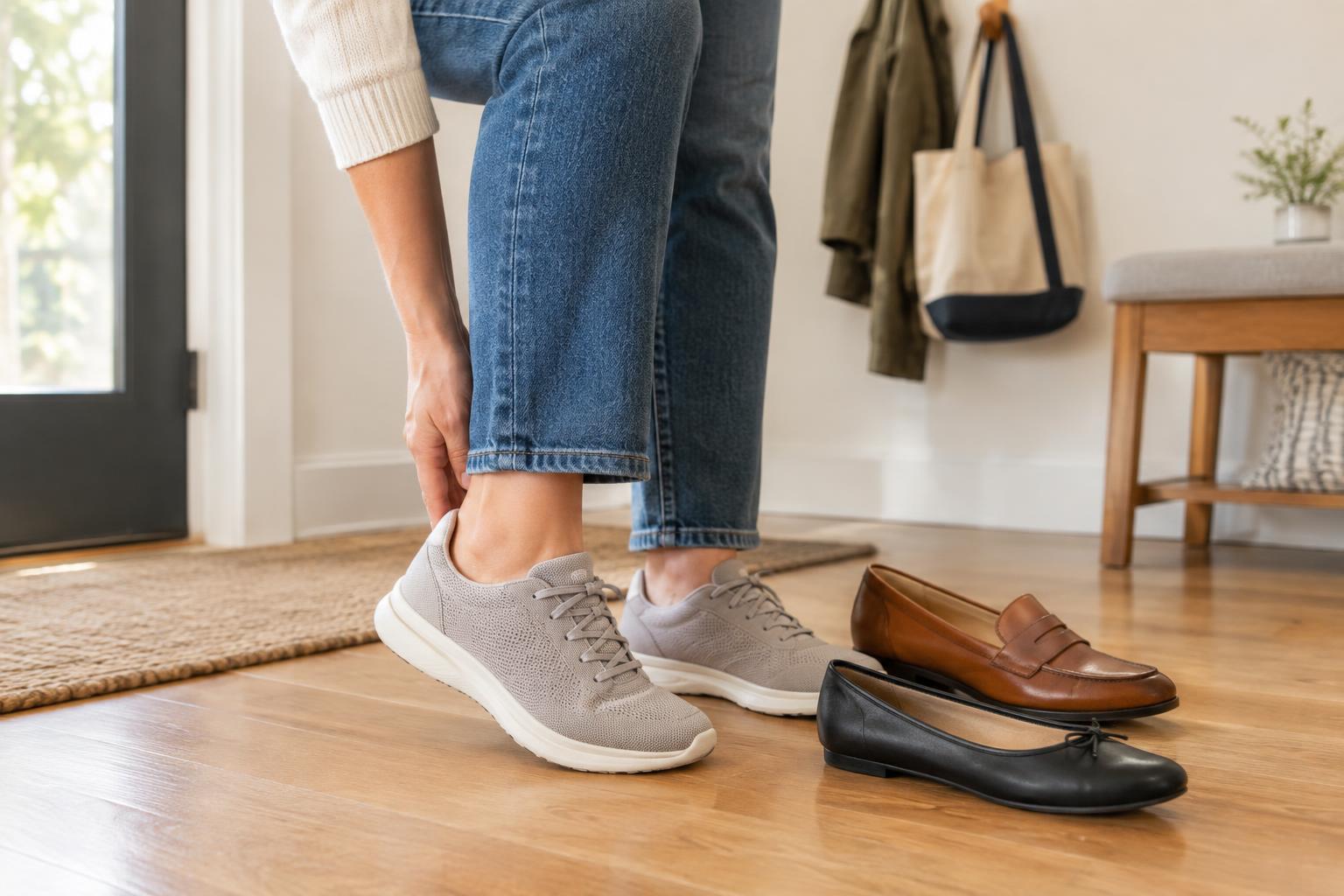
Start with a normal week, not an ideal outfit
Before looking at shoes, think through the days you actually have. Do you walk to a bus stop, stand while cooking, climb office stairs or spend most of the day seated? A shoe that feels fine for a short errand may be frustrating on a day with several stops. Write down the two or three situations in which you wear everyday shoes most often, then shop for those first.
Consider the surfaces and weather you encounter, too. Smooth soles may feel pleasant indoors but be less useful on wet pavement. A fabric upper might be comfortable on a dry commute yet inconvenient if you regularly cross puddles. You do not need one pair to handle every possible outing. A dependable main pair and a second pair for rain, dressier plans or long walks can be more useful than several near-identical purchases.
Pay attention to fit before style labels
Words such as sneaker, loafer and flat tell you how a shoe looks, not how it will feel on your foot. Try shoes on with the socks or insoles you expect to use. Your toes should have room to move without pressing against the front or sides. The widest part of the shoe should sit comfortably around the widest part of your foot, and your heel should feel secure when you walk.
Walk across the store or around your home if you are trying on an online order. Notice whether your toes grip to keep the shoe on, your heel slips, or a seam rubs in one spot. Check both feet; they may not feel exactly the same. Do not count on a stiff or painfully tight pair becoming comfortable later. Some materials soften with wear, but that is not a reliable fix for a poor fit.
The sole matters as much as the upper. Look for a balance that suits your day: enough flexibility for a natural step, without feeling flimsy on the surfaces you use most. Cushioning can feel pleasant, but more is not automatically better. The useful test is whether the whole shoe feels stable and comfortable while you move, not just soft when you press it with a thumb.
Match the shoe to your wardrobe without making it boring
A comfortable shoe earns its place when you want to wear it with your real clothes. Think of three outfits you repeat: perhaps straight-leg jeans and a sweater, work trousers and a simple shirt, and a casual dress. If a candidate works with at least two, it is more likely to leave the closet. Bring a photo of those outfits when shopping, or try the shoes on with similar clothes at home.
Color is an easy place to simplify the decision. A shade already present in your jackets, bags or trousers can make a shoe feel intentional. That does not have to mean black or white. Brown, navy, olive or a muted color can be just as versatile in the right wardrobe. Pay attention to shape as well: a streamlined sneaker, a roomy loafer and a sturdy lace-up each create a different impression, even in the same color.
Shop with a cost-per-wear mindset
Set a budget before browsing, then compare shoes by how often you expect to wear them rather than by price alone. A lower-priced pair is not a bargain if it pinches and stays by the door. An expensive pair is not worthwhile simply because it promises comfort. Decide what matters most for your routine, such as a secure fit, easy cleaning or a sole suited to frequent walking, and avoid paying extra for details you will not use.
If possible, inspect how the shoe is put together. Look for tidy joins, an insole that sits flat and a sole that feels securely attached. Check the care instructions so you know whether the material suits the time you are willing to spend cleaning it. For online purchases, confirm the return terms before wearing the shoes outdoors; a careful indoor try-on gives you a better chance to change your mind.
Test the pair in your actual routine
Once you have chosen a pair, introduce it on an ordinary, manageable day rather than saving its first wear for a long trip. Take note of how it feels after your commute, a grocery run or a few hours of household tasks. If it repeatedly rubs, slips or makes you change how you walk, it may not be the everyday shoe you need, even if you like the look.
Keep the pair useful with small habits: let it dry if it gets damp, clean off dirt before it settles and rotate it with another suitable pair when you can. When it is time to shop again, remember what worked and what did not. That short record of your own routine is often more helpful than chasing a shoe described as universally comfortable.