Start by deciding what belongs in the bathroom
When counter space is scarce, begin with a full reset rather than another organizer. Take everything off the counter and out of the nearby drawers or cabinet. Group similar items: daily toiletries, occasional products, cleaning supplies, spare toiletries and things that belong somewhere else. Check containers for leaks and discard empty packaging. If you find several open versions of the same product, choose one to finish first and put the others in a designated backup spot.
Not every bathroom item needs to live in the bathroom. Extra towels, bulk toilet paper and rarely used grooming tools may fit better in a bedroom closet or hallway cupboard. Keep daily items close to where you use them, but give backups a separate home. This leaves room for the supplies you actually need while getting ready.
Give the counter one clear job
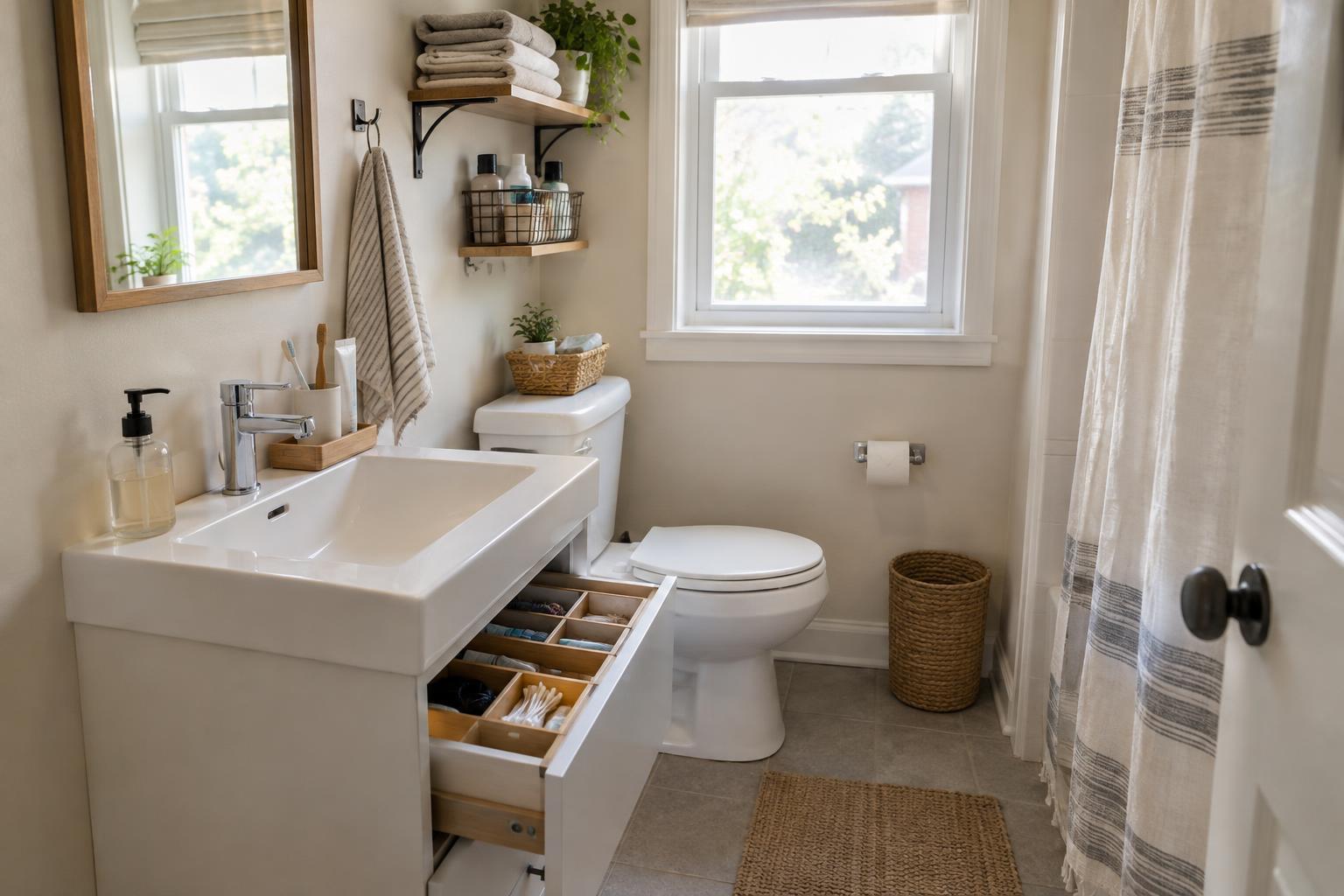
Treat the counter as a work surface, not the main storage area. Leave enough open space to wash your face, set down a toothbrush or clean around the sink. A small tray or washable cup can hold a few daily essentials, such as hand soap, toothbrushes and a frequently used skin-care product. Choose something with a footprint that fits beside the basin without crowding the tap.
If several people share the bathroom, assign each person a small drawer section, cup or portable caddy. A caddy works especially well when there is no drawer space: bring it to the sink, then return it to a shelf or cabinet. It also makes it easier to wipe the counter. Avoid stacking products along the back edge of the sink, where they can get wet, fall over or block cleaning.
Use vertical space without overloading it
Look for storage above the toilet, on the back of the door or along an unused wall. A narrow shelf can hold extra towels and lightweight supplies; a door-mounted hook can take a robe or washcloth off the counter. In a rental, removable hooks or an over-the-door rack may be alternatives to drilling. Check the product’s weight limits and whether the door still closes easily before filling it.
Put frequently used items at a comfortable reach and reserve higher shelves for light, less-used supplies. Keep heavy or breakable containers away from spots where they could fall into the sink or onto someone. Closed bins can make open shelves look calmer, but label them so you do not have to open several to find a spare tube of toothpaste. Leave breathing room around anything that needs ventilation, including damp towels.
Make cabinets and drawers easier to use
The cabinet under the sink often has more usable space than it first appears, but pipes make a large, rigid bin awkward. Measure the clear areas around the plumbing before buying anything. Two smaller washable bins can be easier to fit and pull out than one deep container. Use one for cleaning supplies and another for spare toiletries, keeping any products that need special storage according to their labels.
For shallow drawers, simple dividers stop small items from drifting into a pile. You can test the layout with sturdy boxes you already own before purchasing inserts. Store items upright where practical, with labels facing out, so you can see what you have. In a bathroom without drawers, a narrow rolling cart may help if there is a safe place to park it without blocking the door, walkway or cabinet.
Set up a routine the space can support
An organized bathroom is easier to maintain when putting things away takes only a few seconds. Give each item a specific home near its point of use, and avoid filling every shelf to the edge. That small amount of spare room makes it easier to take out a bin, replace a towel or accommodate a new product without rebuilding the whole system.
Once a week, return stray items to their homes, wipe the counter and check whether any containers have leaked. When you finish a product, look in your backup spot before adding it to a shopping list. If the counter keeps collecting the same item, treat that as useful feedback: its assigned home may be too far away or too hard to access. Move the storage to fit your routine rather than expecting your routine to fit a complicated system.