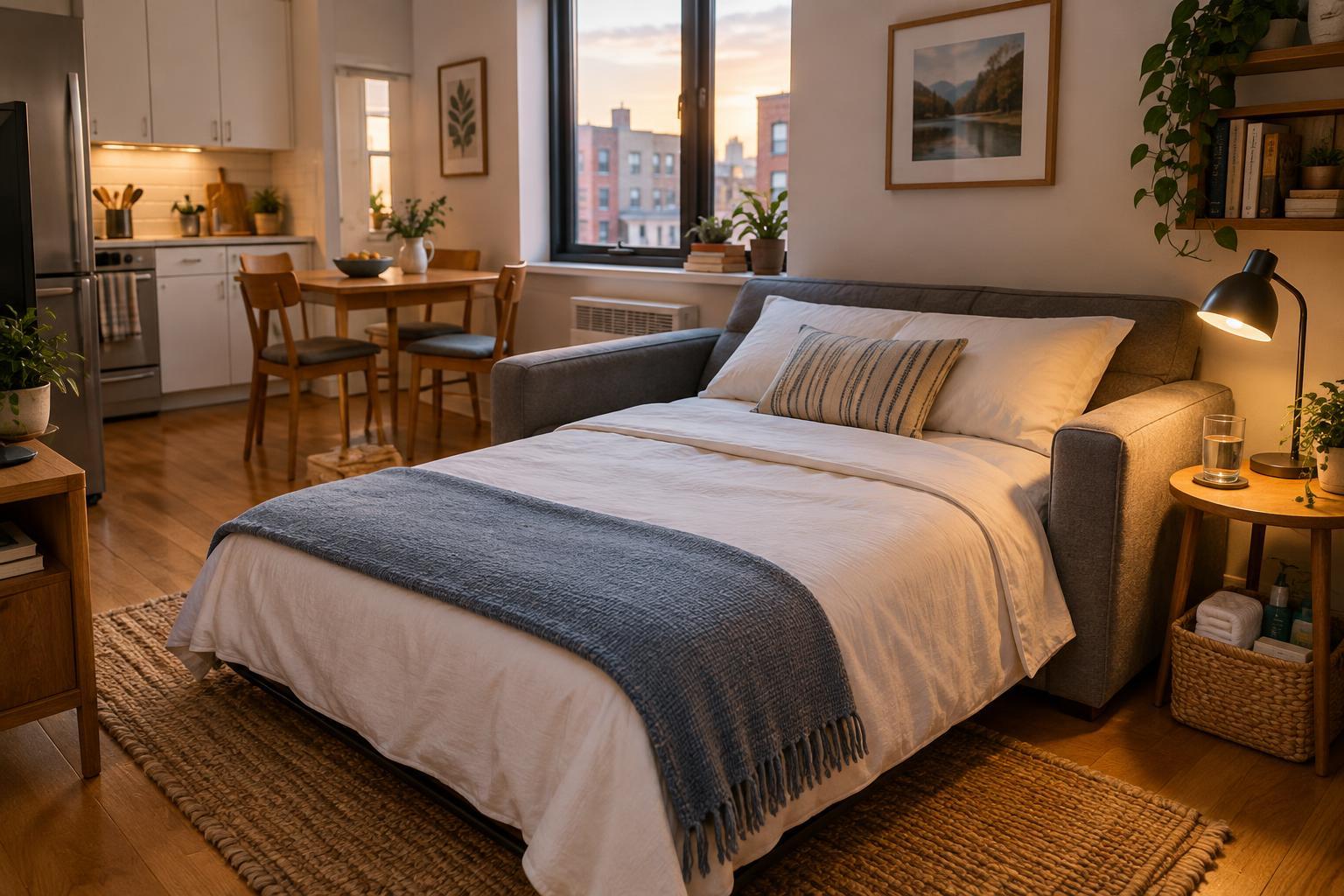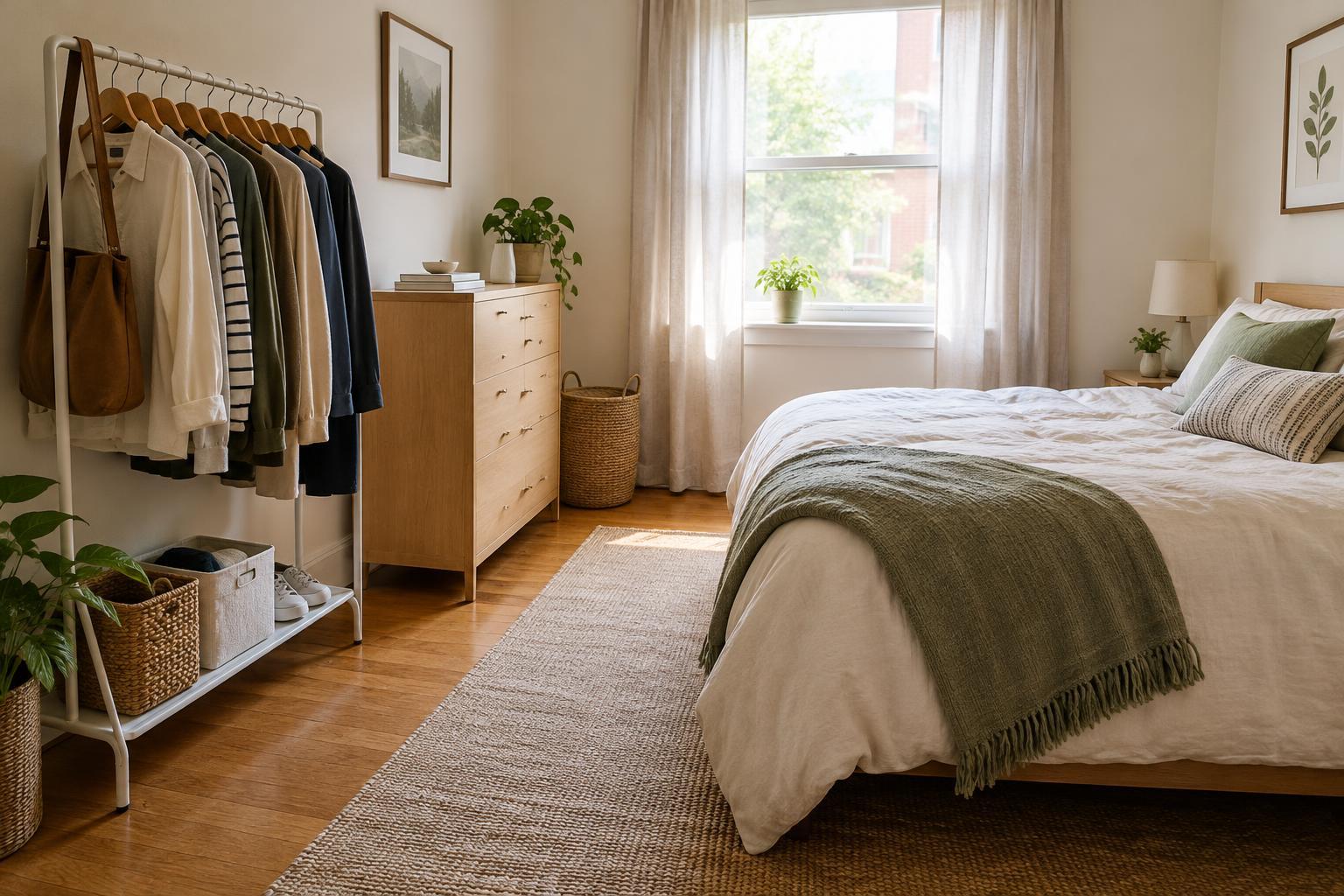
Start with what the bedroom needs to hold
Before buying a rack or storage boxes, gather the clothes, shoes and accessories currently scattered around the bedroom. Sort them into three groups: things you use often, things you use occasionally and things that belong elsewhere. This is also a chance to set aside items that no longer fit or serve you. A smaller wardrobe is easier to organize, but the goal is to make room for what you actually wear, not to meet an arbitrary item count.
Next, look at the available space with doors and drawers open. Measure the width of a free wall, the clearance under the bed and any awkward corners. Leave a comfortable path around the bed rather than filling every gap. In a small room, a little open floor space can make the whole setup feel easier to live with.
Build a small wardrobe zone
Choose one main place for hanging clothes: a freestanding rail, a compact wardrobe or a wall-mounted bar where the wall and your housing arrangement allow it. A rail is useful when you want to see everything at once, though it will look tidier if you reserve it for clothes that need hanging. Put folded T-shirts, knitwear and workout clothes in drawers or bins instead of crowding the bar. Check weight limits and secure any tall furniture as directed by its manufacturer.
If the rail is in full view, give it a clear boundary. Place it along one wall, use matching or similar hangers and leave a little space between garments. A curtain can soften the view, but it should be easy to pull aside; otherwise, it may become one more obstacle between you and your clothes. Keep shoes below the rail only if there is enough room to see and reach each pair.
Give folded clothes and extras a home
A dresser is not the only option for folded storage. A narrow drawer unit, a low cabinet that doubles as a bedside table or sturdy shelf bins may fit better. Assign each drawer or bin a simple category, such as sleepwear, socks or everyday tops. Shallow containers are especially helpful for small items because they keep a pile from turning into a jumble.
Use under-bed space for items you need less frequently, such as spare bedding or off-season clothes. Measure the height before buying containers, and choose ones you can pull out without moving furniture. If your bed sits too low, a different bed frame may be a better long-term solution than squeezing in flimsy boxes. Store clean, dry textiles in closed containers, and label the ends so you do not have to open several to find one set of sheets.
Make daily routines easy
The best storage spot is often the one closest to where you use something. Put a small tray near the bed for glasses and other pocket items. Hang a few hooks behind the door or beside the wardrobe zone for a robe, a bag or tomorrow’s outfit, provided the door can still open fully. Keep hooks for items in active use, not as a second permanent clothes rail.
Plan for clothes that are worn but not ready for laundry. A designated hook or one section of the rail prevents them from landing on a chair. Give laundry its own basket with an easy-to-reach opening. If shoes tend to spread across the floor, start with a mat or a low shoe rack near the doorway and keep only the pairs you wear regularly in the bedroom.
Adjust the system before adding more storage
Live with the arrangement for a week or two before filling every empty spot. Notice where piles form: they usually point to a missing home for an item or a storage place that takes too much effort to use. Move a bin, change a category or remove an extra step before purchasing another organizer. Secondhand furniture and containers you already own can be good ways to test a layout on a modest budget.
Keep the room manageable with a brief reset: return clean clothes to their places, clear the floor and put laundry in the basket. When seasons change, swap the contents of your most accessible storage rather than forcing everything into the daily-use zone. A closet-free bedroom does not need to hide every possession. It needs a place for each kind of item and enough breathing room to make getting dressed straightforward.