Start with a simple ratio
A quick vinaigrette can turn leftover rice, a handful of greens or chopped vegetables into a meal that feels put together. You do not need a blender or a long ingredient list. Start with three parts oil to one part acid, then add a pinch of salt. For a small batch, that means three tablespoons of olive oil and one tablespoon of lemon juice or vinegar. It is enough to dress a few servings, depending on how much you use.
Treat the ratio as a starting point, not a rule. Lemon juice, red wine vinegar and apple cider vinegar each bring a different kind of sharpness. Olive oil adds its own flavor; a neutral oil lets the other ingredients stand out. If the dressing tastes too sharp, add a little more oil. If it tastes flat or heavy, add a few drops of acid and another small pinch of salt. Tasting as you go is more useful than measuring with perfect precision.
Mix it in a jar or bowl
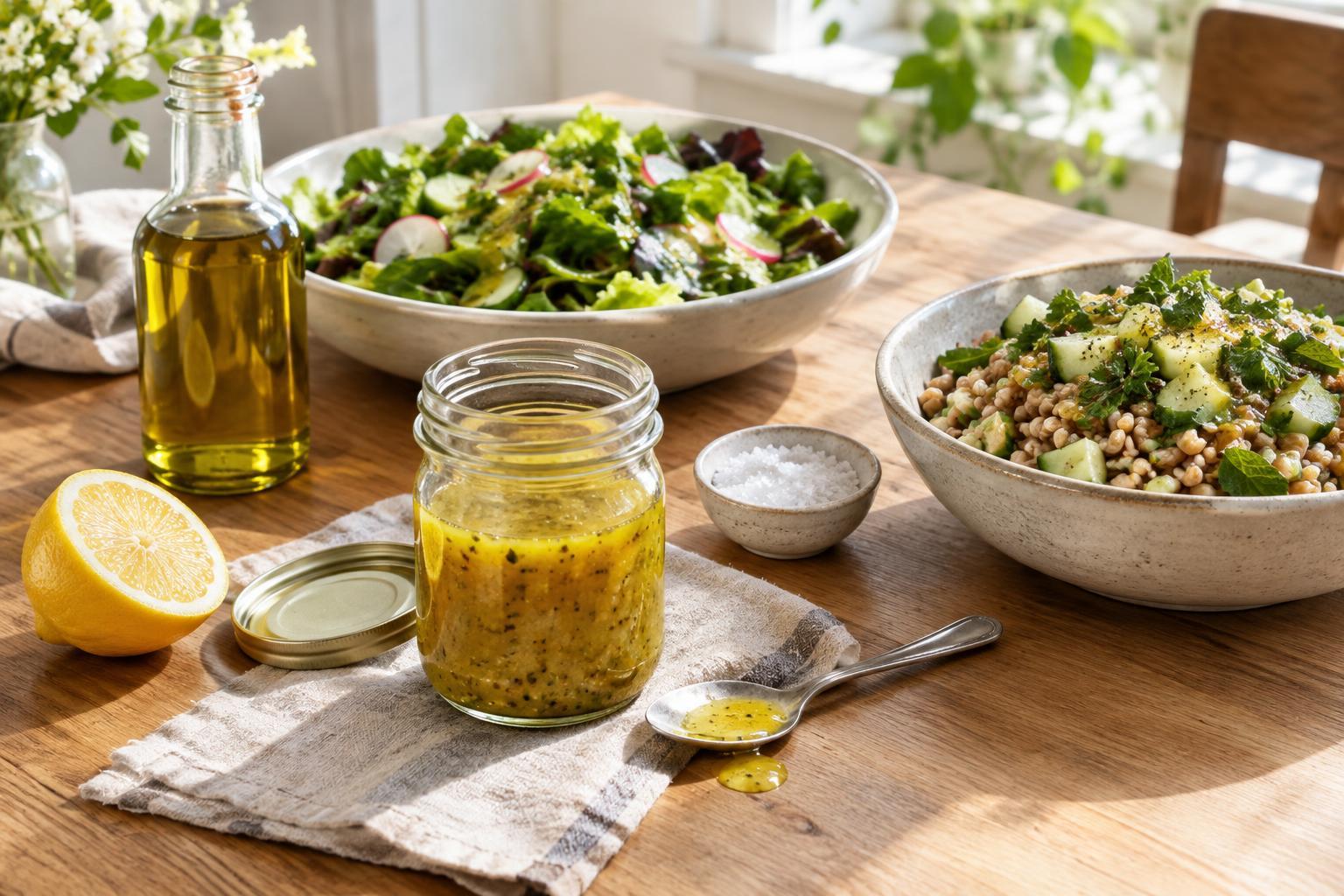
The fastest method is to put the oil, acid and salt in a clean jar with a tight-fitting lid. Add a teaspoon of mustard if you have it. Mustard contributes flavor and helps the ingredients stay mixed long enough to dress your food. Close the lid and shake until the mixture looks cloudy. No jar? Whisk the acid, salt and mustard in a bowl, then whisk in the oil.
Dip a lettuce leaf, cucumber slice or spoonful of cooked grain into the dressing before making changes. A plain spoonful of vinaigrette may taste stronger than it will on food. For a rounder flavor, try a small amount of honey or maple syrup; for more bite, add finely chopped shallot or a little black pepper. Add just one extra ingredient at a time so you can tell what improved the dressing.
Match the dressing to the bowl
Tender greens need a light touch. Dry washed leaves well, add a modest spoonful of vinaigrette and toss before deciding whether they need more. Water left on the leaves can dilute the dressing, while too much oil can make a small salad feel weighed down. For a salad with tomatoes or other juicy vegetables, taste again just before serving: their juices will become part of the dressing.
Grain bowls can handle a bolder mix. Warm or room-temperature grains, beans and roasted vegetables have more substance than lettuce, so they may need a little extra acid or salt to taste lively. Toss some dressing with the grains first, then add toppings and another small drizzle if needed. This helps spread flavor through the bowl instead of leaving all the dressing on top.
Build variations from what you have
You can change the character of a vinaigrette without buying a separate bottle for every meal. Use lemon juice, olive oil and black pepper for a bowl of chickpeas, cucumber and herbs. Try apple cider vinegar with mustard for a cabbage-and-carrot salad. For a bowl of rice, roasted squash and greens, a touch of sweetness can balance the vinegar. These are combinations to experiment with, not recipes that require exact ingredients.
Before adding anything new, check the pantry and refrigerator. A little citrus zest, a pinch of dried herbs or a spoonful of finely chopped fresh herbs can use up ingredients already on hand. If you include garlic or shallot, chop it finely so one bite does not get all the sharpness. Keeping the basic dressing simple makes it easier to adapt to lunch the next day.
Make only what you need
A small batch takes about as much effort as a large one and is easier to adjust. If you do have leftovers, cover and refrigerate them, especially when the dressing contains fresh herbs, garlic or shallot. Shake or whisk it again before using it; separation is normal. Olive oil may thicken when cold, so let the container sit briefly at room temperature until the dressing can be mixed.
The most useful habit is to dress, taste and adjust rather than pour in the whole batch at once. Keep a little vinaigrette aside until you know how the greens or grains absorb it. With oil, an acid and a pinch of salt on hand, a quick lunch or simple side salad is always within reach.