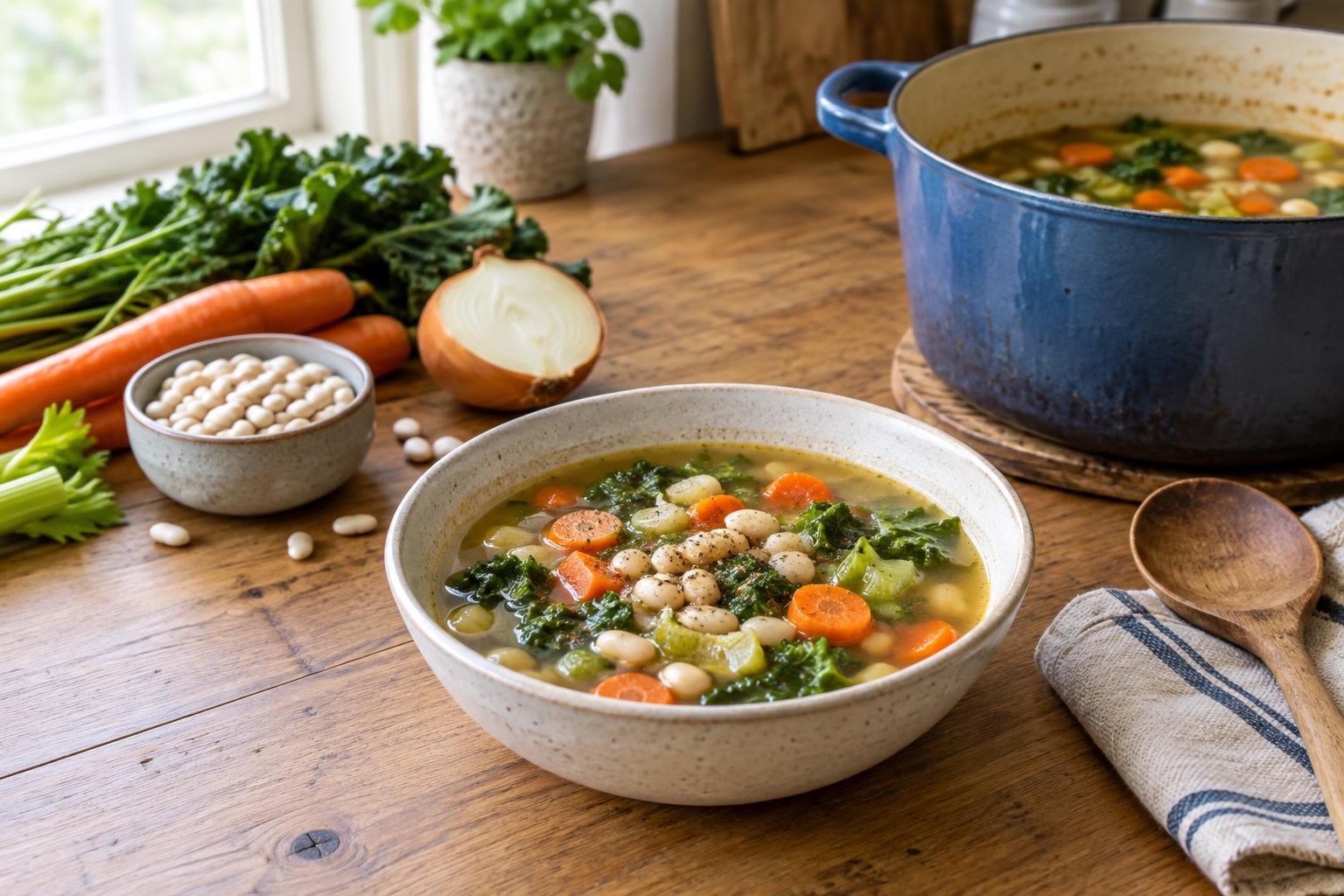
Start with a simple framework
Think of soup as a pot with four parts: a flavorful base, enough liquid to simmer it, something substantial to eat and a finishing touch. You do not need all four parts to be elaborate. An onion softened in oil, a few handfuls of vegetables, broth and a squeeze of lemon can make a complete, pleasant bowl.
For two or three servings, start with about a tablespoon of oil, one small onion or a similar amount of leek, two to three cups of chopped vegetables and three to four cups of liquid. Water works, though broth adds flavor more quickly. These are starting points, not rules: use less liquid for a thick soup and more for a lighter one. If you want a heartier meal, plan to add a can of drained beans, some cooked grains or a small handful of pasta.
Build flavor before adding liquid
Set a pot over medium heat and soften chopped onion in the oil with a pinch of salt. Stir occasionally until the onion looks translucent and smells sweet. If you have celery, carrot, garlic or the tender parts of a leek, add them too. Garlic needs less time than a carrot, so put it in near the end of this stage. A little tomato paste or a pinch of dried herbs can go in next; stir for a minute before pouring in the liquid.
This first step is useful, but it is not a test you can fail. If time is short, put the vegetables and liquid in the pot together and simmer them. The result may have a gentler flavor, which you can strengthen later with seasoning. Frozen chopped vegetables are also welcome here: they can go straight into the pot without thawing.
Add ingredients in the order they need to cook
Once the liquid is in, add firm vegetables such as potatoes, carrots or winter squash. Bring the pot to a gentle boil, then lower the heat so it simmers. Cut pieces to a similar size and check them with a fork as they cook. When they are nearly tender, add quicker-cooking ingredients such as zucchini, peas or chopped greens. Canned beans only need to heat through. If you are using dried beans, cook them separately before adding them to this flexible soup; they need more planning than most vegetables.
Pasta and rice need particular attention because they absorb liquid. Add a modest amount and check the pot often, topping it up with water or broth if necessary. For leftovers, consider cooking pasta or rice separately and adding it to each bowl. That keeps the stored soup from becoming unexpectedly thick. If you are adding raw meat, use an appropriate cooking method and make sure it is fully cooked before serving; leftover cooked meat is the easier choice for an improvised pot.
Taste, then decide what is missing
When the ingredients are tender, taste a spoonful. If the soup seems flat, add a little salt, stir and taste again. A small splash of lemon juice or vinegar can brighten a rich or starchy soup. If it tastes too sharp, give it a few more minutes of simmering or add a little more broth and something mellow, such as beans or potato. Black pepper, chili flakes or a spoonful of yogurt can change the character of a bowl without changing the whole pot.
Texture is just as adjustable. Mash some beans or potatoes against the side of the pot to thicken the broth. For a smoother soup, carefully blend a portion and stir it back in, following your blender’s guidance for hot liquids. If the soup is too thick, add liquid a little at a time. Let it simmer uncovered briefly if it is thinner than you want.
Use combinations you already like
The framework gets easier when you start with familiar pairings. Try onion, carrot, canned white beans and spinach, finished with lemon. Or combine onion, potato and frozen peas, then stir in a little milk at the end for a softer, creamier bowl. For a tomato-based version, simmer canned tomatoes with broth, vegetables and a small handful of pasta. None requires a long ingredient list, and each can change with what is in your cupboard.
Before serving, ask whether the bowl has enough substance for the meal you want. Toast, a piece of cheese or a spoonful of cooked grains can make a light vegetable soup more filling without complicating the pot. Note roughly what you used if you particularly enjoy the result. Next time, that memory—not an exact recipe—can be your starting point.