Plan for what you do in the room
Before buying a lamp, notice when the room feels dim and what you are trying to do. Reading on the sofa calls for light in a different place than finding clothes in a closet or preparing food at a counter. Walk through the room after dark and identify two or three spots where better visibility would help. This gives each lamp a job and helps you avoid filling a small room with fixtures that all illuminate the same corner.
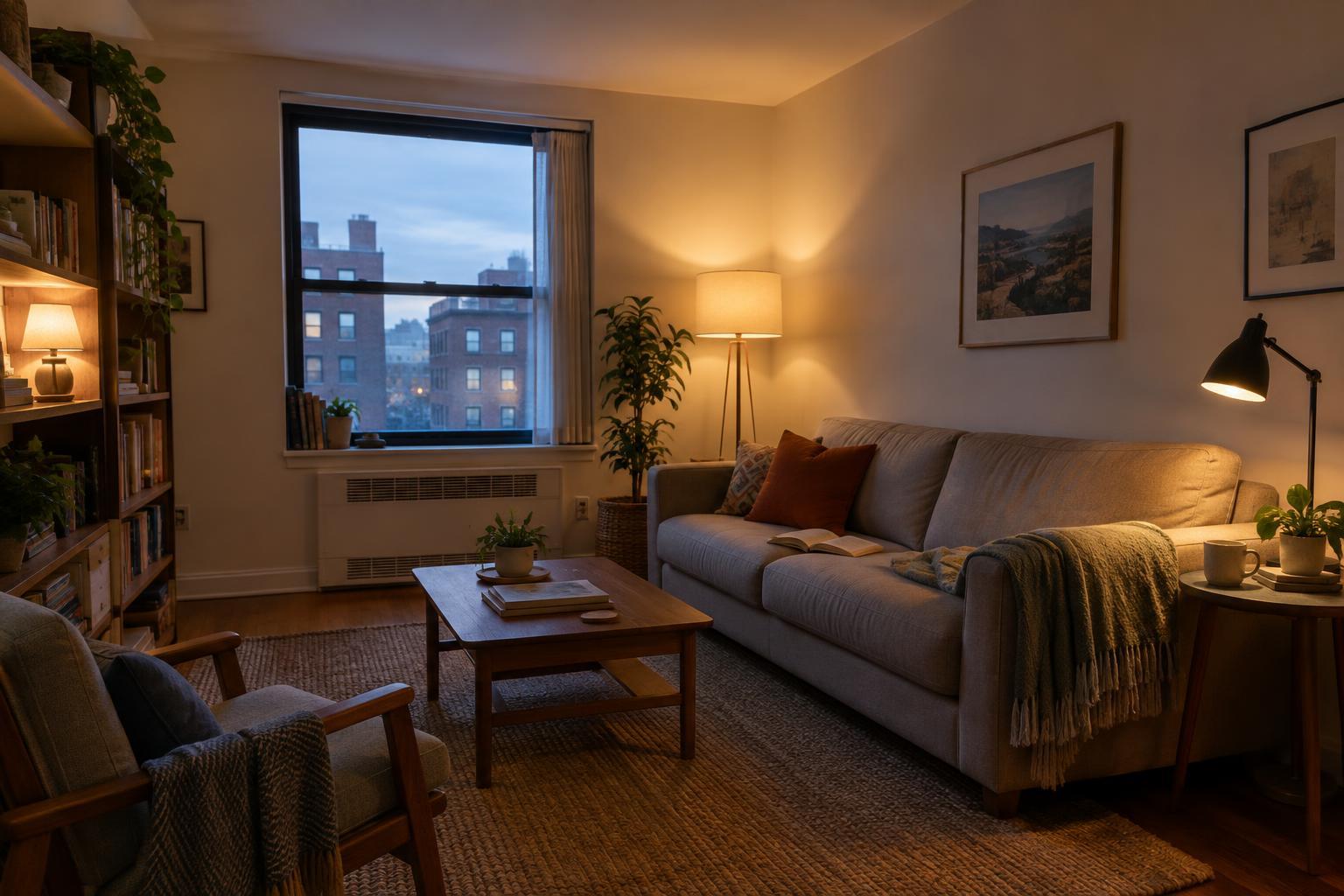
Think of the room in layers: general light to move around by, focused light for activities, and softer light that makes the space pleasant in the evening. You do not need a separate lamp for every layer. A floor lamp beside a sofa, for example, may brighten part of the room while also serving as a reading light if its shade or arm directs light downward.
Build a base with one well-placed lamp
Start with a floor lamp if you have little table space. Put it where its light can spread across the room rather than behind a large piece of furniture. A shade that directs some light upward can brighten a pale wall or ceiling, creating a gentler effect than a bare bulb at eye level. An adjustable lamp can also point toward a dark corner instead of lighting only the floor beneath it.
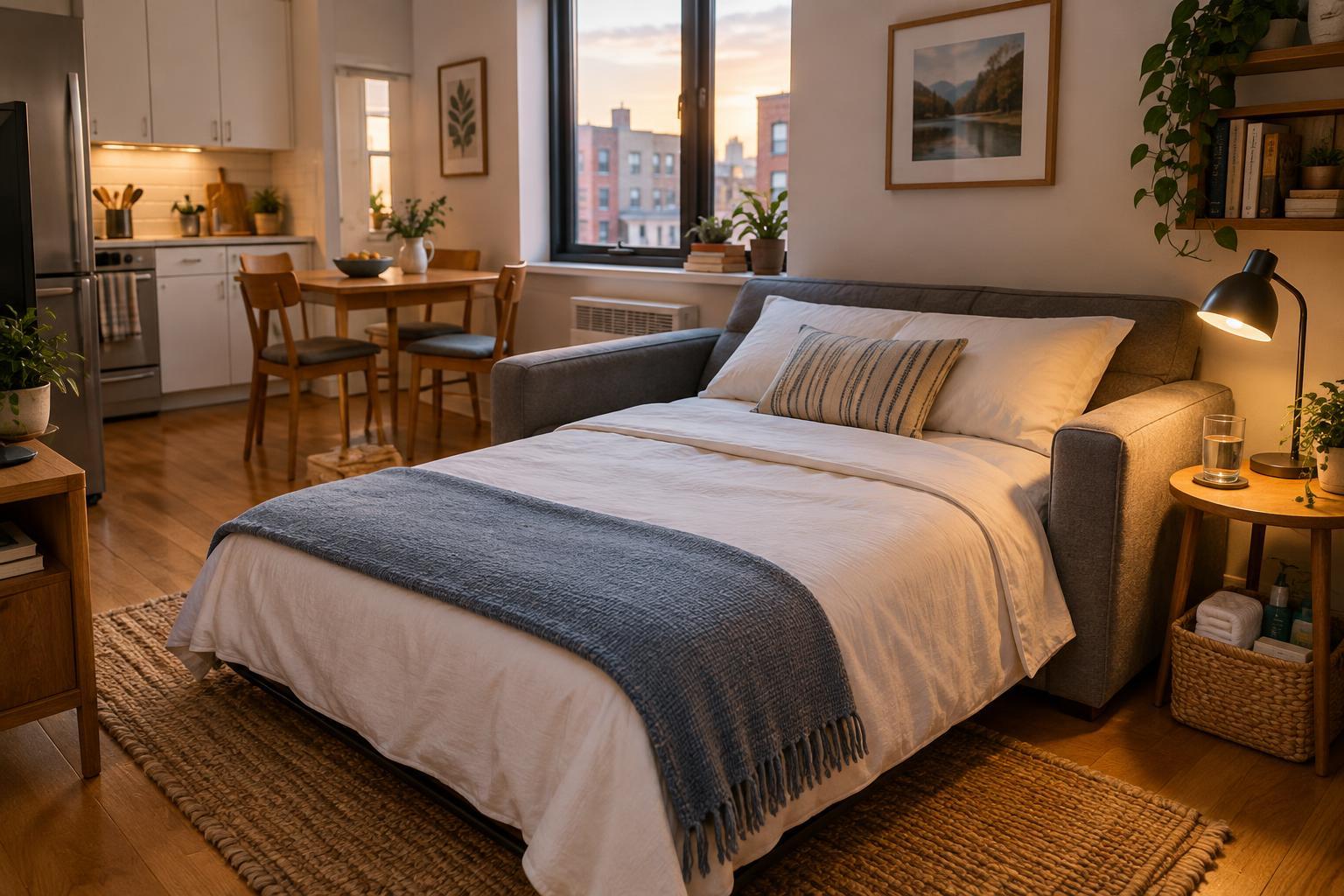
If floor space is tighter than surface space, try a compact table lamp on a dresser, shelf or sturdy side table. Set it far enough back that it will not be knocked over during ordinary use. A lamp near the room’s middle may do more work than one tucked into a distant corner. Test a position with a lamp you already own before committing to a new purchase; moving it a few feet may change how the whole room feels.
Add focused light where you need it
Once you have a comfortable base, add light to the tasks that still feel difficult. A narrow desk lamp can illuminate paperwork without lighting the entire room. A clip-on reading lamp can save space beside a bed, provided it attaches securely to a suitable surface. If a closet is hard to see into, a battery-powered light can be useful there, though batteries will need replacing or recharging.
In a multipurpose room, choose lamps that can change direction. An adjustable arm beside a sofa can point at a book, then turn toward a small worktable. Try to place task lighting so your body does not cast a shadow over what you are doing. You may find that one movable lamp serves you better than several fixed ones, especially when the furniture layout changes.
Choose bulbs and shades for comfort
A brighter bulb is not always a better bulb. Check the lamp’s label for its permitted bulb type and maximum wattage, then compare bulb packages for light output, often shown in lumens. If you are unsure what feels right, start with a moderate-output bulb and adjust after using the room for a few evenings. A dimmable bulb can add flexibility, but confirm that it is compatible with the lamp or dimmer you plan to use.
For a relaxed living room or bedroom, a warm-looking bulb often feels comfortable; a desk or hobby area may benefit from a clearer, brighter-looking light. Shades matter too. An opaque shade directs light more strongly, while a translucent shade can spread it around the room. Avoid placing an exposed bulb where you will see it directly from your usual seat, since glare can make a room feel less comfortable even when it is well lit.
Keep the layout tidy and safe
No-overhead lighting often means more cords, so plan a route to an outlet before deciding where each lamp belongs. Keep cords out of walking paths and away from places where furniture might pinch them. Do not run them under rugs, and avoid overloading an outlet or power strip. If a lamp needs a cord stretched across the room, another location or a different type of light is usually a better choice.
Finally, look at the room from the doorway and from your usual seat after dark. If one side still feels gloomy, try shifting an existing lamp before buying another. If the room feels harsh, aim a light at a wall or swap an exposed bulb for a shaded lamp. Two or three lights with distinct jobs can make a small room more useful without making it feel crowded.