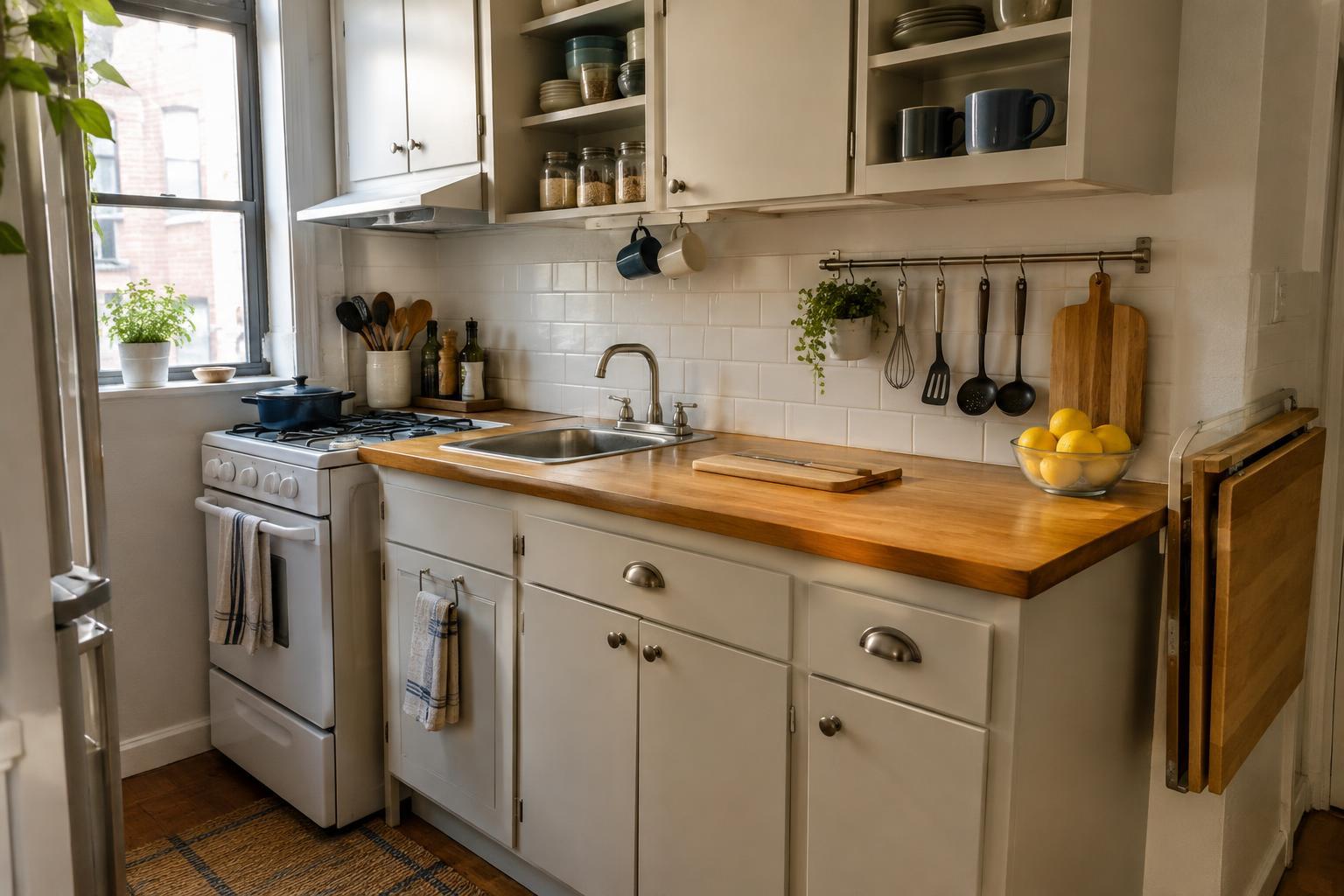
Give the counter a job
In a tiny kitchen, even a few objects can take over the only place you have to chop vegetables or make a sandwich. Before buying organizers, clear one stretch of counter and notice how you use it for a few days. Where do you put groceries when you come in? Where is it comfortable to prepare food? Protect that spot as a work zone rather than treating every open inch as storage.
Put everything back only after asking whether it needs to live there. A kettle used several times a day may earn its place; a blender used twice a month probably belongs in a cabinet. If you share the kitchen, agree on a simple rule, such as keeping the area beside the sink clear. A visible, usable patch of counter is more valuable than a perfectly arranged collection of appliances.
Move daily essentials close, not necessarily onto the counter
The best alternative home for an item is near the point where you use it. Keep mugs and tea in a cabinet above the kettle, or put cooking oil and frequently used seasonings together in a reachable cupboard by the stove. A shallow tray inside a cabinet can make small bottles easy to pull out without leaving them on display. If cabinet space is tight, look for unused vertical room: a shelf riser may let plates sit below bowls rather than in one tall stack.
Make access part of the decision. You should not have to unload a cupboard every morning to find the coffee. Put less-used serving pieces or spare containers on higher shelves and reserve the easiest-to-reach storage for ordinary days. If opening a cabinet reveals duplicates, mismatched lids or gadgets you no longer use, sorting those first may free more space than any new rack.
Use walls and doors with care
A clear wall can hold useful storage without shrinking your prep area. A rail with hooks can keep sturdy utensils together, while a narrow shelf may hold lightweight items you reach for often. Renters can consider removable hooks for light objects, but should check the product’s weight limits and test whether the surface is suitable. For anything heavy or breakable, a properly mounted shelf or a cabinet is the safer choice.
The inside of a cabinet door can also work for a slim holder for measuring spoons, pot lids or cleaning supplies. Measure the space before adding one: the door still needs to close around the shelves inside. Avoid crowding the area above a stove or blocking outlets, ventilation or a window. Moving clutter upward only helps if the new arrangement remains comfortable and safe to use.
Add a work surface that can disappear
If the counter is still too small, look for a surface that serves more than one purpose. A sturdy cutting board may bridge a sink when the sink is not in use, provided it fits securely and stays stable. A rolling cart can hold pantry items and offer extra prep room, then move aside when you need floor space. Lockable wheels are worth considering if you will work on the cart rather than use it only for storage.
In a very narrow kitchen, a folding table may be more useful than a permanent island. Check that drawers, doors and walking routes can still open when it is set up. You do not need to buy something immediately: try placing a board or small table where a cart might go for a few meals. That trial will tell you whether extra surface area solves the problem or simply makes the room harder to move through.
Make the clear space easy to keep
Counter space often disappears during the transition between tasks: mail lands beside the toaster, dishes wait near the sink and an empty grocery bag stays out for days. Give those items destinations outside the prep zone. A hook can hold reusable bags, a small bin can collect paper that needs attention, and a dish rack that folds away can leave room free once dishes are dry.
Finish cooking with a short reset: put ingredients away, wash or stack tools, and wipe the section you want ready for next time. If one category keeps returning to the counter, its assigned home may be too inconvenient. Adjust that home instead of relying on willpower. The goal is not an empty kitchen; it is enough clear, dependable space to make the next meal without first moving everything else.