Start with the load, not the drying rack
In a small home, the easiest drying problem to solve is the one you never create: too many wet clothes at once. Wash a load that your drying space can actually hold, rather than filling the machine and then looking for somewhere to drape everything. If you have room to hang only a few shirts, some underwear and a pair of trousers with space between them, that is a more useful limit than the capacity of your washer.
Run an extra spin cycle if your machine offers one and the garment labels allow it. Less water in the fabric generally means less time hanging indoors. Give each item a shake before hanging it to separate folds and reduce bunching. Keep heavy towels, bedding and thick denim for a day when you can give them more space; these items can stay damp long after a small rack appears ready to put away.
Choose one drying zone that stays out of the way
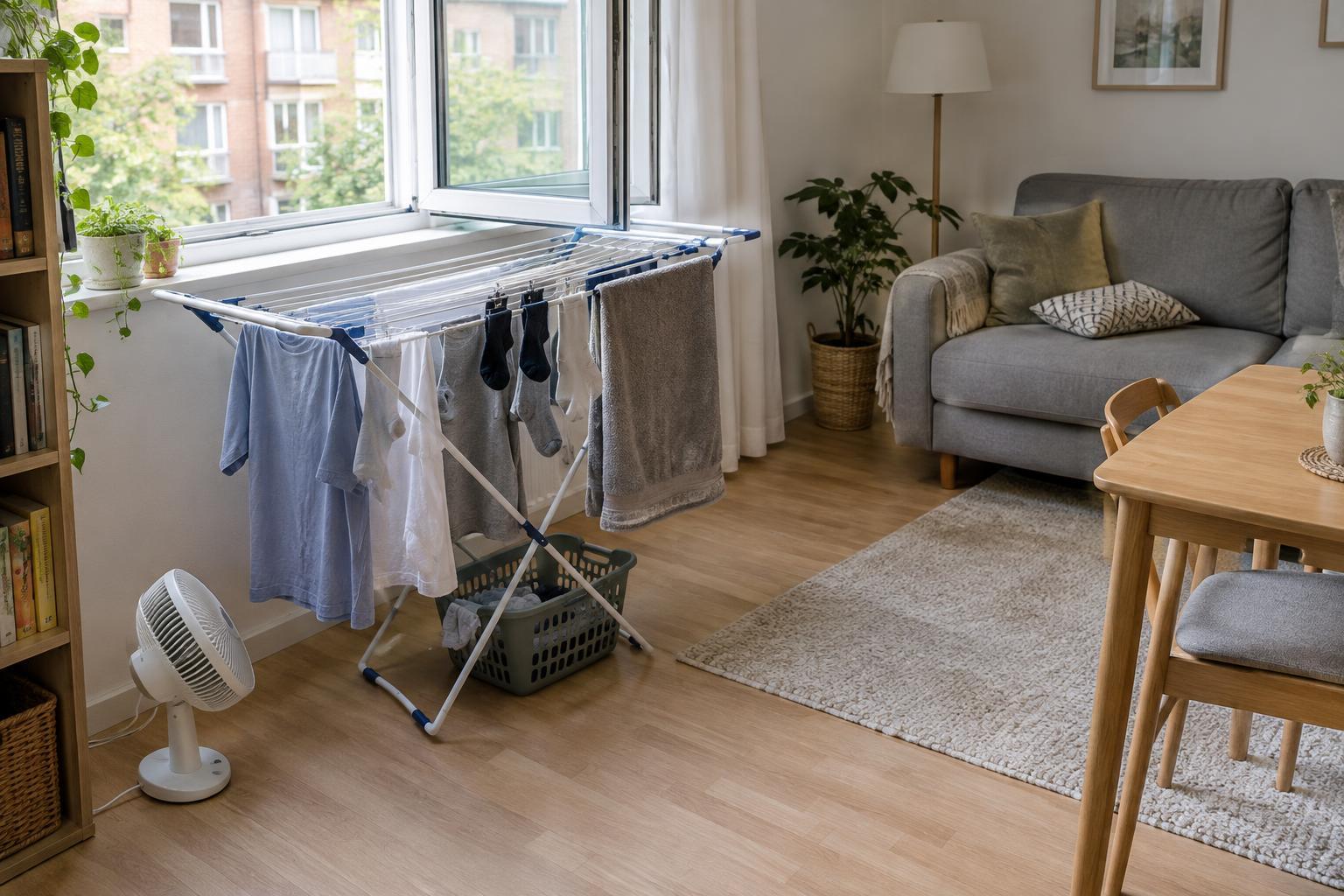
Pick a spot you can dedicate to laundry for a few hours without losing a doorway, a seat or a clear path across the room. The end of a kitchen counter is rarely ideal if you need it to cook. A rack beside a window may work better, provided it does not press against curtains or a cold wall. Leave enough room to walk around the rack without brushing against wet clothes.
A slim folding rack can fit along a wall when open and behind a door or beside a cabinet when stored. A bathtub can be a useful temporary zone for a small rack if the room has ventilation and the tub will not be needed soon. Over-door hangers and wall-mounted rails may free up floor space, but check the weight they are designed to hold and whether the door, wall or rental rules suit the installation. You do not need to buy a system before trying a basic rack in two or three locations.
Give every garment breathing room
Air needs to reach the fabric for drying to progress. Hang shirts on hangers if that gives them more room than laying them across several bars. Place smaller items on the rack’s inner bars and longer items toward its edges, where they are less likely to bunch up. Avoid stacking socks or folding a towel into several damp layers just to fit one more item on the rack.
If the rack is crowded, move a few pieces to a second suitable spot rather than packing everything tighter. A shower rail may hold a couple of light garments, but do not overload it or hang laundry where it will interfere with using the bathroom. Check clothes before putting them away, especially at cuffs, waistbands and seams. Those thicker areas can still feel damp when the rest of an item feels dry.
Manage moisture without making the room uncomfortable
Drying laundry releases moisture into the room. Where practical, use an extractor fan or open a window for a while to let humid air leave. A fan can help move air past the clothes, though it does not remove moisture from the home on its own. If you already use a dehumidifier, follow its instructions and place it so air can circulate around both the machine and the laundry.
Pay attention to signs that the drying setup is too much for the room, such as persistent condensation on windows or a musty smell. Try smaller loads, more ventilation or a different drying spot. Keep laundry away from electrical outlets and heaters, and do not drape clothes over a space heater or block its airflow. Keep doorways and escape routes clear, even if that means drying fewer pieces at a time.
Make the setup easy to put away
A drying arrangement works best when it has an end point. Put up the rack after washing, spread the clothes out, then fold the rack as soon as the final items are dry. A small basket nearby can hold pegs and hangers so they do not migrate onto tables and chairs. If you dry laundry indoors often, keep the rack close to where you use it rather than burying it in a hard-to-reach cupboard.
For a manageable routine, try washing one small load in the morning and checking it later in the day. Move any slower-drying pieces to the most open bars once the lighter items are ready to put away. The goal is not to make laundry invisible while it dries. It is to give it a temporary, safe place that still lets you cook, sit down and move comfortably through your home.