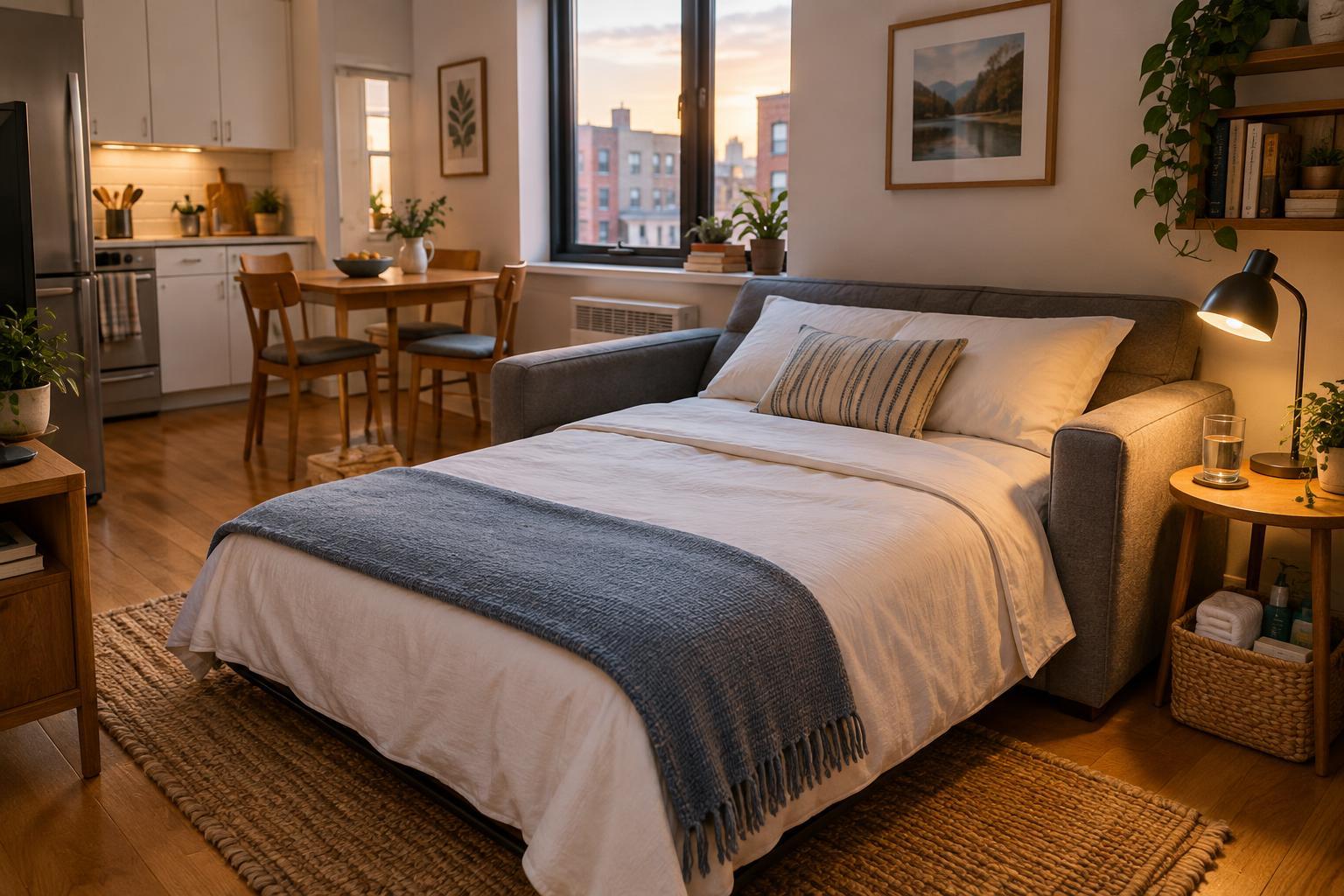
Decide what kind of privacy you need
Before buying a screen or rearranging furniture, name the moments that feel exposed. Do you need a place to take a call, change clothes, sleep while someone else is awake, or simply sit without making eye contact? Each need calls for a different solution. A curtain can block a view, for example, but it will do little to stop conversation from carrying across the room.
Walk through an ordinary day and mark the areas people need to cross. Keep the route to the door, windows, and frequently used storage clear. Then choose one or two places where a visual boundary would help most. In a compact bedroom, that might mean shielding the bed from the doorway. In a combined living and sleeping space, it might mean turning a desk away from the main seating area.
Make a boundary with what you already own
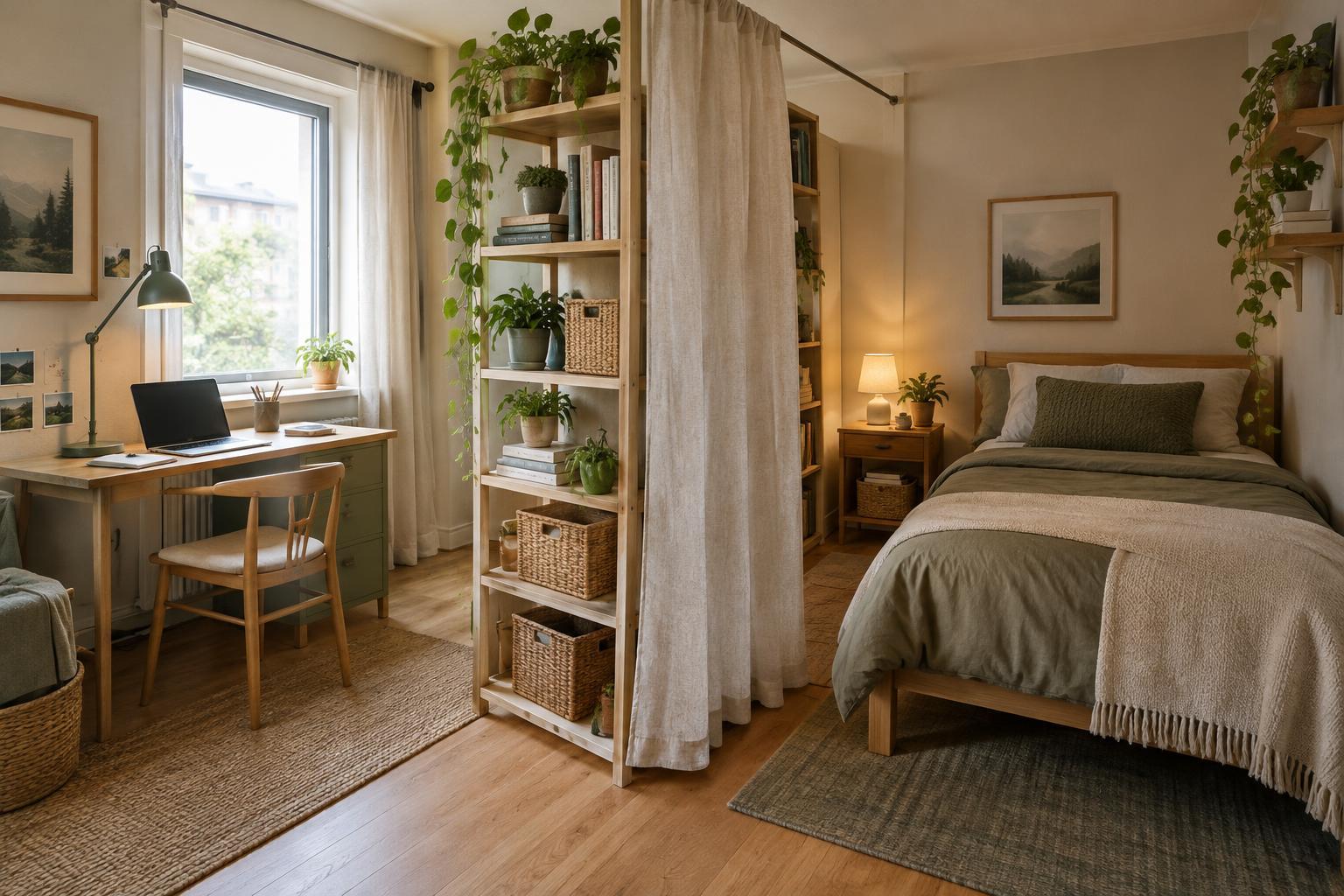
Furniture can define a zone without adding another object to the room. Try placing a bookcase perpendicular to a wall, or turning a sofa so its back marks the edge of a sleeping area. A low shelf preserves a sense of openness while signaling that one side has a different purpose. Put heavier items on lower shelves and follow the manufacturer’s guidance for securing any tall furniture, especially where children or pets are present.
For more coverage, consider a folding screen, a freestanding garment rack with a fabric panel, or curtains on a suitable tension rod. Measure both the space you want to cover and the space needed to walk around it. A divider that looks generous in a photo may make a narrow room frustrating to use. Lightweight, movable options are helpful when the room needs to serve different purposes throughout the day.
Use light and fabric to soften the divide
A private corner feels more convincing when it has its own light. A desk lamp can define a work area without illuminating someone else’s bed. A reading lamp beside a chair gives that spot a clear purpose, while a shade or adjustable beam helps keep light from spilling across the room. If one person sleeps earlier, test the lighting at night before settling on a layout.
Fabric can make a boundary feel softer and less temporary. A washable curtain or screen panel is easier to live with than a material that collects dust and cannot be cleaned. Choose a fabric that provides the level of visual coverage you want, but avoid enclosing a corner so tightly that it feels stuffy. Keep fabric away from heat sources, and do not let a divider obstruct vents, exits, or access to a window.
Plan for sound without expecting silence
Most room dividers offer visual privacy, not soundproofing. Soft furnishings such as a rug, upholstered chair, or curtains may reduce some of the hard, echoing quality of a room, but they will not make a phone call inaudible. For calls that need real discretion, use a different room or arrange a time when your roommate can step out, if that works for both of you.
For everyday noise, small changes are often more useful than another purchase. Headphones can keep videos and music from filling the room. A fan or other steady background sound may make minor movements less noticeable, provided everyone is comfortable with it. Put a basket near each person’s area for items they often need, so a late-night search does not become a room-wide disturbance.
Agree on boundaries people can actually follow
A physical divider works best when its meaning is clear. Decide together whether a closed curtain means “please knock or speak before entering this area,” and whether a screen can be moved during the day. Discuss calls, guests, lights, and shared storage in specific terms rather than assuming you have the same expectations. Even a simple agreement about quiet hours can make a small room easier to share.
Start with a reversible setup and live with it for a week. Notice whether anyone has to squeeze past a divider, whether a lamp shines into the wrong area, and whether the room still feels comfortable when both people are home. Adjust the layout before spending more. The goal is not to turn one room into two perfect rooms; it is to give each person a little control over their space.