Start with one area, not the whole town
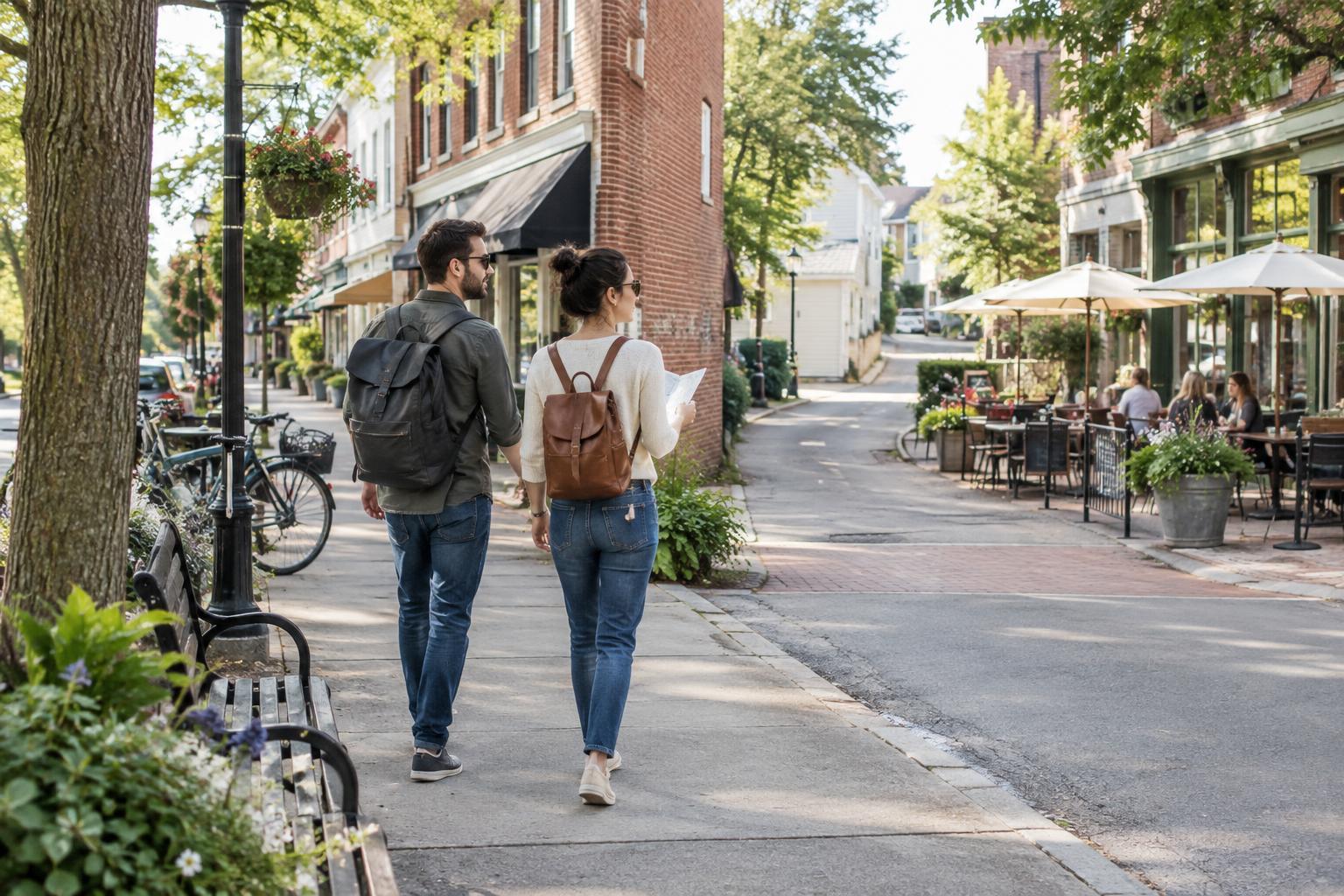
The best self-guided walking tour is one you can enjoy without constantly checking a map. Pick a nearby town you can reach easily, then focus on a compact area such as its main street, waterfront, historic center, or cluster of public parks. You do not need to see every landmark. A pleasant two-hour walk with time to linger can feel more satisfying than a long route you have to rush through.
Look at a map and choose a natural starting point: a train station, public parking area, library, or town square. From there, identify three to five places that catch your interest. They might include an older residential street, a small museum, a bridge, a bookshop, or a public garden. Check that the stops connect by sidewalks or pedestrian paths, rather than assuming that places close together on a map are comfortable to walk between.
Give the walk a loose theme
A theme helps you notice details without turning the outing into homework. You could follow the town’s public art, compare storefront signs, seek out views of a river, or visit places connected by a shared architectural feature. For a food-focused version, choose a bakery at the start and a casual lunch spot near the finish. Keep purchases optional: looking closely at buildings, parks, and street life costs nothing.
Write a one-sentence purpose for the trip, such as “walk from the station to the river and find three good places to sit.” Then choose a route that supports it. Make one stop your anchor, especially if it has limited opening hours, and treat the others as flexible. A tour is easier to enjoy when a closed shop or a sudden rain shower does not ruin the plan.
Build a route with breathing room
Arrange your stops in a loop if possible, so you finish near where you arrived. If a loop makes the walk awkward, an out-and-back route works too: the return trip often reveals details you missed the first time. Mark a few useful facilities along the way, including public restrooms where available, drinking water, and a sheltered place to pause. Check opening hours and access information before leaving, since maps may not reflect temporary closures.
Estimate your time generously. Walking is only part of the outing; crossing streets, reading displays, taking photos, and deciding where to eat all add time. Give yourself permission to skip a stop rather than speed up. If someone in your group needs a shorter route, identify a simple shortcut or a place to turn back. Pavement quality, hills, and crossings matter as much as distance when deciding whether a walk will feel comfortable.
Pack lightly and set a spending limit
Bring comfortable shoes, weather-appropriate layers, water, and a charged phone with your route saved or written down. A small snack is useful even if you plan to buy food; it keeps a delayed lunch from setting the pace. If you expect to visit a small market or café, carrying a modest amount of cash can be handy, but there is no need to buy something at every stop.
A simple budget might cover transportation and one treat, with free stops filling the rest of the day. Decide on that treat in advance: a pastry, a museum ticket, or lunch from a place that looks inviting. If your budget is tighter, pack lunch and make a public bench or park your main break. The point is to spend your attention on the town, not to make the outing expensive.
Let the town surprise you
Once you arrive, use your plan as a guide rather than a checklist. Take the quieter side street if it looks welcoming, stop to read a plaque, or stay longer in a square where people are gathering. Keep to public areas and respect signs and private property. If a street feels unpleasant to walk, turn around and choose another way; completing the mapped route is never the goal.
At the end, note one thing you enjoyed and one thing you would change next time. Perhaps the route needed fewer stops, or the best part was an unplanned coffee break. Those small observations make the next nearby-town adventure easier to plan. You may even find that a place you thought you knew has enough interesting corners for a second, entirely different walk.