Start the clock when the meal ends
Leftovers are easiest to manage when putting them away is part of clearing the table. Refrigerate or freeze perishable food within two hours of cooking or serving. If it has been sitting in temperatures above 90°F (32°C), shorten that window to one hour. This applies to familiar foods such as cooked meat, rice, pasta, casseroles, cut fruit and dairy-based dishes. If you cannot tell how long a perishable dish has been out, discarding it is safer than saving it.
You do not need to leave a pot on the counter until it reaches room temperature. In fact, waiting can use up the time available for safe cooling. Before sitting down to eat, set out a few clean containers so packing up afterward is quick. Use clean utensils rather than ones that have been used for tasting or serving from someone’s plate.
Cool big batches in small portions
A deep pot of chili or a large pan of roasted vegetables holds heat longer than a shallow portion. Divide cooked food among shallow containers so it cools more quickly in the refrigerator. For a large batch of soup, you can stir the pot while it sits in a sink of ice water, then transfer the soup to containers and refrigerate it promptly. Avoid putting a tightly packed, steaming stockpot straight into a crowded fridge, where its center may stay warm for a long time.
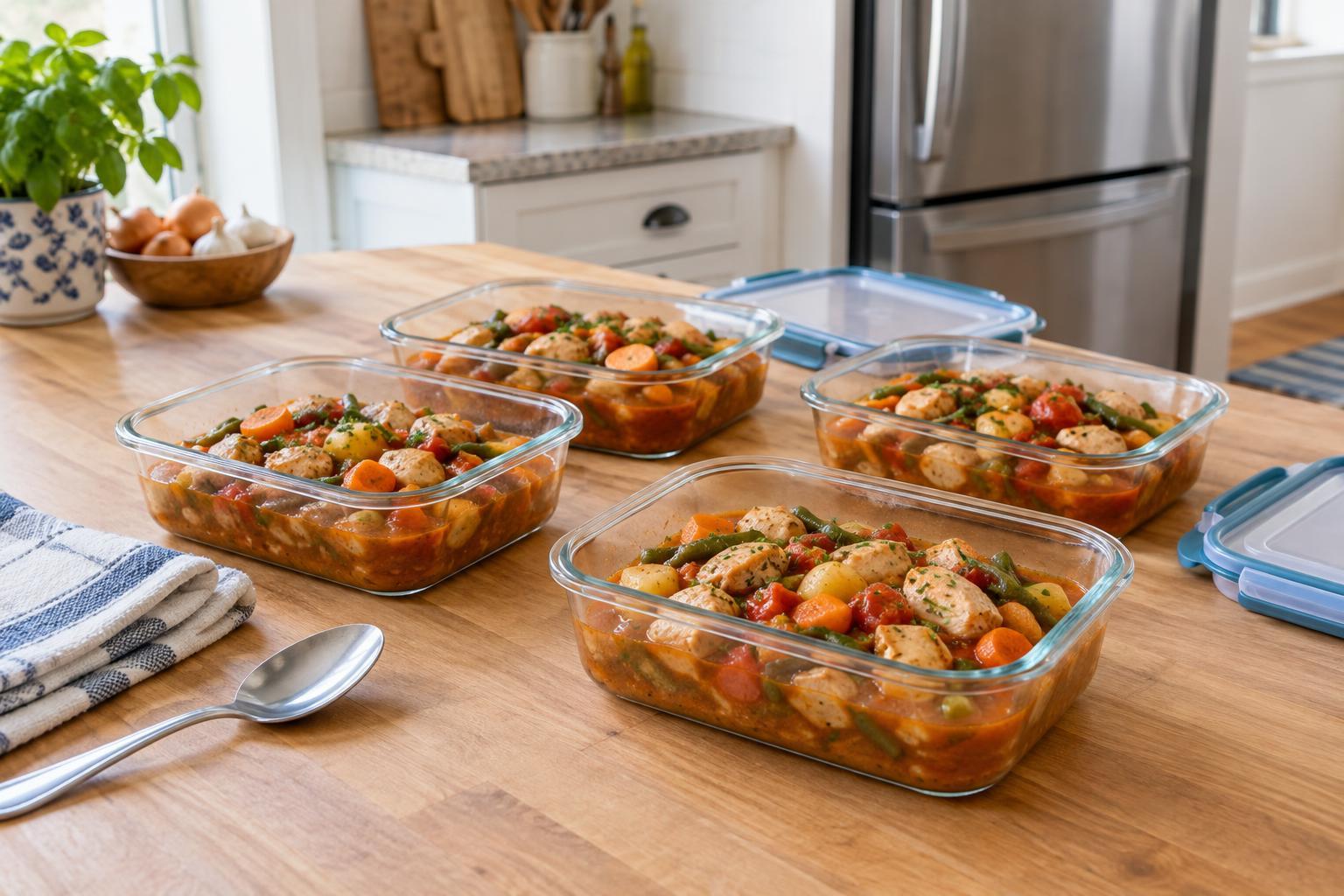
Leave a little space around containers so cool air can circulate. Once the food has cooled, cover it securely to prevent spills and keep it separate from raw meat or fish. For a small kitchen, stackable containers in a couple of useful sizes are often more practical than a large assortment of mismatched tubs. A wide, shallow container can also make tomorrow’s lunch easier to see and retrieve.
Label it, date it and know when to let it go
Keep the refrigerator at 40°F (4°C) or colder and the freezer at 0°F (-18°C) or colder. A simple appliance thermometer can help you check the setting rather than relying on the dial. As a general rule, use refrigerated cooked leftovers within three to four days. If your plans change, freeze a portion sooner rather than waiting until the end of that window. Freezing keeps food safe when it remains frozen, although flavor and texture can decline over time.
Write the food and storage date on a piece of tape or a reusable label. Put newer containers behind older ones, and choose a regular day to check what is left. Smell and appearance are not reliable tests of safety: food can be unsafe without seeming spoiled. Likewise, reheating is not a dependable fix for food that spent too long at room temperature.
Reheat until the whole portion is hot
Reheat leftovers to 165°F (74°C) throughout. A food thermometer is the clearest way to check, especially for thick dishes such as lasagna, casseroles and stuffed vegetables. On the stove, stir soups and sauces as they heat so cold spots do not linger. Heat only the portion you expect to eat; that keeps the rest chilled rather than repeatedly warming the entire container.
Microwaves can heat unevenly. Transfer food to a microwave-safe dish, cover it loosely so steam can escape, and stir or rotate it partway through. Let it stand briefly after heating, then check several places, including the center. If you are reheating a mixed meal, a hot edge does not mean the rice or chicken in the middle is hot enough.
Make the safe choice the easy choice
A little planning turns leftovers into a useful part of the next meal. Pack a single serving of dinner for lunch as you clear the table, or freeze extra portions of soup in containers sized for one or two people. Thaw frozen leftovers in the refrigerator when possible. If you use a microwave to thaw them, reheat them fully right away rather than putting the partly warmed food back in the fridge.
When plans are uncertain, smaller portions give you options without requiring much extra equipment or freezer space. The routine is straightforward: pack food promptly, cool large batches quickly, label what you keep and heat each serving all the way through. If any step was missed and you are unsure whether a perishable dish was stored safely, it is reasonable to throw it out.