Start with a small, flexible ingredient list
For two servings, gather about 200 grams of dried pasta, one 400-gram can of crushed or whole tomatoes, two tablespoons of olive oil, and two garlic cloves. Have salt and black pepper ready. Dried oregano, red pepper flakes and grated hard cheese are optional. If you have an onion, you can use half of it instead of, or alongside, the garlic. This is a useful dinner when fresh ingredients are limited: the essential ingredients keep well, and the sauce works with most pasta shapes.
Choose a pot that gives the pasta room to move and a wide pan for the sauce. If you have only one burner, make the sauce first and keep it covered while you cook the pasta. Whole canned tomatoes can be broken up with a spoon in the pan. The goal is a sauce you can repeat and adjust, not a recipe that depends on one exact brand or shape.
Cook the pasta until it tastes right
Bring a generous pot of water to a full boil, then add salt. The water should taste lightly seasoned, not unpleasantly salty. Add the pasta and stir well right away so the pieces do not stick together. Keep the water boiling and stir once or twice more, especially during the first few minutes. Use the package time as a starting point, but taste a piece near the lower end of the suggested range.
The pasta is ready when it is tender enough to enjoy but still has a little firmness when you bite it. Before draining, scoop out a mug of the cloudy cooking water. Drain the pasta, but do not rinse it: a little starch on the surface helps the sauce cling. If the sauce is not ready yet, you can toss the drained pasta with a small spoonful of oil to reduce sticking, though it is best to time both pans to finish together.
Build a tomato sauce while the water heats
Warm the olive oil in a wide pan over medium-low heat. Add finely chopped garlic and cook, stirring, for about a minute, just until fragrant; browned garlic can taste bitter. If using onion, cook it in the oil first until softened, then add the garlic. Add the tomatoes carefully, as they may splatter. Stir in a pinch of salt, a few grinds of pepper and, if you like, a pinch of oregano or red pepper flakes.
Let the tomatoes bubble gently for about 10 to 15 minutes, stirring occasionally. The sauce should thicken enough to coat a spoon but remain loose enough to mix through pasta. Taste it before adding more salt. If it seems too thick, add a splash of water; if it seems thin, let it cook a little longer. A small drizzle of olive oil at the end can round out a sharp-tasting sauce without requiring another ingredient.
Finish the pasta in the pan
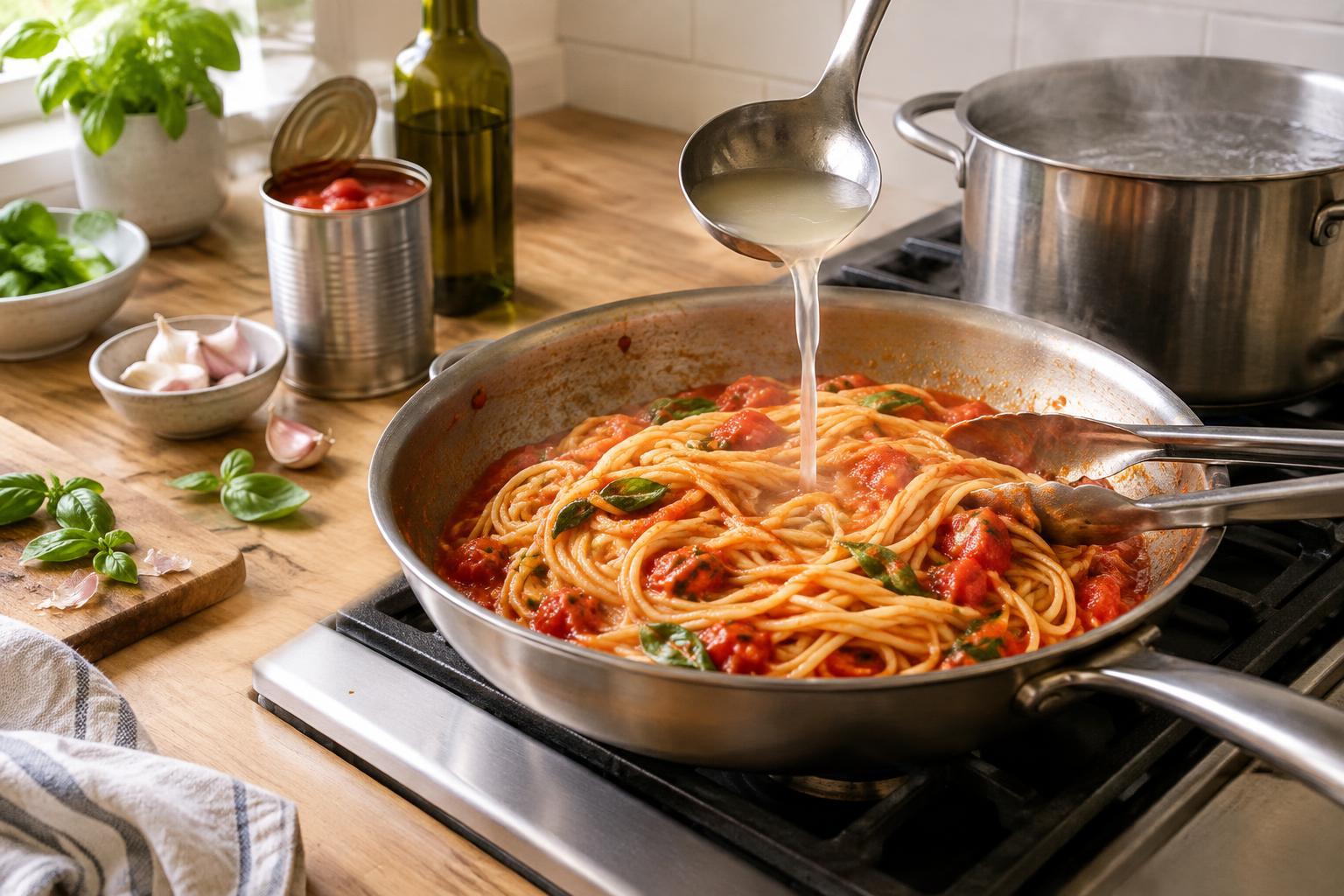
Add the drained pasta to the sauce and toss over low heat for a minute or two. Pour in a splash of reserved pasta water and toss again. The starchy water helps loosen the tomatoes and bring the sauce and oil together, so they coat the pasta rather than sitting in a puddle underneath it. Add more water a spoonful or two at a time if the pan looks dry. Stop when the noodles look glossy and evenly coated.
Taste one last time. You may want a little more salt, pepper or olive oil. Add cheese at the table if you have it. For an easy change, stir in drained canned beans near the end of the sauce’s cooking time, or wilt a handful of spinach in the pan before adding the pasta. Chopped olives or a spoonful of capers can add a briny note; use less salt at first if you include them.
Make the next pasta night easier
Keep one or two pasta shapes and a can of tomatoes on hand, and this method becomes a fallback meal rather than a special shopping trip. Short shapes such as penne catch bits of tomato, while spaghetti is easy to toss through a smoother sauce. If you regularly cook for one, halve the pasta and save the unused dry portion. You can refrigerate leftover sauce separately, then warm it gently with a splash of water before using it.
The most important steps are simple: taste the pasta instead of relying only on a timer, save cooking water before draining, and combine the pasta and sauce in the pan. Once those habits feel familiar, you can change the seasonings and additions without changing the basic method.