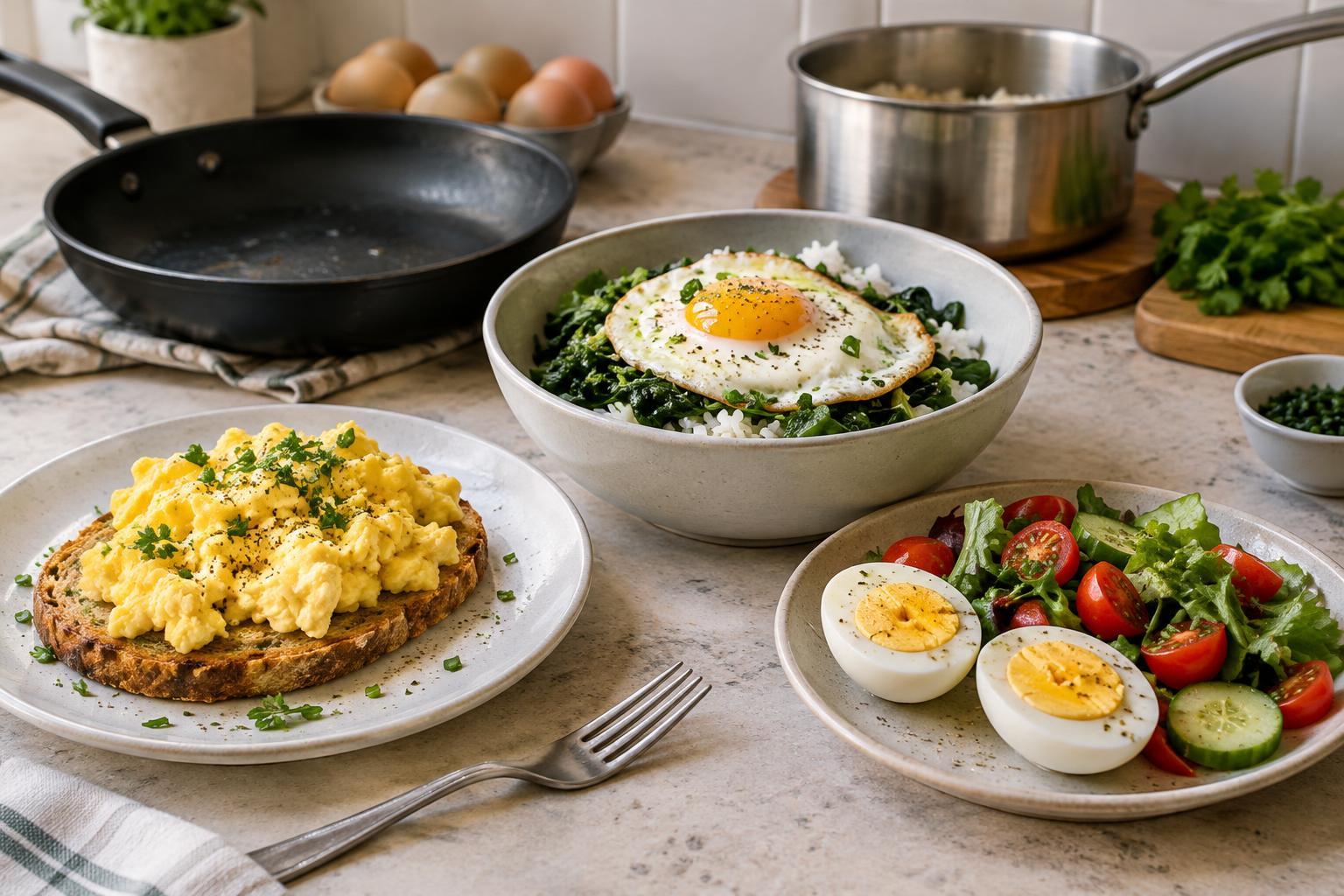
Start with a simple setup
Eggs are useful when you want a meal without a long shopping list. A few eggs, a small pan or saucepan, and something to serve alongside them can become breakfast, lunch or dinner. Toast, leftover rice, tortillas, cooked vegetables and salad greens all work. You do not need a separate recipe for every combination; learn a few cooking methods, then use what you have.
For the methods below, keep a bowl, fork, spatula and plate nearby. A nonstick or well-seasoned pan makes scrambled and fried eggs easier to manage. Set out any sides before you start cooking: eggs move quickly once they hit the heat. Wash your hands and surfaces after handling raw eggs, and cook them to the level of doneness you’re comfortable serving.
Scramble for a soft, flexible filling
For one serving, crack two eggs into a bowl, add a pinch of salt and beat with a fork until the yolks and whites are combined. Warm a small pan over medium-low heat with a little butter or oil. Pour in the eggs and let them sit briefly, then use a spatula to push them gently from the edges toward the center. Keep moving the eggs as they form soft curds. Remove the pan from the heat when they look just set; the residual heat will continue cooking them for a moment.
Lower heat gives you more time to control the texture. If the eggs start browning before they have formed curds, turn the heat down next time. A splash of milk is optional, not essential. For a filling meal, fold the eggs into a tortilla with beans and salsa, or spoon them onto toast with sautéed spinach. Add delicate ingredients such as herbs or grated cheese near the end so they stay fresh-tasting rather than spending the whole time in the pan.
Fry for a quick topping
A fried egg can turn leftovers into a meal because the yolk adds richness and the white adds substance. Heat a little oil or butter in a pan over medium heat, then crack in an egg. For more control, crack it into a small bowl first and slide it into the pan. Let the white cook until it is opaque and set. If the top is taking longer than the bottom, cover the pan briefly to trap steam. For a firmer yolk, carefully flip the egg and cook it a little longer.
Serve a fried egg over reheated rice and vegetables, on a sandwich with tomato, or alongside a bowl of beans. Keep the heat moderate if you prefer a tender white; use a slightly hotter pan if you want crisp edges. A thin spatula helps you lift the egg without breaking it. If the egg sticks, give it a little more time before trying again rather than scraping hard against the pan.
Boil ahead for meals you can assemble later
Boiled eggs are handy when you want to do the cooking before you are hungry. Place eggs in a saucepan, cover them with cool water and bring the water to a boil. Reduce the heat so the water simmers gently rather than knocking the eggs around. Cooking time depends on egg size and your preferred yolk: start checking after about six minutes for a softer center, or allow roughly ten to twelve minutes for a firm yolk. Transfer the eggs to cold water to stop the cooking and make them comfortable to handle.
Peel an egg and slice it over toast, add it to a grain bowl, or mash it with a little mayonnaise and mustard for a sandwich filling. If peeling is difficult, crack the shell all over and peel under a trickle of water. Refrigerate cooked eggs promptly rather than leaving them out for later; keeping the shells on until you need the eggs can also make them easier to pack.
Build the meal around what you have
Once you know all three methods, choose one based on your schedule. Scramble eggs when you have a few minutes and want a filling for toast or tortillas. Fry one when cooked leftovers need a finishing touch. Boil a batch when you would rather assemble meals than cook them later. Each method pairs well with a vegetable and a pantry staple, so you can make a satisfying plate without buying ingredients for a single-purpose recipe.
For an easy pattern, combine eggs with something substantial, such as potatoes, bread, rice or beans, and add something fresh or colorful. Season at the table with pepper, hot sauce, lemon or herbs if you have them. Start simple, notice how your stove and pan behave, and adjust the heat or timing the next time. That small bit of practice is what makes eggs a dependable quick-meal option.