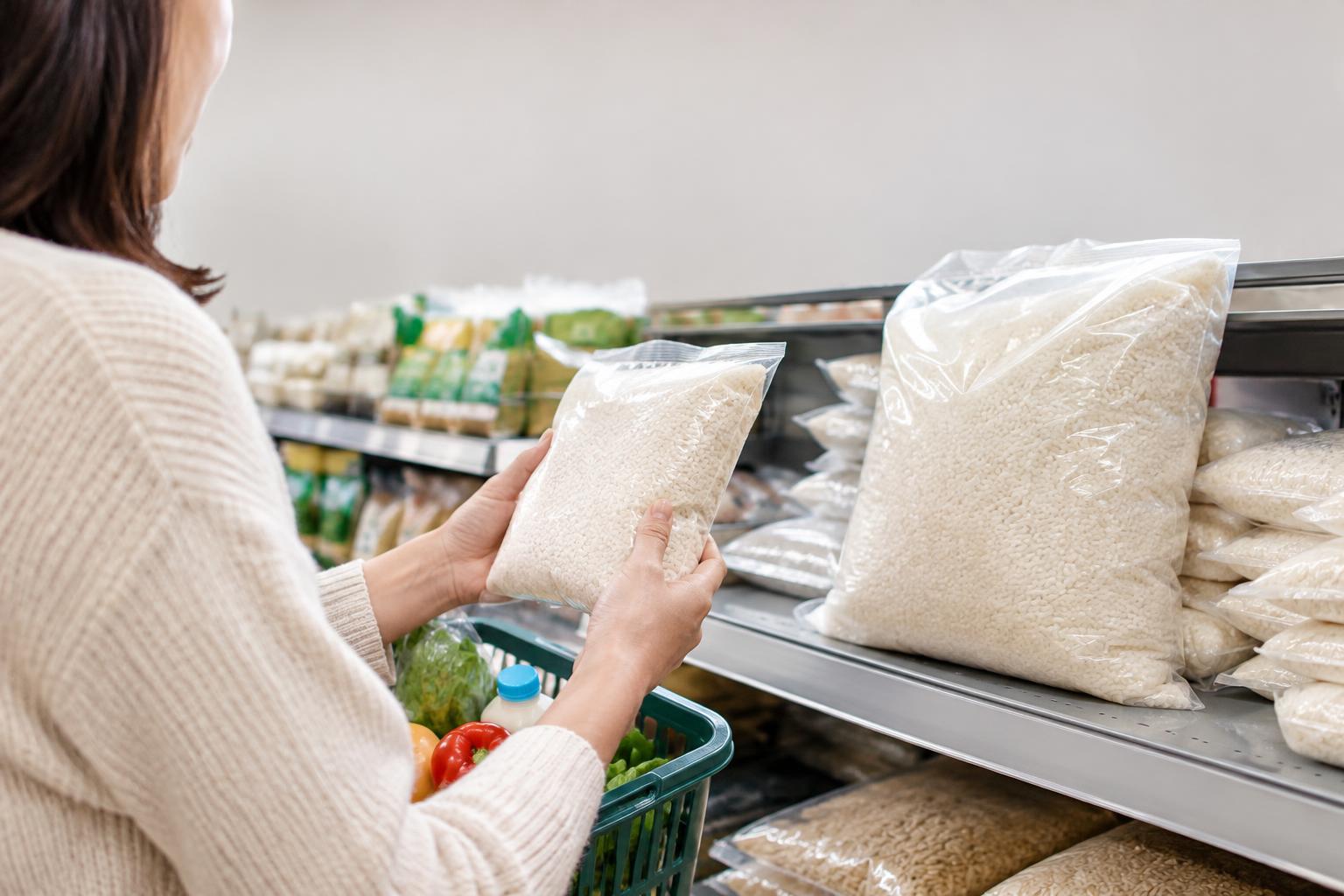
Start with the unit price, not the package price
The price printed in large type tells you what you will pay today. The unit price, often shown in smaller type on a shelf label, tells you what the item costs per ounce, pound, or other measure. It makes different package sizes easier to compare. If one bag of rice costs $3 for two pounds and another costs $6 for five pounds, the smaller bag costs $1.50 per pound and the larger one costs $1.20 per pound.
When a shelf label does not show a unit price, divide the package price by its quantity. A phone calculator is enough. Keep the units consistent: compare dollars per pound with dollars per pound, not dollars per pound with dollars per ounce. You do not need to calculate every item in your cart. Try it when sizes look similar, a sale seems unusually good, or you are deciding whether a larger package is worth the space.
Compare what you would actually use
A lower unit price only saves money if you use enough of the package. Suppose a small tub of yogurt is $3 for 16 ounces and a large tub is $5 for 32 ounces. The large tub is cheaper per ounce. But if you usually eat about 16 ounces before it goes off, the small tub costs less for the yogurt you will actually eat.
Before choosing the larger size, ask three questions: How many meals will this make? When will I make them? Where will the rest go? A five-pound bag of rice may fit easily into your routine because it stores well and you cook it weekly. A large box of delicate greens needs a more immediate plan. In a small kitchen, cupboard and refrigerator space are useful resources, too. An inexpensive bulk purchase can be inconvenient if it crowds out ingredients for this week’s meals.
Check that the products are truly comparable
Unit prices are most helpful when the foods can serve the same purpose. Compare plain oats with plain oats, for example, rather than assuming a flavored packet and a large canister will fit the same breakfasts. Packaging can also change how much food is usable. A whole pineapple includes peel and core, while a container of cut pineapple is mostly ready to eat. The whole fruit may still be the better choice, but its sticker price per pound does not tell the full story.
Pay attention to the measure on the label. A shelf may show one item priced per ounce and another per pound, or compare a concentrated product with one that is ready to use. For canned goods, consider whether you use the liquid as well as the solids. You do not need a perfect calculation of every edible portion. The goal is to notice when a neat-looking unit-price comparison leaves out a meaningful difference.
Give bulk buys a job before they go in the cart
A simple meal plan turns a promising unit price into a practical purchase. If a family-size pack of tortillas is cheaper per tortilla, decide whether you will use it for wraps today, quesadillas later in the week, and a freezer meal after that. If you cannot name enough uses, the smaller pack may be better value for you. The same test works for produce, cheese, bread, and other foods that are easy to buy with optimistic intentions.
Freezing or sharing can make a large package worthwhile, provided you can do it promptly and have the space. You might divide a loaf of bread into smaller freezer bags or split a bulk bag of onions with a neighbor. For pantry foods, check that the container will close well and fit where you plan to keep it. Buying in bulk should make ordinary cooking easier, not create another storage project.
Use a quick decision rule at the shelf
First, compare unit prices for products you would be equally happy to cook or eat. Second, estimate the amount you can use while it is still in good condition. Third, check the total price against this week’s grocery budget. A smaller package with a higher unit price can be the sensible choice if it keeps the bill manageable and prevents waste.
Sales and multi-buy offers deserve the same check. If a deal requires buying three jars but you need only one, calculate the cost of the amount you will realistically use and consider the cash you must spend upfront. There is no need to win every price comparison. The useful habit is to look beyond the biggest package and choose the quantity that supports the meals you actually make.