Start with the problem, not a donation bag
If you wear most of your clothes, getting rid of half of them is not a useful goal. The real problem may be that clean laundry has no landing place, off-season layers crowd your daily shirts, or one deep shelf hides everything behind its front row. Before you remove anything, name the friction you want to fix. “I need to see my work clothes” gives you a clearer plan than “I need fewer clothes.”
Empty one small area at a time rather than pulling apart the entire closet. Start with a drawer, a shelf or a short run of hangers. As you put things back, note which pieces you reached for recently and which ones you regularly move out of the way. You do not need an exact wear count. The point is to observe how your closet works on an ordinary week, not to put every garment on trial.
Sort by how you use clothes now
Make four temporary groups: regular wear, occasional use, needs attention and uncertain. Regular wear includes the everyday pieces that suit your current routine, even if they are not exciting. Occasional use might include a warm coat, a wedding outfit or clothes for a hobby. These items can deserve space without needing to pass an everyday-wear test.
Put clothes with missing buttons, uncomfortable hems or stubborn stains in the needs-attention group. Ask what the next step actually is: a simple repair, a wash or accepting that the item no longer works for you. Give uncertain pieces a separate bag or shelf and revisit them after a normal stretch of dressing. Keeping a jacket because you wore it last month is different from keeping one only because it might suit a life you no longer lead.
Give your most-used clothes the easiest spots
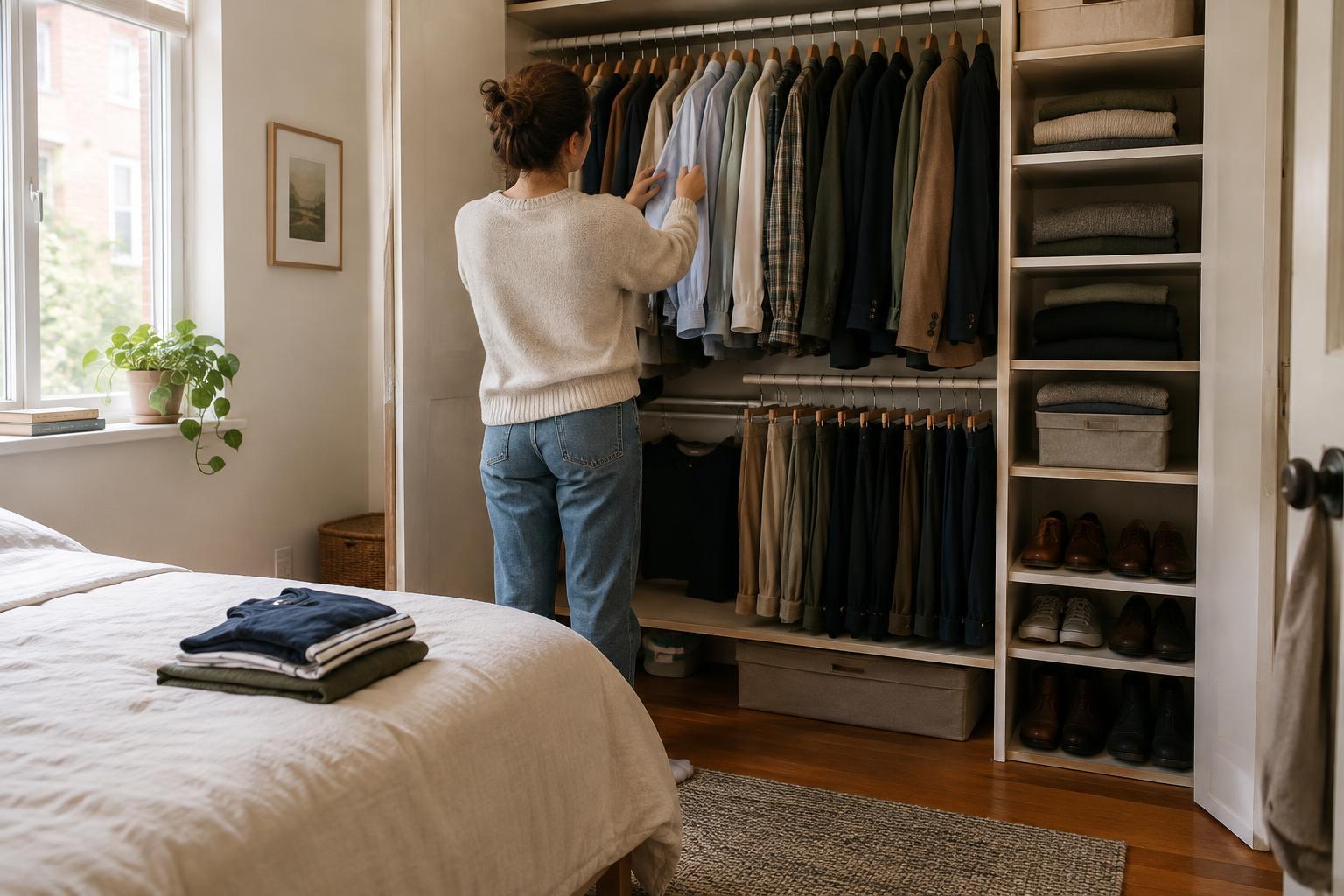
A useful closet puts frequently worn clothes within easy reach. Place current-season tops, trousers and everyday layers at eye level or in drawers you can open without shifting other things. Move occasional-use pieces to a higher shelf, the back of a rail or a labeled box under the bed if you have room. This is a change in priority, not a verdict on what is worth owning.
Choose storage that matches the clothes rather than buying organizers first. A few sturdy hangers may keep jackets visible; folded knitwear may fare better on a shelf. Drawer dividers can help with small items, but a repurposed shoebox can do the same job. Leave enough space to lift out one item without upsetting a stack. If everything fits only when folded perfectly, the system may be too demanding for daily life.
Look for space you can recover without losing outfits
Check for empty packaging, spare hangers, clothes that belong in another room and bags stored inside bags. Then look at duplicates with care. Three similar black shirts might all be useful if they bridge laundry days; three uncomfortable versions of the same shirt may not be. Keep the number that supports your actual routine rather than an arbitrary rule about how many of each item a person should own.
Clothes that are clean but not ready to put away can also make a closet feel full. Give worn-once items a hook or a small, defined spot so they do not spread across a chair or get mixed into clean stacks. If your laundry schedule means the closet must hold a full cycle of clothes, plan for that volume. You should not have to do laundry more often just to make a storage method look tidy.
Set a realistic finish line
After reorganizing, test the closet for a week or two. Can you find a complete outfit without searching through piles? Is there a clear place to return clean clothes? Those are better signs of progress than the size of a donation bag. If an area still overflows, adjust that area first: move seasonal items, change a stack to hangers or choose a container that makes its contents easier to see.
Only part with clothes when you have a reason you can explain, such as poor fit, damage you do not plan to fix or a style you no longer choose. Offer usable pieces to someone who wants them or use a suitable local donation option; dispose of worn-out items according to what is available where you live. A successful clear-out leaves you with a closet that serves the clothes you actually wear, not one that is simply emptier.