Start with a small, repeatable routine
Shoes are easier to maintain when you deal with dirt before it builds up. After wearing a pair, knock loose grit off the soles and let the shoes air out before putting them away. If the uppers are dusty, wipe them with a soft, dry cloth or brush. This takes little time and means a deeper clean is less likely to involve heavy scrubbing.
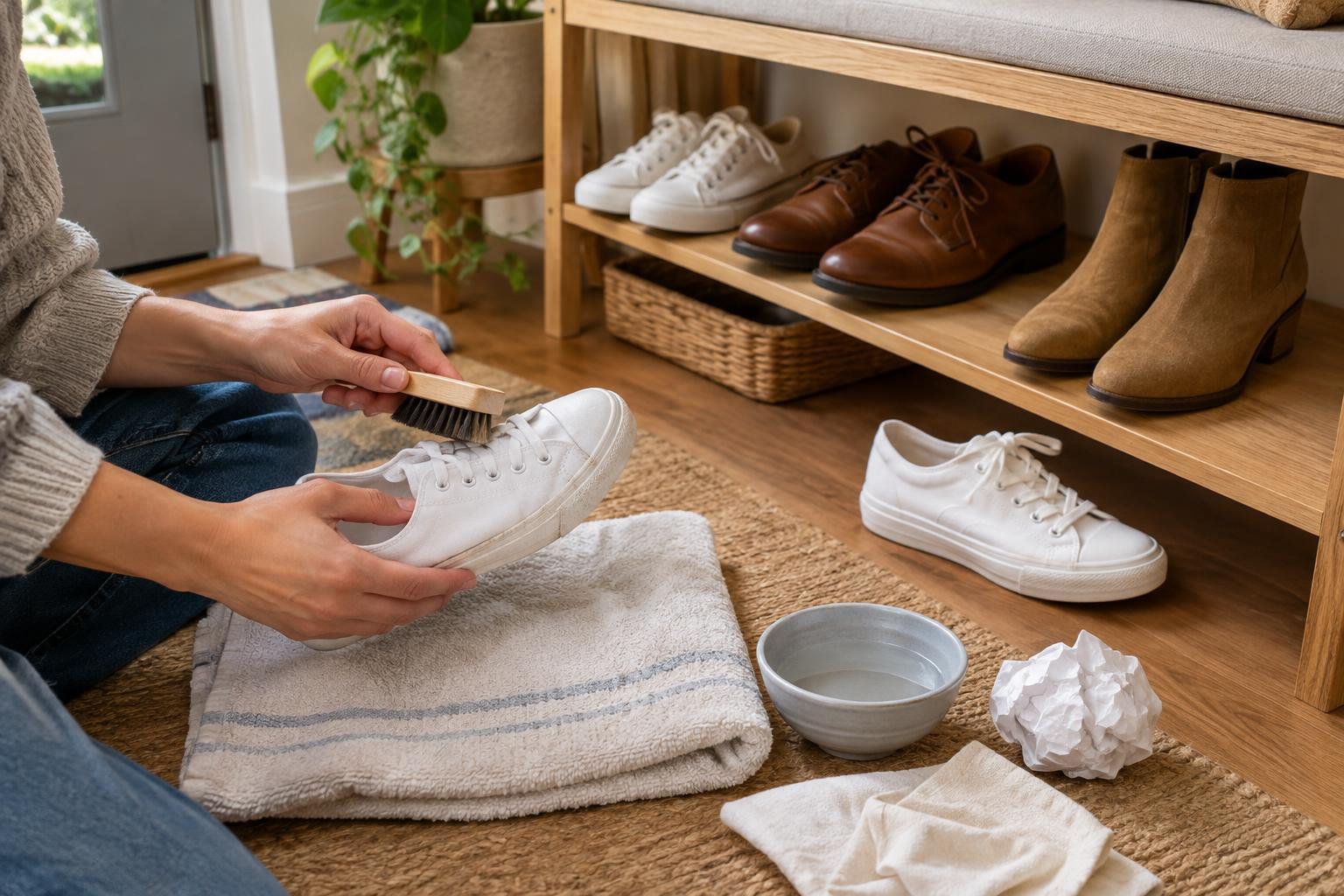
You do not need an elaborate kit. A soft brush, a few clean cloths, mild soap and a small bowl of water cover many everyday jobs. An old toothbrush can help with textured soles, provided it is kept for cleaning. Before using any product, check the shoe’s care label or manufacturer guidance when available, and test it on a discreet spot. Materials that look similar can respond differently to water and cleaners.
Clean the upper according to its material
For canvas and many synthetic uppers, brush away dry dirt first. Then use a cloth lightly dampened with water and a little mild soap to work on marks. Wipe off the soap with another damp cloth rather than soaking the shoe. Avoid assuming a pair is machine-washable: agitation and prolonged water exposure can affect adhesives, shape and decorative details. If machine washing is permitted by the care instructions, follow those instructions rather than a general rule.
Smooth leather calls for a gentler approach. Remove dust with a soft cloth, then wipe with a barely damp cloth if needed and dry the surface promptly. A leather conditioner suited to the finish may help if the material feels dry, but use it sparingly and test first. For suede or nubuck, let mud dry before brushing it away with a suitable soft brush. Water and ordinary soap can leave marks on these textured materials, so use a product made for them when brushing is not enough.
For any pair, treat stubborn stains in stages instead of scrubbing harder. Repeated rubbing can wear down a finish or spread a mark. If a shoe has delicate trim, unusual dyes or a stain you cannot identify, it is reasonable to stop after a gentle surface clean rather than risk permanent damage.
Give soles and interiors their own attention
Soles often need different treatment from uppers. Brush dirt out of tread grooves, then wipe rubber edges with a damp cloth and a little mild soap. Keep that soapy cloth away from suede or other sensitive uppers. Pebbles lodged in the tread can often be lifted carefully with a blunt tool; avoid digging into the sole or using anything sharp near your hand.
Inside the shoe, remove loose insoles if they are designed to come out. Air them separately, and follow their care instructions before washing them. To manage everyday odors, make sure shoes dry fully between wears and rotate pairs when you can. Clean, dry socks also help limit moisture inside closed shoes. A strong lingering odor may mean an insole needs replacing or the shoe needs a more thorough, material-appropriate clean; covering it with fragrance alone will not remove trapped grime.
Dry slowly and protect the shape
After cleaning or getting caught in rain, loosen the laces and open the shoes as much as their design allows. Set them somewhere with good airflow, away from direct heat. A radiator, hair dryer or hot patch of sun may seem quicker, but heat can affect glue, leather finishes and the shape of some materials. Stuffing damp shoes loosely with plain paper can help them hold their form and absorb moisture; replace the paper if it becomes wet, and take care with paper that might transfer ink.
Wait until the shoes are completely dry before storing them. For pairs that tend to crease or collapse, use shoe trees or lightly stuff the toes with clean paper. Shoe trees are useful but optional: a low-cost support is often enough for casual pairs. If a heel, sole or seam is coming loose, address it before the damage grows. A repair may be worthwhile for a pair you wear often, while heavily worn shoes may be better replaced.
Store what you wear where you can see it
The best storage setup keeps shoes dry, supported and easy to find. In a small home, that might mean a narrow rack by the door for current pairs and a shelf or under-bed container for occasional ones. Brush off dirt and make sure shoes are dry before moving them into closed storage. Avoid piling pairs on top of one another, which can crush uppers and make it harder to spot a damp or damaged shoe.
If you use boxes or bins, leave enough room that shoes are not forced out of shape. Label opaque containers so you do not have to open every one to find a pair. A quick check when seasons change is also useful: clean off settled dust, inspect soles and pull forward anything that needs attention. Keeping fewer pairs in active rotation can make the routine feel manageable, while letting each pair air out between wears helps it stay ready for the next outing.