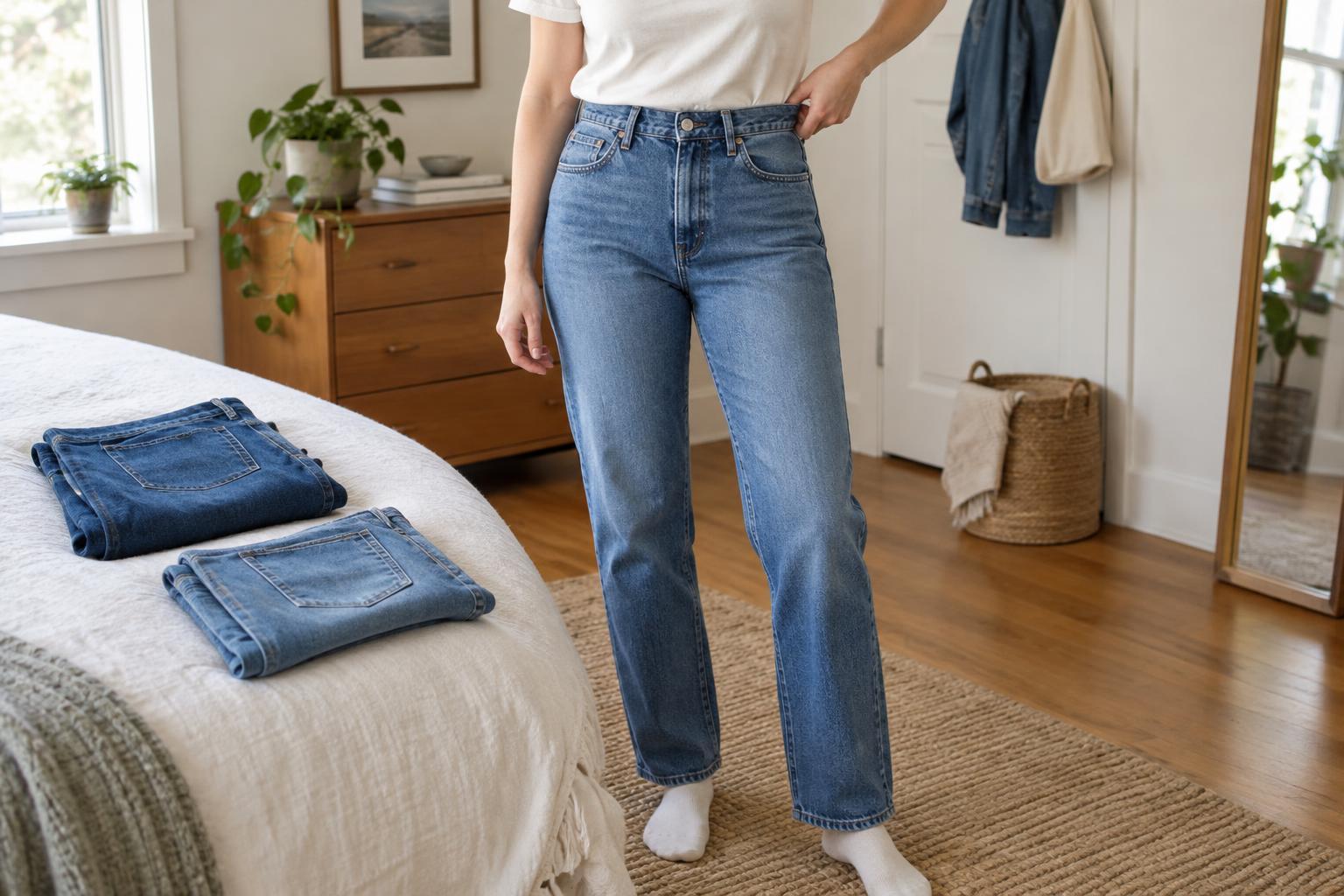
Start with the pair you already reach for
Before comparing labels, look at the jeans you wear most often. What works: the waistband, the room in the thighs, or the way the hems sit over your shoes? Then notice what makes you change out of them. A waistband that digs in when you sit and a hem you keep stepping on are different problems, so they call for different fixes.
Think about where the new pair needs to go. Jeans for long desk days may need more ease at the waist than a pair worn mainly for short outings. If you walk a lot, pay attention to whether the legs rub or restrict your stride. Choosing for your routine gives you a better starting point than choosing for a trend.
Choose a rise that stays comfortable when you move
Rise describes the distance from the crotch seam to the top of the waistband. Low-rise jeans sit nearer the hips, high-rise jeans sit higher on the waist, and mid-rise jeans fall somewhere between. Those terms are useful for narrowing a search, but two pairs with the same label can sit differently. Your torso length, the jean’s construction and the size all affect where the waistband lands.
Try a rise while sitting, bending and walking, not just standing in front of a mirror. A waistband should feel secure without pressing sharply into your stomach or sliding down whenever you move. Check the back, too: if it gaps noticeably or pulls when you sit, try another size or a different shape. Going up a size may add room at the waist but leave too much fabric elsewhere.
If you shop online, measure the front rise of a pair you own and compare it with the measurements supplied for the new pair. This will not guarantee the same fit, but it is more useful than relying on “high” or “mid” alone.
Read the cut from hip to hem
A cut describes more than the width of the ankle. Straight jeans keep a relatively consistent line from knee to hem, making them an easy place to start if you want a simple shape. Slim cuts sit closer through the leg; relaxed cuts offer more room around the seat and thighs. Wide-leg styles add volume below the hip, while bootcut and flare styles widen below the knee.
Check where a pair feels tight before deciding a whole cut is wrong for you. If you like a straight leg but the thighs feel restrictive, try a relaxed straight cut rather than switching immediately to a much wider leg. If a wide-leg pair feels bulky, a shorter hem or a less roomy version may give you the shape you want. Bring or wear the shoes you use most often so you can judge the length realistically.
The best-looking cut is one you do not have to keep adjusting. Walk a few steps and sit down. Notice whether the knees pull, the crotch drops or the hems catch under your shoes. A mirror shows the outline; movement shows how the jeans will behave.
Check fabric and construction for everyday comfort
Denim with some stretch may feel easier at first, especially in a close-fitting cut. Rigid denim can feel firmer and may soften with wear, but it should still let you sit and move when you buy it. Do not count on an uncomfortable pair changing enough to solve a major fit problem. Fabric weight and softness matter, too: if possible, handle several pairs to learn what you prefer.
Look at the small details that affect daily wear. Can you use the pockets comfortably? Does the waistband stay flat? Do the seams feel smooth against your skin? Try the jeans with the sort of top you expect to wear with them, including a tucked-in shirt if that is part of your usual outfit. This can reveal whether the rise and waistband feel right together.
Buy deliberately, then make the pair work
Set a budget before browsing and compare cost with likely use. A versatile pair you wear twice a week may be a better purchase for you than several pairs that each solve only one outfit. If a pair fits well everywhere except the length, hemming may be worth considering; ask about the alteration cost before buying. Thrift shops can also be useful when you have time to check measurements and condition carefully.
Before removing the tags, try your choice at home with two or three outfits and your everyday shoes. Sit at a table, climb a few stairs and check that you still like the fit. Follow the garment’s care label, wash only when needed and let the jeans dry as directed to help them keep their shape. A successful pair is not defined by its size or trend name. It is the one you can put on without planning your day around it.