Start with the clothes you actually wear
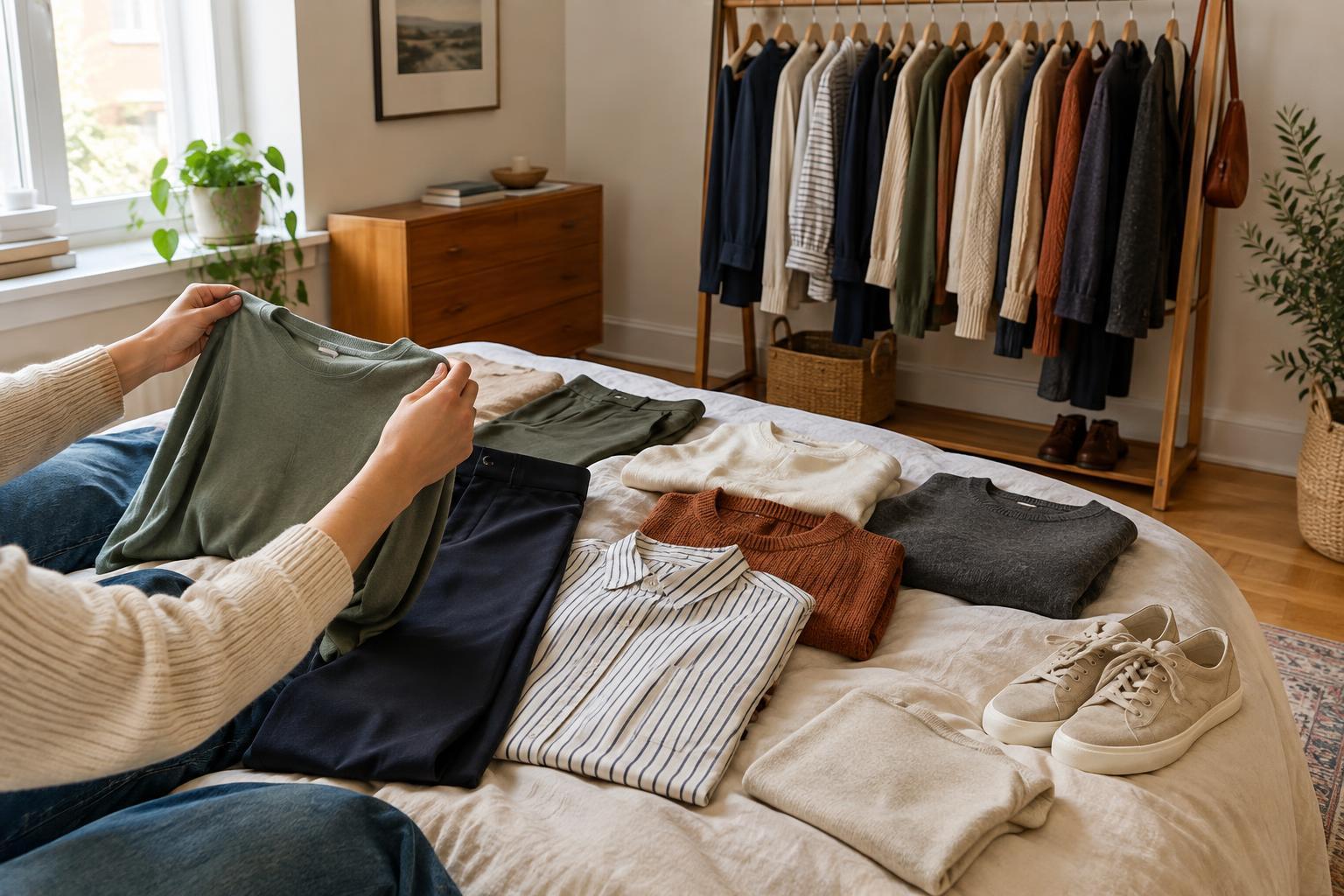
A coordinated wardrobe does not require every item to match every other item. It helps if the pieces you wear most often can make several outfits together. Before choosing a palette, pull out a few favorites: perhaps the jeans you reach for weekly, a jacket you feel good in, and the top that always seems easy to wear. Lay them side by side and look for repeated colors or a shared feeling, such as soft and muted, bright and crisp, or warm and earthy.
Notice what you rarely wear, too. A color may look appealing on a hanger but feel too bold for your day-to-day life, or it may clash with the shoes and outerwear you own. You do not need to decide whether a color is universally flattering. A more useful question is: can I picture myself wearing this with two or three things I already have?
Choose a small set of dependable base colors
Base colors do the most work because they appear in larger pieces such as trousers, coats, skirts and everyday shoes. Choose one or two neutrals you genuinely like wearing. Navy, charcoal, black, brown, cream and olive can all serve this role; none is mandatory. If most of your wardrobe is built around navy and denim, buying a black coat just because black is considered versatile may not make your outfits easier.
You can use both light and dark versions of a base color to give outfits some contrast. For example, dark brown trousers, a cream shirt and a tan jacket feel connected without being identical. If you prefer a quieter look, pair colors with similar depth, such as charcoal and navy. If an outfit feels flat, changing the lightness of one piece is often more effective than adding another color.
Add accent colors with a simple pairing test
Accent colors bring personality to smaller pieces: a shirt, scarf, knitwear or bag. Pick one or two that work with your base colors and that you are happy to repeat. For a wardrobe centered on navy and cream, rust or soft green might offer variety. With brown and olive, pale blue can provide a fresh contrast. These are examples, not rules; the shades you choose matter as much as their names.
Try the pairing test at home before buying anything. Place a potential accent next to your usual bottoms, outer layer and shoes in natural light. Then make two complete outfits with it. If you can only imagine wearing a top with one particular pair of trousers, it may still be worth owning, but it is less versatile than a piece that works with several favorites. Taking a quick photo can help you compare combinations without relying on memory in a shop.
Use prints and texture to connect an outfit
A print is easier to wear when at least one of its colors appears elsewhere in the outfit. A striped shirt with navy and cream can tie navy trousers to light sneakers. A patterned scarf can bring together a coat and sweater that otherwise feel unrelated. You do not have to match colors exactly: a slightly different shade often looks natural, particularly when the pieces have different textures.
Texture also adds interest when you want to keep the colors simple. Denim, cotton, wool and corduroy can make an outfit of blue and gray feel more layered than those color names suggest. If you are combining prints, start with one noticeable pattern and one smaller or quieter one. Give them a shared color, then check the whole outfit from a few steps away. The goal is a combination you enjoy wearing, not a perfect formula.
Make your palette useful when you shop
A wardrobe palette should help you make decisions, not stop you from trying something new. Keep a short note on your phone listing your main neutrals and favorite accents, along with any practical gap you have noticed. For example: “Navy and cream basics; green and rust accents; need a washable layer for cool mornings.” That is more useful in a secondhand shop or sale aisle than a vague plan to buy clothes that go together.
Before paying for a new piece, consider the outfits it can join and whether you will wear them for your real activities. If the answer is uncertain, leave the item and revisit the idea later. You can also experiment without spending: rearrange what you own, borrow a color combination from a favorite outfit, or try an accent through an inexpensive accessory first. The best palette is not the most restrictive one. It is the one that makes getting dressed feel simpler while leaving room for your taste to change.