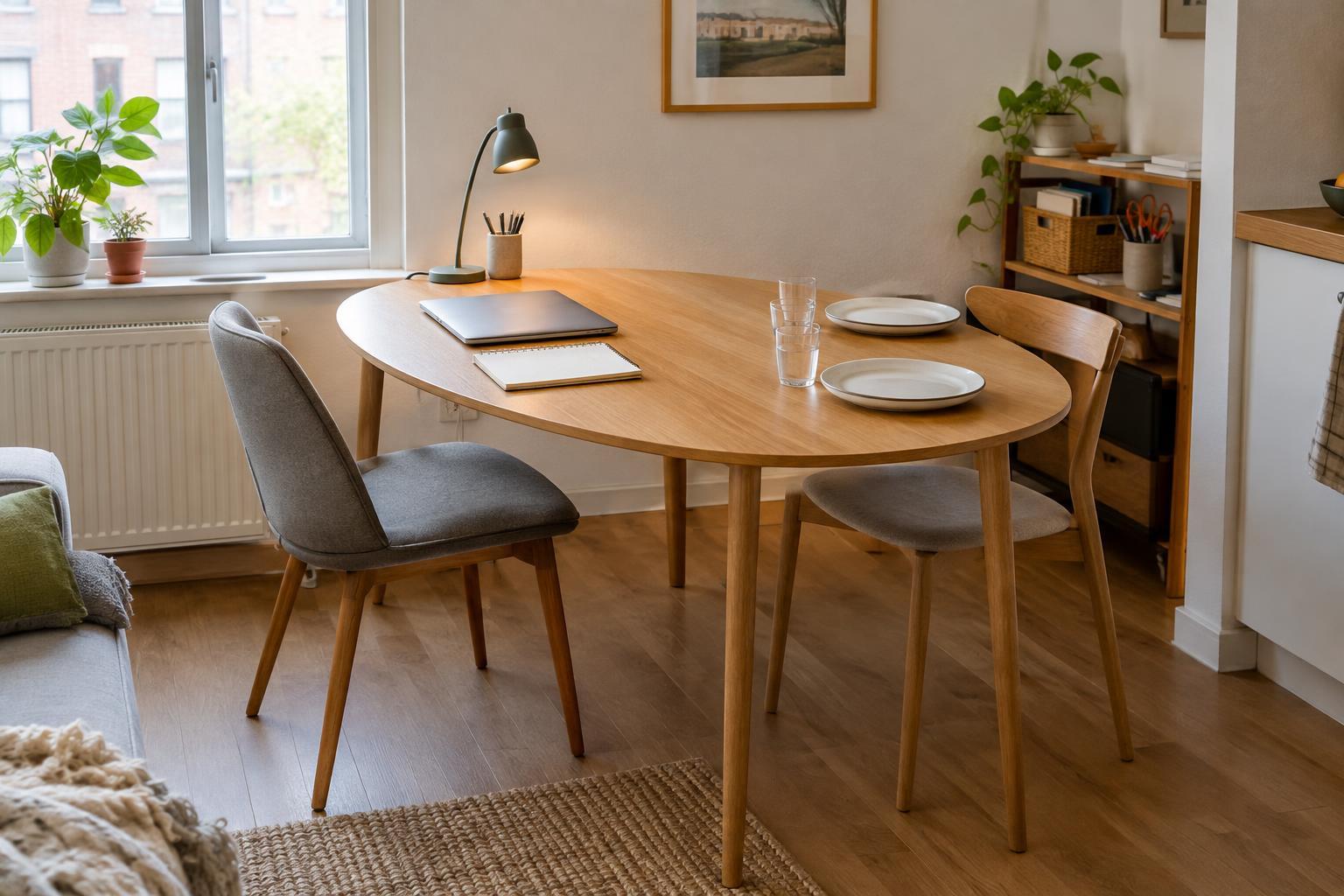
Start with the space you actually use
Before shopping, measure the area where the table will sit, including the space needed to pull out chairs and walk past them. Mark the proposed tabletop on the floor with painter’s tape, then place a chair where you would normally work. Can you get up without moving furniture? Can someone pass behind you? A table that fits on paper may still make a room awkward to use.
Think through an ordinary week rather than a special dinner. If one person works at the table most days and two people eat there each night, prioritize a comfortable work position and two easy-to-reach seats. Occasional guests can be handled with folding chairs or an extendable top. This keeps you from buying a permanently large table for an event that happens only a few times a year.
Pick a shape that supports both jobs
A rectangular table offers a defined work edge and room to spread out a laptop, notebook and drink. It can often sit against a wall when not in full dining use. A round table can make a tight room easier to move through because it has no corners, but its curved edge may feel less convenient if you regularly use a keyboard and papers side by side. A square table works well for two people, provided each has enough elbow room.
Pay attention to what is underneath. Wide aprons, bulky crossbars and central supports can limit legroom or dictate where chairs go. Sit at a candidate table if you can, or compare the underside measurements with a chair you already own. Check that your knees fit comfortably and that you can pull the chair close enough to type without leaning forward. A compact table with generous legroom may be more useful than a larger one with an obstructive base.
Test the work setup, not just the tabletop
Most dining tables are designed for eating, so chair choice matters when the same surface becomes a desk. Try the table and chair together: your feet should rest comfortably, and your shoulders should not have to lift to reach your keyboard. If you work there for long stretches, a supportive chair or a removable seat cushion may be a better purchase than a bigger table. A separate keyboard and laptop stand can also help you arrange the screen and typing surface independently.
Consider where power will come from. A table beside an outlet is simpler to use than one that requires a cable across a walking route. If that position is not possible, plan a safe, tidy cable path before committing to the layout. Leave space for a lamp if the room’s lighting is dim at working height. These small details often determine whether the table feels like a practical workspace or a daily improvisation.
Choose a surface you can live with
A smooth, stable surface makes writing and mouse use easier. A heavily textured top may look appealing but can require a desk mat, while a delicate finish may make every mug or pen feel risky. Ask how the surface should be cleaned and whether spills need immediate attention. If you expect frequent meals, crafts or children’s homework, an easy-care finish is likely to be more relaxing than one that needs careful handling.
You do not need a flawless tabletop. A washable placemat for meals and a desk mat for work can protect an affordable or secondhand table while making each activity feel distinct. If you are considering a drop-leaf or extendable model, check that the section where you will work feels steady. Open and close the mechanism, and note whether seams or hinges fall under your notebook or mouse.
Make the changeover easy
The best dual-purpose table is one you can clear without starting a major tidying project. Give work items a nearby home: a shallow tray for pens and chargers, a folder for papers, and a basket or drawer for everything that should leave the tabletop at dinnertime. Keep the system small enough to carry away in one trip. If the table is also used by other household members, agree on which items can stay out.
Set a realistic budget for the whole setup, not only the table. A secondhand solid table paired with comfortable chairs and simple storage may serve you better than an expensive table that leaves no room for those essentials. Before buying, repeat the floor-tape test with the table’s exact dimensions and picture both modes: chair pulled out for work, then chairs arranged for a meal. If both feel easy, you have found a table that earns its space.