Start with the ride you want to have
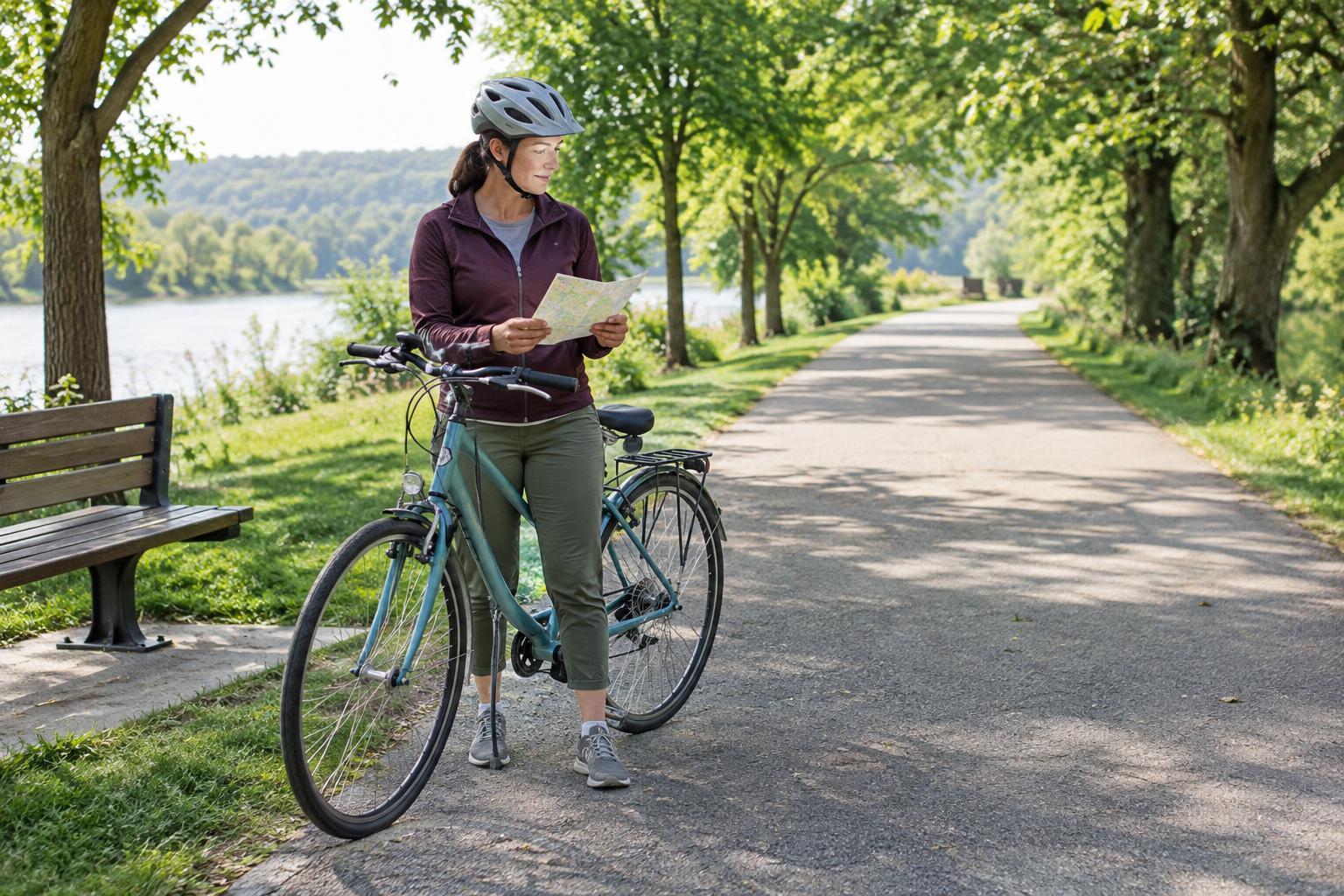
Before opening a map, decide what a good Saturday or Sunday ride would feel like. Are you hoping for an easy hour outdoors, a trip to a café, or a longer outing with a picnic stop? A destination can make the ride more enjoyable, but it should not dictate a distance you would rather avoid. If you are riding with someone else, plan around the person who wants the gentlest pace.
Choose a time budget before a mileage target. A route that looks short on a map can take longer once you include crossings, hills, photos and breaks. For an unfamiliar route, leave more time than you think you need so there is no pressure to hurry home. An out-and-back ride is a useful starting point: you can turn around when you have used about half your planned time, rather than committing to a full loop.
Look beyond the distance on the map
Distance is only one part of comfort. Check the route’s elevation profile for sustained climbs, and look at the surface wherever the route leaves a paved street or path. A short stretch of loose gravel may be fine on one bike and unpleasant on another. A route description may also call a path “flat” while leaving out a steep approach to its entrance. If you cannot confirm a section, treat it as a possible surprise rather than a promise of easy riding.
Pay attention to the shape of the route. A loop can offer more variety, while an out-and-back lets you learn the road on the way out and adjust your return point. A route with several small loops near home gives you another option: add one if everyone feels good, or finish early without needing a pickup. For a first ride in a new area, that flexibility may be worth more than reaching a scenic landmark.
Choose streets and paths that feel manageable
The most direct route is not always the most comfortable one. Look for continuous paths, calmer neighborhood streets, or roads with bike lanes that connect clearly. Zoom in on junctions: a pleasant path can still involve a difficult crossing or an awkward left turn. Note where a bike lane ends and whether a street has enough space for you to ride at your own pace.
Consider when you will ride, too. A street that feels quiet early in the day may be busier later, and shared paths may be crowded at popular times. If you are unsure about a particular stretch, choose an alternative you would be happy to take. Avoid relying on a map’s suggested route alone; its shortest option may not match your preferences for traffic, surface or stops.
Build useful breaks into the plan
Mark a few places where you could comfortably pause: a park bench, a public restroom, a water fountain you can verify, or a café where you might buy a drink. You do not need to schedule every minute. Knowing where the options are makes it easier to stop before you are tired, hungry or uncomfortable. For a low-cost outing, bring water and a snack and make a park your main destination.
Think about the return leg while choosing your midpoint. A café at the bottom of a long hill may be a less relaxing stop if the climb home is the hardest part of the day. If you are traveling by transit to the start, check whether your bike can come back with you and whether any restrictions apply. Do not count on a shop or facility being open unless you have checked its hours.
Do a final comfort check before leaving
The day before your ride, review the route from start to finish and save it somewhere you can access easily. Check the forecast and daylight window, then identify a simple way to shorten the ride. Charge your phone, but do not make it your only plan for finding the way home. A short written list of key turns or a familiar return street can help if navigation becomes inconvenient.
Give your bike a quick check, including tires, brakes and anything that has felt loose or unreliable. Bring water, a suitable layer, and any basic items you normally use to deal with a flat tire. If something is not working properly, choose a shorter familiar ride or postpone the trip. The best route is not the one that looks most ambitious on a map; it is the one that lets you enjoy the journey and finish feeling ready to ride again.