Use temperature, not appearance
A browned crust can make chicken look finished while its center is still undercooked. The opposite can happen, too: safely cooked chicken may retain a pink tint near the bone. Clear juices, firm texture and the time on a recipe are useful cooking clues, but they cannot confirm that the coolest part of the meat is safe to eat. A food thermometer gives you a direct check.
Aim for an internal temperature of 165°F (74°C) for chicken, including breasts, thighs, wings and ground chicken. If you are cooking several pieces, check more than one: pieces of different sizes, or pieces in different spots on a pan, may not finish together. You do not need an expensive tool for this job. A basic digital instant-read thermometer is convenient because it gives a reading quickly and can be moved from piece to piece.
Find the center of the thickest part
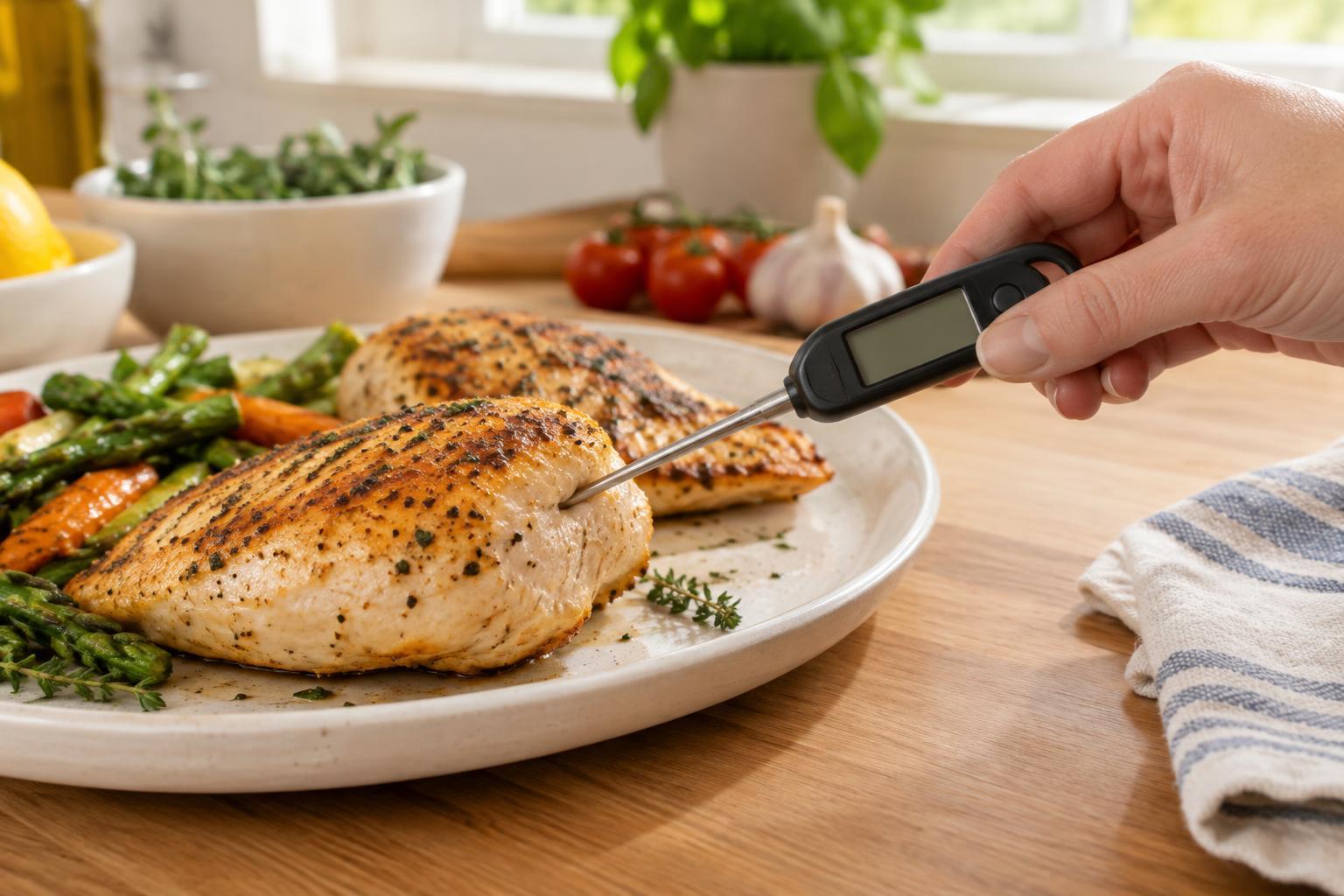
Insert the thermometer probe into the thickest part of the meat, with its sensing tip near the center. Keep the tip away from bone, large pockets of fat, the pan and the cooking surface. Those spots can give you a reading that does not represent the meat you are checking. Hold the probe still until the number settles, following your thermometer’s instructions for how long that takes.
For a thick boneless breast, insert the probe from the side if that makes it easier to reach the center without pushing through to the pan. The same approach works for a thin cutlet or a small piece: sliding the probe in horizontally gives its tip more meat to sit in. For a bone-in thigh or drumstick, measure in the thickest meaty area without touching the bone. If you are unsure where the tip landed, move it slightly and check again.
Check whole birds and mixed pans carefully
A whole chicken can cook unevenly. Check the thickest part of a breast and the innermost part of a thigh, keeping the probe clear of bone. Both should reach 165°F (74°C). If you cook a chicken with stuffing inside, check the center of the stuffing separately; it also needs to reach 165°F (74°C). Cooking stuffing in its own dish can make these temperature checks simpler.
On a sheet pan, do not assume every piece is ready because one large piece passes the test. Check a few pieces, particularly the largest and any that sat in a cooler-looking area of the pan. When cooking small pieces, such as chicken for a stir-fry, test one of the largest pieces by inserting the probe far enough to place its tip in the center. If the pieces are too small for your thermometer to measure reliably, try cutting a larger piece before cooking or use a thermometer suited to thin foods.
What to do with a low or uncertain reading
If the reading is below 165°F (74°C), keep cooking and test again. You can move pieces that are already done to a clean plate while the others finish. When a piece is close to the target, check it more often so you do not dry it out unnecessarily. Resting chicken may improve its texture, but do not rely on a predicted rise in temperature instead of checking that it has reached the safe target.
An unexpectedly high or low number is worth a second look. Make sure the sensing tip is actually in the center of the meat, not against a bone or exposed on the other side. Check another spot in the same piece if its shape is uneven. For a thermometer that seems unreliable, consult its instructions for how to test or calibrate it; models differ.
Keep the check clean and easy to repeat
A thermometer only helps if you use it without spreading raw chicken juices. Wash the probe with hot, soapy water after it touches undercooked chicken and before inserting it into cooked food. Wash it again after use, following the manufacturer’s cleaning instructions. Keep cooked chicken off the plate or cutting board that held it raw unless that surface has been washed.
Make the final temperature check part of your cooking routine: take the pan off the heat briefly, test the thickest piece, then check any other pieces that may have cooked differently. Once each piece you plan to serve has reached 165°F (74°C), move it to a clean serving plate. With a little practice, placing the probe becomes as routine as setting a timer—and much more useful for deciding when dinner is ready.