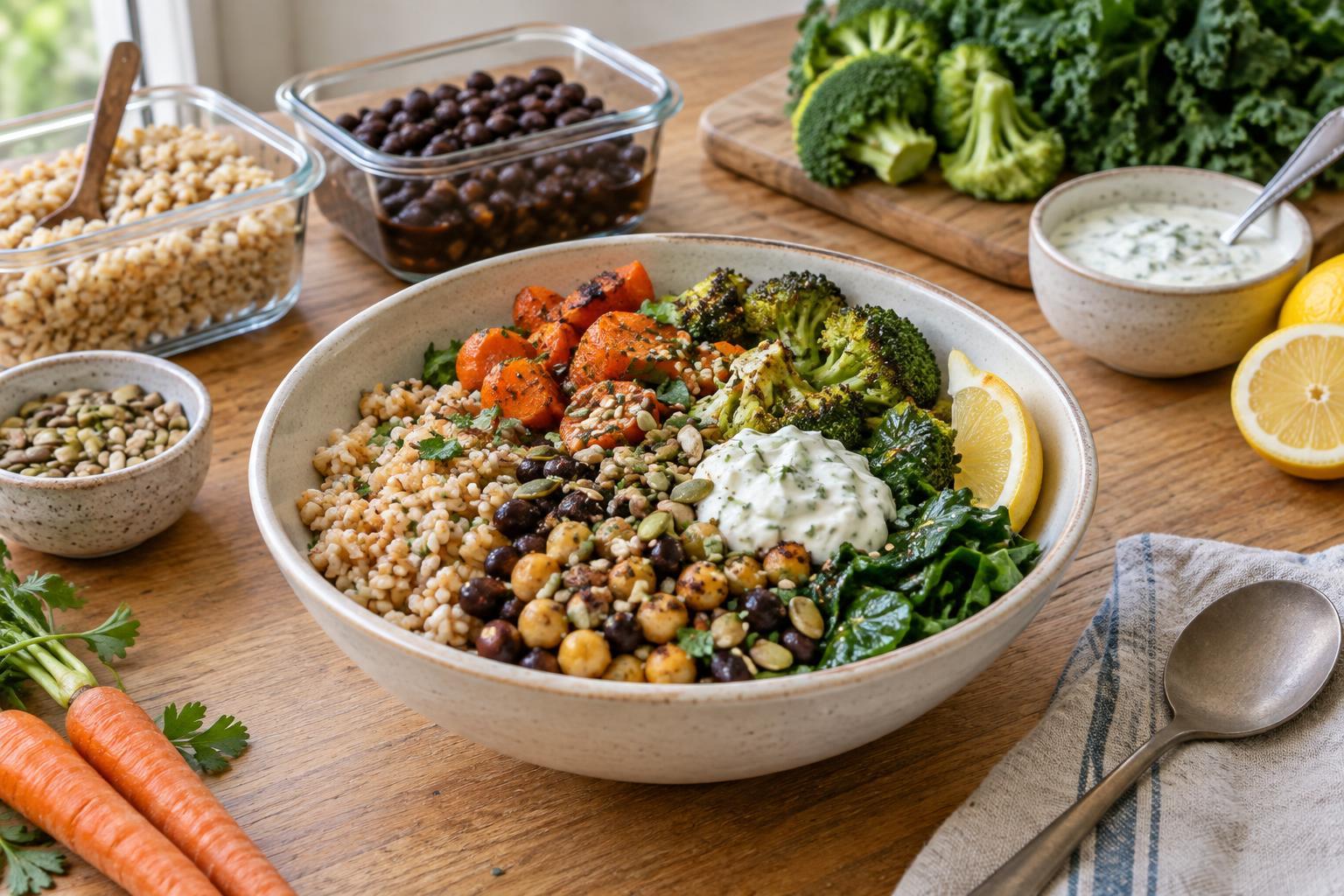
Start with three flexible building blocks
A bowl of beans, grains and vegetables is less a recipe than a way to put dinner together. Choose one from each group: chickpeas, black beans or lentils; rice, bulgur or barley; and whichever vegetables you have. Frozen peas, a bag of carrots and leftover roasted broccoli all count. The combination works because each part brings something different to the plate, so you do not need a long ingredient list to make the meal feel complete.
For a starting point, put a scoop of cooked grain in a bowl, add about the same amount of beans and pile vegetables alongside or on top. Adjust from there based on your appetite and what needs using up. If the bowl looks sparse, add more vegetables or beans. If it seems dry, hold off on extra grain until you have added a sauce. There is no fixed ratio to get right.
Cook for contrast, not complexity
Texture can make familiar ingredients more appealing. Try warm, soft rice with crisp cucumber and creamy white beans, or tender lentils with chewy barley and browned roasted carrots. You can roast a tray of vegetables while a grain cooks, then warm canned beans in a small pan. For the quickest version, use leftover rice, microwave frozen vegetables and rinse a can of beans.
Season each component lightly as you go rather than relying on one final sprinkle of salt. A pinch of spices in the beans, a little salt in the grain’s cooking water and pepper on the vegetables give the bowl flavor throughout. If you are using canned beans, drain and rinse them if you prefer a cleaner flavor; for a saucier dish, you can warm them with a splash of water and seasonings instead.
Add a sauce and one finishing touch
Sauce ties the three building blocks together. A spoonful of yogurt mixed with lemon juice and garlic makes a cool topping for chickpeas, rice and roasted zucchini. Stir peanut butter with warm water, soy sauce and a little vinegar for a pourable sauce over lentils, noodles or grains and steamed greens. Even olive oil and a squeeze of lemon can be enough when the vegetables are well seasoned.
Then add one small finishing touch for contrast: chopped herbs, toasted seeds, sliced scallions, pickled onions or a few crushed crackers. These extras are optional, not another shopping list. A useful habit is to taste the assembled bowl before adding more seasoning. If it tastes flat, try a little lemon juice or vinegar; if it lacks richness, add a drizzle of oil or a spoonful of yogurt.
Use a few combinations as starting points
For a warm, savory bowl, pair brown rice with black beans and sautéed peppers and onions. Add cumin while the vegetables cook, then finish with lime juice and a spoonful of salsa. For something gentler, combine barley, white beans and roasted carrots with lemon, olive oil and parsley. Neither combination requires exact measurements, and both make good use of vegetables that might otherwise be left in the drawer.
You can also change the format without changing the ingredients. Spoon the mixture into a tortilla, serve it over greens or turn it into a thick soup with broth. If you have only a small amount of one component, let the others carry the meal. Half a can of beans can stretch into dinner with extra vegetables and grain; a little leftover rice can become a topping for a bean-and-vegetable soup.
Make the next meal easier
A little preparation gives you more choices later. Cook a pot of grain, roast an extra tray of vegetables or open two cans of beans instead of one. Store the components separately in covered containers in the refrigerator so you can assemble different meals without committing to the same bowl every day. Cool cooked food and refrigerate it promptly, following the storage guidance for the ingredients you use.
When you are ready to eat, warm what you want warm and add fresh or crunchy elements at the end. Yesterday’s rice and beans might become a bowl with greens today and a tortilla filling tomorrow. The goal is not to prepare a perfect set of matching containers. It is to keep a few useful ingredients ready, so a filling meal remains possible even on a night when you do not feel like following a recipe.